Wide-Angle Lenses

by Allan Weitz ·Posted
In addition to its innovative image-processing abilities, the recently introduced Zeiss ZX1 is also notable as being the first camera to wear the Zeiss nameplate in five decades. This Classic Camera review is about the last camera to wear the Zeiss nameplate—the Zeiss Ikon Hologon Ultrawide (1969-71), which was as technically remarkable as its 21st-century follow-up act. Although this article is a classic “camera” review, the story is really about
by Allan Weitz ·Posted
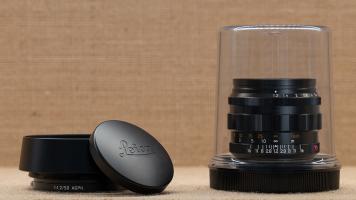
Fifty-five years ago, Leica introduced a groundbreaking high-speed normal lens for Leica M-series cameras. It was called the Noctilux 50mm f/1.2, and it remains the gold standard among photographers who shoot in low light, to this very day.
In a nod to its fabled heritage, Leica is introducing an updated 2021 edition of this lens—the Leica Noctilux-M 50mm f/1.2 ASPH. Leica has been reaching into its archives of classic glass and

0 Plays ·Posted
On this week’s episode of the B&H Photography Podcast, photographer Matt Price describes skate photography as the “perfect blend between studio and sports photography” and, from our engaging conversation, this idea will be made clear. Price knows of what he speaks—in addition to an acclaimed freelance career, he has been a staff photographer and editor for The Skateboard Mag and is currently Brand Director at CCS Skateshop and

by Allan Weitz ·Posted
Filtering ultra-wide-angle lenses, which are generally defined as lenses with diagonal angles of view of 90° or greater, can be challenging. And the greater the AoV, the more challenging filtering can become. The big problem has to do with vignetting, which in the case of filtering ultra-wide-angle lenses means seeing the edges of the filter in the corners of the frame.
In the case of full-frame cameras, this is seldom an issue with lenses in the 18mm to 21mm range (approximately 90° to 100° AoV) assuming you are using threaded, thin-mount

Let’s face it: Shooting film and video isn’t just a job for most of us, it is something we love. Everything that we do contributes to creativity of the images that we make. But the toll the day-in and day-out work can take on our creativity can be devastating. Sometimes you just need a break, something to reinvigorate you, like a fun, non-professional optic. Sometimes you need a different challenge, working with a different set of limitations; experiment, explore, create without having to worry about others judging or the consequences of

by Allan Weitz ·Posted
Panoramas are visually interesting, and that’s why Panorama modes can be found on many consumer cameras. Simply set the camera to Panorama mode, frame your shot, and follow the panning instructions in your viewfinder. Move slowly, evenly, and keep your camera level with the horizon. If your camera is on a tripod, so much the better. Do it right and you get a terrific panoramic image of up to 360 degrees, depending on how you set your camera.
I have long been a fan of panorama imaging, you can imagine my surprise when I realized my

by Allan Weitz ·Posted
In this week’s edition of FAQ, the topic is a wide-angle lenses. When describing the focal lengths of lenses, there are three main groups: normal, wide-angle, and telephoto.
What is a wide-angle lens?
By way of comparison, normal lenses approximate the perspective and special relationships between elements within the viewing area the way our eyes do. In other words, normal lenses represent the world much like the way we see it.
Wide-angle lenses capture a wider view of the scene before the camera, but because they squeeze more of the scene
by Allan Weitz ·Posted
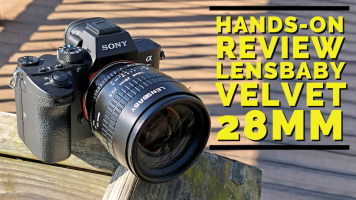
Lensbaby has introduced the third member of its popular Velvet lineup: the Lensbaby Velvet 28mm f/2.5 Lens. Having already reviewed the Lensbaby Velvet 85mm f/1.8 and Lensbaby Velvet 56mm f/1.6, my
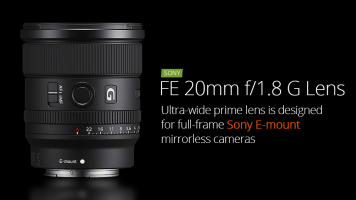
Long awaited and highly anticipated, Sony has finally released an ultra-wide-angle prime lens for its full-frame mirrorless cameras: the FE 20mm f/1.8 G. While this company’s standard wides and normal-length lenses have been a focus and priority over the years, the ultra-wide sector has been relegated to zoom lenses—until now. With this new 20mm f/1.8, though, a more compact and focused design gives photographers and videographers a faster
by Allan Weitz ·Posted
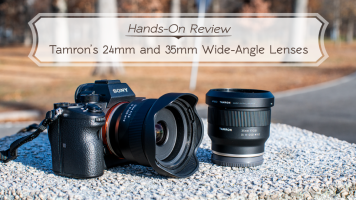
I'm a big fan of smaller, lighter camera gear, so when Tamron announced a trio of lightweight, compact prime wide-angle lenses for Sony E-mount cameras, I took notice. Included in the lineup are the 35mm f/2.8 Di III OSD M 1:2 and 24mm f/2.8 Di III OSD M 1:2, which will be available any day now, and a

Shooting fish in a barrel takes on a whole new meaning with a trio of ultra-wide and fish-eye lenses from Hongkong MeiKe Digital Technology Co. Ltd. Better known by the designation MeiKe, which according to one source combines the words “beauty” (Mei) and “technology” (Ke), the parent company was founded in 2005 as a manufacturer and exporter of photographic accessories, with a headquarters in Hong Kong and branches in mainland China. In addition to manufacturing a variety of affordably priced battery grips, shutter releases, adapter rings,
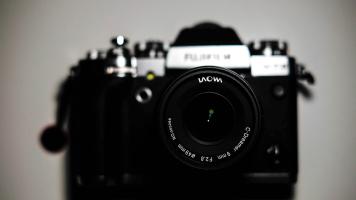
If Venus Optics were an athlete, its motto for the Laowa lens line would not be “Farther, faster, stronger,” but, “Wider, Closer, and Even Wider and Even Closer.” One look at the Venus Optics Laowa lens lineup and you will see that the company is, with a couple of exceptions, carving out the turf in the ultra-wide-angle lens and macro-lens markets.
Photographs ©Todd Vorenkamp
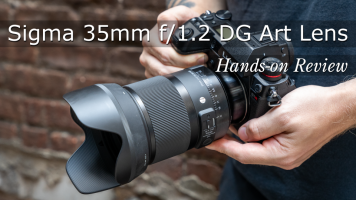
Sigma’s latest announcement included three distinct lenses and, likely, the most highly anticipated of the three is the 35mm f/1.2 DG DN Art. This lens was clearly designed to be a showstopper, with its huge f/1.2 maximum aperture and equally huge physical size. But is the lens more than just a one-trick pony? I think so—if you’re willing to handle the weight and size of a lens like this, you’ll be well rewarded with its impressive sharpness,
by Allan Weitz ·Posted
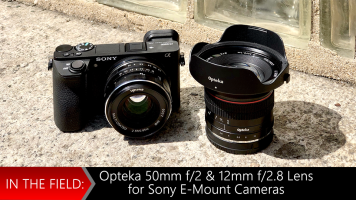
Opteka, a Chinese optical manufacturer, has been producing manual-focus lenses and lens accessories for the consumer market since 2002. Like other lenses in this series, Opteka lenses are designed for photo enthusiasts who want to expand their lens choices without having to expand their credit line.
For this review we included two manual-focus Opteka lenses: the Opteka 50mm f/2 lens for Sony E-mount cameras, which has the FoV of a
by Staff Writer ·Posted
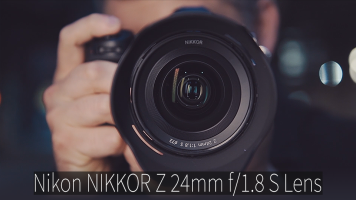
Nikon has announced the NIKKOR Z 24mm f/1.8 S Lens, the widest prime for Nikon’s FX-format Z-series mirrorless cameras to date. Ideal for architecture, landscapes, and streetscapes, its fast f/1.8 maximum aperture ensures excellent imaging even when capturing low-light environments.
NIKKOR Z 24mm f/1.8 S Lens
An admirable addition to an already