Photography
- Recently Added
- Popularity
- Name
About 45 filtered results

Posted
Recently, the B&H social media video team traveled to the Florida Everglades to film a wildlife and landscape photography series. Matt Matkin led the bird photography segment, sharing his personal approach to capturing birds in action along with a few memorable moments from the experience.
0:00 - Intro
2:43 - Why bird photography in the Everglades
7:29 - Equipment used
9:13 - Bird resources
12:55 - First impressions & tips
25:08 - Camera settings & composition tips
46:14 - Look for other wildlife
47:22 - Camera & lens

by Todd Vorenkamp · Posted
Choosing a lens is a highly personal choice, and that’s especially true for wildlife photography. This is in the realm of the telephoto lens after all. While almost any focal length lens works for landscapes and other types of photography, in general, when it comes to photographing animals in the wild, you'll want to have the longest reach you can. In this guide, we’re going to discuss the factors one should consider when purchasing a lens for wildlife photography.
Focal Length
The first and most straightforward factor to consider is focal
by Shawn C. Steiner · Posted
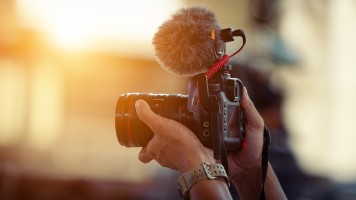
Audio is extremely important. Photographers haven’t really had to worry about this, but it is something that can make or break your videos. Watch some of your favorite movies and pay close attention to the sound—you will probably pick up some audio cues or effects that amplify the scene or action. If recorded poorly, audio can make something completely unwatchable. Have you ever opened a video online to crackling and noise and decided that it just wasn’t worth enduring? Clarity in audio is one of the most important things for keeping your

by Mathew Malwitz · Posted
There’s an old adage that gear doesn’t make the picture, it’s the photographer. This is partly true. A super-telephoto prime with a fast aperture will make quick work of busy backgrounds, and the faster focusing systems of high-end full-frame cameras will more easily track a bird’s eye in some of the most challenging lighting conditions. But there’s another factor to consider. At the heart of the image is a creative eye and technical proficiency. High-end camera gear only serves a purpose once you know what you’re doing.
In this guide, we’re

by Mathew Malwitz · Posted
Landscapes and wildlife are among the most challenging subject matter to capture well with a camera. Wildlife is unpredictable and despite your best efforts, will not respond to posing instructions. Landscapes are stationary but at the mercy of available light and weather conditions. All that being said, it is the unpredictable nature of landscape and wildlife photography that has earned these genres a very large, very dedicated, and very passionate following. The dedication of these photographers can make finding the right gift all the more

by Todd Vorenkamp · Posted
The Micro Four Thirds system is becoming popular among a passionate group of wedding photographers. The compact size of the cameras and lens system, as well as the sheer number of available lenses from, OM System, Panasonic, and other manufacturers, not to mention the nearly limitless option of adapted lenses, means that the wedding photographer has many options for capturing the action.
It’s worth noting that OM System, formerly known as Olympus, has lenses with both branding. As lenses are updated, they’ll adopt the OM system name, but as

by Mathew Malwitz · Posted
When you think of wildlife photography, huge super-telephoto lenses might be what pop into mind. While these are practical, they’re far from the end-all-be-all option. Today, we’re going to learn some practical applications of other, less common lenses for wildlife photography, such as portrait lenses, ultra wide-angle landscape lenses, and special-effect glass like mirror lenses.
Portrait Lenses


by Mathew Malwitz · Posted
Binoculars are a birdwatcher’s best friend. They allow you to get close-up views of distant objects without having to actually get close. While they all perform the same basic functions, not all binoculars are good for bird watching. Features like build-quality, optical quality, and lens coatings all play a role in determining whether a pair of binoculars is good for birding.
In this guide, we’re going to cover the features that make for a great pair of birding binoculars, including the

by Bjorn Petersen · Posted
As a student, much of your life is about making choices and sacrifices. “Should I skip this class and sleep in?” or “Should I go to class even though I’m too tired to pay attention?” There are a lot of hard decisions to make as a student, especially if you’re a burgeoning photographer looking to attain professional status.
But, as a student, means are often limited and you need to be more conscious about what gear to add to your kit. What gear is critical and worth the investment versus what are some of the things you can ignore for now and

Posted
Choosing the right camera gear can feel overwhelming, especially when you're just starting out. Whether you're venturing into wildlife photography, launching a portrait business, diving into travel photography and videography, or exploring landscape photography, having the right setup is important. To help you navigate your choices, our resident photographers and videographers share their top gear recommendations based on their own experiences.
0:00 - Intro
0:25 - Portrait Overview
0:45 - Portrait Gear Under $500
1:36 - Under $800
2:22 -

by Bjorn Petersen · Posted
When it comes to choosing the best camera for wildlife, sports, and action photography, three key factors to focus on are speed, reliability, and autofocus performance. In the past, with SLRs, the flagship models usually translated to being the top models for action photography. The same is still true today, with mirrorless cameras, but speed is now more

by Todd Vorenkamp · Posted
If your dreams involve capturing stunning images of beautiful, wild animals in nature, there is no getting around it—you need the right gear. Although every camera can capture wildlife, not all cameras are created equally and some certainly have technological advantages that benefit wildlife photography. We have discussed buying considerations for the right lens in this article, and here we will take a deep dive into what to look for in a camera for dedicated wildlife photography.
What Makes a Camera Better for Wildlife?
For wildlife

by Todd Vorenkamp · Posted
When you head out into the wilderness armed with a pro camera and big telephoto lens to tackle some awesome wildlife, landscape, and bird photography, you had best be sure to have the right accessories for your adventures! Let’s take a look at the best accessories for wildlife photography because—trust me—you don’t want to be the only photographer out there without a cool camouflage lens cover!
Tripods
I’ve said it before and I am saying it again: the

by Todd Vorenkamp · Posted
Many budding sports and wildlife photographers dream of larger and larger lenses that get them closer to the action while letting in more light—allowing blazing-fast, action-freezing shutter speeds that capture priceless moments on the field or out in the field. But, with long lenses comes the increased chance of camera shake due to the extreme focal lengths. How do we combat physics here? Well, if you are entering the world of the

by John Harris · Posted
When speaking with wildlife and bird photographers, the subject of camouflage always sparks conversation. Some are surprisingly dismissive, others are all-in and, of course, there are those of us in the middle, who understand the benefits, but are not quite ready to order a complete ghillie suit. In fact, camouflage gear is not a panacea, and all photographers should agree that your location, movements, techniques, scent, and even breathing have more impact on getting that great animal photograph than what you are wearing or under what you are