Video
- Recently Added
- Popularity
- Name
About 207 filtered results

1,485 Views· Posted
In this video, B&H takes us behind the scenes of the movie Tomorrow Ever After, with actor, writer, and director Ela Thier and B&H’s Michel Suissa. The pair discusses the effective collaboration of the various movie-making equipment manufacturers, B&H, and the film’s creative staff. Equipment suppliers for the film included Canon, Arri, Ikan, Sachtler, Sony, Convergent Design, and G-Technology. We hope you enjoy the video, and invite you to view the wide selection of other instructional
by Ronald Francis · Posted
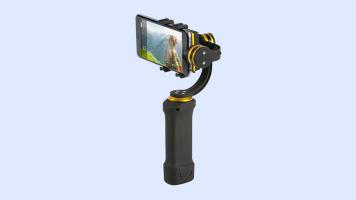
Your iPhone probably won’t replace your Canon EOS 5D. However, if you’re still going to shoot on an iPhone because:
“it’s cool”
it’s all you have
you heard of its feats at the Zacuto shootout
Tangerine, a recent Sundance hit, was shot on an iPhone
you can get enough friends with iPhones to shoot multi-cam
you’re entering into one of many mobile film festivals and contests
you saw the Bentley Motors commercial shot on iPhone and cut on iPad
more and more music videos are being shot on iPhones
—or for any other reason—there are only a few

by Peter Ward_1 · Posted
So you’ve made the plunge, and are now the proud owner of your very first GoPro HERO. Or maybe it was an unexpected but very much welcome gift. Either way, if you’re new to the action-camera genre you’ll be wondering, understandably, just what the heck you can do with it.
Whether it’s the HERO4 Silver Edition or the
by Michael Christensen · Posted
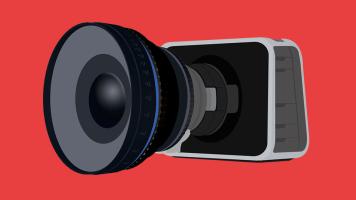
In the past five to six years, camera technology has advanced by leaps and bounds and, in that time, cinema-quality video has become significantly more accessible. Consider the Blackmagic Production Camera 4K. This camera has a Super-35mm-sized sensor with a global shutter, and it shoots 4K raw. Ten years ago, a camera with specs like that would cost more to rent for one day than to buy the Blackmagic Production Camera
by David Flores · Posted
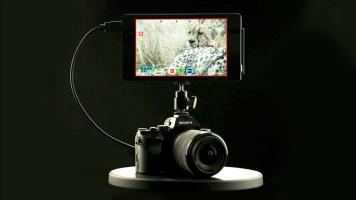
Making the leap to 4K video is more exciting and affordable than any major video-format shift in recent history. Mirrorless cameras like the Panasonic GH4, Sony a7S, and Samsung NX1 offer many of the

by David Flores · Posted
The widespread adoption of 4K video isn't a question of if but, rather, a mash-up of when and how. There are a handful of ways that we already consume the format. When you visit a modern movie theater, the odds are high that you’ll be screening a 4K digital video projection. Netflix, YouTube, and Vimeo are all experimenting with 4K streaming options—but most of us don't have the right kind of hardware to appreciate them. Premium 4K or Ultra

by Michael Christensen · Posted
Large image sensors are among the most in-demand components of video cameras, and it's easy to see why. Relatively recent advances in image-sensor technology have allowed even advanced hobbyists to produce world-class footage. However, this is only half of the story. The recent popularity of interchangeable-lens camera systems is perhaps the single greatest factor driving our emerging creative freedoms.
"... with lens adapters, your creative options are practically limitless."
When it comes to choosing camera gear, lenses are one of your

by Steven Gladstone · Posted
Mirrorless cameras are currently seeing a huge surge in popularity among videographers for shooting video. Whether this trend is spurred by the design aspects of the cameras or by manufacturers advancing their capabilities, the end result is that mirrorless cameras can now deliver up to 4K video in a small, lightweight form factor that most DSLRs cannot match.
Evolving from their humble origins as consumer-oriented, point-and-shoot cameras,

345 Views· Posted
Philip Bloom stopped by B&H to do a two day workshop sponsored by Sony on October 5th and 6th. Twenty-five hand picked students were all provided Sony a7S mirrorless cameras to use around New York City.

by Justin Dise · Posted
Since the release of his 2008 short film Reverie, which was shot using the Canon 5D Mark II, Vincent Laforet has become an influential figure in the video-making community. His evolution and growth as a commercial director is charted in his blog, which is now a must-read for photographers and filmmakers alike. We were lucky enough to talk with Laforet about his transition into directing, and reveal some of his secrets to approaching cinematic motion. We also got some insight into what to expect
by Anonymous · Posted
4K is on the way. In fact, it’s already here, and now is the time to prepare yourself for this next milestone in the evolution of video technology. The gradual yet inevitable implementation of 4K standards is likely to be the most significant revolution in video production since the transition from SD to HD or from tapes to solid-state media. Some may dread the change, as it represents both the beginning of a whole new learning curve and a potentially significant investment in new equipment. But rest assured that compared to the SD/HD
by Justin Dise · Posted
Lens selection is an important decision for any Director of Photography. Lenses from different manufacturers and different eras offer unique characteristics to better suit the director’s vision for a film or scene. While color grading gives you the flexibility to adjust images in post, there are intrinsic qualities inherent in the construction of the lens itself that can't be fully replicated. And with on-set grading becoming more commonplace, the ability of a DP to create a "look" on set with just lens selection can endear them to the