Video
- Recently Added
- Popularity
- Name
About 210 filtered results
by David Adler · Posted
It’s movie night, the time to see one of several big science-fiction films of the summer. You arrive just as the 15 minutes of previews start, trying to sneak past the other patrons in your row without tripping over any outstretched limbs or jutting armrests. At last, you’ve arrived at your seat. You ease into the overly spongy cushion and let out a sigh of relief as the realization that you didn’t tar-and-feather any of the other moviegoers with your one-two punch of glowing-yellow buttered popcorn and soft drink. It’s enough to almost make
by David Adler · Posted
Over the past few years, motorized gimbals have enjoyed a noticeable rise in popularity, becoming a viable and affordable camera-stabilization platform. In fact, these mechanisms took the world by storm, starting with the announcement of the FREEFLY MōVI, in 2013. Like most technologies, it has taken some time for motorized gimbals to break into the

by John-Paul Pale… · Posted
During my days as a film student, I shot projects using film and digital media. While digital footage was imported directly from tape, film was sent out, developed, and transferred to tape in standard definition. Now that more than a decade has passed and the industry has gone predominantly digital, what options exist for people looking to transfer their existing film? The answer is: film scanning, but how does this differ from the older telecine process? Before undertaking this journey, users will need to be familiar with items such as film

by Justin Dise · Posted
For many video shooters, a single camera is often enough. If you’re one of those people who finds this to be true then, by all means, feel free to skip this article. But if you’re someone who works with multi-cam setups or is thinking about picking up a second (or third) camera to supplement your main camera, then please keep reading. There are many things to consider when selecting a “B” camera, and while you could easily just purchase an identical model to your main camera, this isn’t always affordable, nor does it give you the opportunity

by Justin Dise · Posted
Vlogging—or video blogging—is becoming more popular by the day, with seemingly everyone seeking to become the next YouTube sensation. You may be thinking that with the right subject matter and your winning personality, stardom is right around the corner. And who knows—maybe it is! But if you’re really going to give it a go, then you’re going to need a few essential pieces of gear to get your vlogging career up and running, and looking good. I mean, let’s face it: viewers are brutal. Bad audio? Dislike! Lousy video quality? Double dislike! So

by Ronald Francis · Posted
If you shoot with up to 50 lb of weight, including with entry-level weights, you might find the new video-head lineup from Cartoni a very realistic match for your needs and investment considerations.
While the 80-year old Italian brand is most famed for its high-end tripod systems, over the past decade Cartoni has also been supporting reduced camera sizes with several entry- and mid-level heads. These options are distinguished for their counterbalance and smooth drag, light weight and solid builds, and long-term consistency.

by Steven Gladstone · Posted
Video needs lighting. This is a statement worth repeating: video needs lighting. Yes, you can shoot available light, and now there are cameras with obscenely high ISO ratings, but think about it—if you are shooting at 100,000 ISO, 400,000 ISO, or 4 million ISO, what is the quality of your light? And what exactly are you shooting? If you are shooting at high ISO ratings, most likely you are shooting in extremely low light, and although you may be able to get a decent exposure, it is unlikely there will be much contrast in your shot. This is a
by Steven Gladstone · Posted
The following article contains suggestions for items that you may not know exist, but you might just end up wanting. These accessories can make your production life a little bit better. In researching this article, I took the opportunity to peruse the accessories that B&H Photo sells, and if you have a day to spend doing so, I’d recommend it—there are more than

by David Adler · Posted
The Internet: where would we be without it? While I could spend an entire afternoon pondering that conundrum, the truth of the matter is that for the time being—barring some sort of global catastrophe—the Internet is here to stay. Not only is it staying, it’s growing fast, and you are a part of that growth. Building your own independent media empire brick by brick, as it were, takes time. And like most other crafts, proper tools of the trade are required. I am under the impression that you would like to create content for other people in the
by Peter Ward_1 · Posted
What makes a great shot? Is it the lighting? The camera angle? The mise en scène? Is there even a formula? Who can compare the gritty naturalism of much postmodern cinematography with the deliberate, expansive visuals of classic Hollywood? I can, I hope, show you many of the tools that have the potential to make great shots possible.
Tripod
I can already hear yawns in the audience. The humble tripod!? Yet, if there is one piece of camera support every DP

by Steven Gladstone · Posted
Over time, you are going to acquire a variety of specialty tools and gear to help you accomplish your shoots and to make your production life easier. However, for those of you who are just starting out, or even if you’ve already assembled a bag, what follows are a few items which, over the years, I’ve found to be invaluable. However, before I start, I’d like to suggest a few things that are essential for productions in general, even if they aren’t part of your on-set bag. A spare set of car keys, when driving to a shoot, a spare pair of socks—

by Steven Gladstone · Posted
Cameras continue to get smaller and lighter, without necessarily being designed with better ergonomics. Media costs drop, resulting in increased improvisation and on-the-fly filmmaking and, of course, you are always balancing quality with getting as much done as possible. So, unless you are making yet another Blair Witch Project, or reviving the shooting style of the TV series Hill Street Blues, smooth is the word when it comes to camera movement. In this article, I'm going to go over many of the available choices for stabilizing your camera
by David Adler · Posted
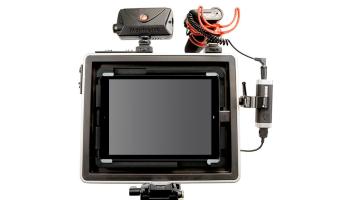
Go to nearly any tourist attraction these days, and you will see quite a few people taking pictures and video with their iPads. Now, I’ve groaned to myself in the past whenever I’d see that transpire, often thinking, “Why don’t they just use a real camera, or even a cell phone?” It seems so impractical to use an iPad, of all things. However, as iPads have grown in their processing abilities and their ubiquity, I have come to realize that with a little help from additional software and hardware, the iPad can be made into a powerful filmmaking

by Peter Ward_1 · Posted
What are they and who uses them? Some call them drones, some apply the label “quadcopters” as a blanket term—though they can have any number of rotors or even be planes—the FAA calls them “unmanned aerial systems” (UAS). I prefer to call them “unmanned aerial vehicles” (UAVs), a neutral term broad enough to safely include pretty much the whole gamut, from Hubsan nano drones up to commercial and military aircraft weighing hundreds of pounds and basically the size of small manned planes.
by Ari Erenthal · Posted
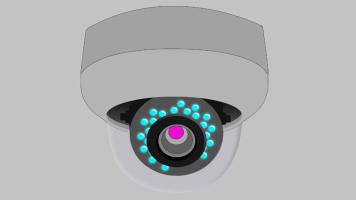
We’ve all seen video from surveillance cameras, whether on news programs, TV and/or movies, and via the Internet. Surveillance can and should be an important part of a physical protection system, and helps provide peace of mind to homeowners, parents, and employers, by allowing you to keep an eye on things when you cannot be physically present. However, there is an enormous range of products available, with great variations in price, complexity, and