Video
- Recently Added
- Popularity
- Name
About 516 filtered results

by Mary Latvis · Posted
Taking to the skies to capture breathtaking footage has never been easier. Modern drones are not only incredible filmmaking tools they are also becoming more affordable and accessible. Filmmakers looking to take flight will want to find something that can capture cinematic imagery with ease. Fortunately, there are plenty of options available today. Whether you are a first-time content creator,

by Zack Young · Posted
There's nothing like the feeling you get after playing your footage from an arduous day of filming, when you realize that everything you shot looks like your camera stumbled into a rogue washing machine, which then toppled down a comically large mountain range. Nothing like it. Unintentionally shaky footage can make a seemingly successful shoot become the bane of one's career. While there are certain measures one can take to mitigate the shakiness of footage in post, nothing will be as painless as simply stabilizing during production—hence the

Posted
What is a cinema camera, and how do you rig one out? Doug is covering the basics for those who already have experience with mirrorless or broadcast-style cameras. In order to understand modern digital cine cameras, we'll cover a brief history of their predecessors. After, Doug will breakdown the entire cine rig setup.
0:00 - What We're Covering
0:34 - What is a Cinema Camera?
6:19 - TLDR
9:29 - Trapped in a Cage
14:13 - Am I Seeing Things?
15:22 - You Might Need Glasses
24:22 - Absolute Power
28:14 - Accessories Make the Outfit
31:47 - Did

by Zack Young · Posted
Looking to learn more about the LED volume walls used in the burgeoning field of OSVP (on-set virtual production)? These walls are a key component of the process, serving as true-to-life backgrounds, sets, and locations for OSVP. Volume walls are composed of multiple LED displays (also called cabinets) that are seamlessly joined together to form a custom-size screen on which your background footage and real-time graphics are shown. Here, we’re going over key specs for the most visible component, the displays themselves.
Configuration
The first

Posted
Now that you've filmed your video, it's time for editing and delivery in HDR. Doug dives deeper into HDR formats, as well as standards and workflows when working with HDR video. Join him in DaVinci Resolve where you'll learn about both the technical and creative sides.
0:00 - Intro
1:03 - Choosing an HDR Monitor
5:08 - Color Gamut
6:44 - Setting Up Your Monitor & Project
10:39 - Grading in HDR
24:28 - Exporting & Delivering
25:32 - Final Thoughts
Sponsored by

by Mary Latvis · Posted
Blending a high-resolution video display with live action, real-time computer graphics, camera tracking, and game engine software to create immersive environments, virtual production is rapidly transforming the face of video production. To streamline your VP or XR (extended reality) stage setup, consider getting a jump start with the help of a turnkey VP package.
LED Nation P1.86mm GOB Video Wall Turnkey Kit for

by Jennifer Hahn · Posted
Point-and-shoot cameras are a great value-add to your photography kit, social media sharing, or as a vacation companion for quick stills and capturing memories on the fly. And these days, the value is even greater with point-and-shoot video recording. The point-and-shoot design makes things simple to change to video mode and press record. Though after you’ve captured your video, it can become cumbersome to edit and share that footage.
Some cameras allow you to edit/trim your video footage (also called “Movies” in some cameras) in camera, which
Posted
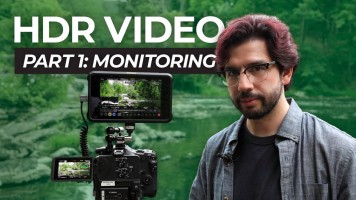
In part one, Doug shares how you can introduce HDR into your workflow. He discusses the advantages and disadvantages of shooting HDR video, the basics of HDR formats, and monitoring HDR on set.
0:00 - Intro
0:59 - What Is HDR Video?
2:20 - HDR Format Basics
5:30 - Middle Gray
7:19 - HDR Monitoring
12:59 - A Note on Exposure
13:45 - Where Is 18% Gray in HDR?
14:26 - Final Thoughts

Posted
Monitors are a critical component for a video production set. Sidney shares what to look for in an on-camera monitor, featuring the SmallHD ULTRA 10 4K Portable Production Monitor.
0:00 - In This Video
0:20 - Size
1:03 - Brightness
1:27 - Color Accuracy
1:58 - Connectivity Options
2:54 - Professional Monitoring Tools
3:40 - Conclusion
Sponsored by

by Roberto Bayde · Posted
Action cameras are one of the best tools to capture everyday life and action adventures. Most cameras feature a universal two-prong adapter that can connect to a multitude of accessories. Here are some of our favorites.
SmallRig Quick Release Chest Strap Mount for Action Cameras
This Chest Strap from SmallRig is an essential for POV filming and can be used to record all types of content, including travel, action, and

by Mary Latvis · Posted
Are you looking to learn more about the LED volume walls used in the burgeoning field of OSVP (on-set virtual production)? These walls are a key component of the process, serving as true-to-life backgrounds, and in effect, sets and locations for OSVP. Volume walls are composed of multiple LED displays that are seamlessly joined to form a custom-size screen on which your prerecorded background plates are played back. Here we'll go over the component that stiches together those displays and controls the behavior of your LED volume wall:

by Jennifer Hahn · Posted
Many moons ago, when the economy was unstable and layoffs were rampant, this author decided to switch careers to pursue filmmaking. With a new perspective and energy, but without any guidance, knowledge, or tools, going back to school for digital filmmaking was a no-brainer. The aim was to tell real stories in documentary form, and it became a challenging but ultimately rewarding adventure.
Tips for Starting Out
If you’re just starting out at the dawn of your student career, or find yourself older and wiser looking for a change, and you want

by Jennifer Hahn · Posted
In a recent Explora article, we went over the basics of media servers for in-camera virtual effects (ICVFX) and virtual production (VP), describing these beefy machines for media playback and distribution to LED processors for LED walls and volumes. A VP media server can be a custom hardware solution or software installed on an off-the-shelf machine, but either type needs to have a

by Steven Esposito · Posted
Whether you are learning the craft of cinematic filming, content creation, or even video editing, Professor Zack is here to get you started!

by Zack Young · Posted
Many budding filmmakers have toiled away on the color correction and grading of their first masterpiece, watched it over countless times, hit the export button, pulled it up on a TV, and been shocked. "This looks nothing like I was expecting. The colors! The contrast! The saturation!" Although there's no universal fix for differences in how devices display an image, the most common culprit of these headaches is editing on a computer monitor not designed for video work. These monitors often display video way differently than televisions,