Night Photography

0 Views ·Posted
Looking to photograph the stars? In this lecture, Forest Chaput de Saintonge discusses what you need to get started with night-sky photography:
How to get perfectly round stars that stay sharp throughout your exposures
Using calibration frames to correct for bias, noise, and vignetting
Choosing a suitable object in the sky for you to photograph
Important equipment considerations
Share Forest's passion as he takes you through his process, and learn how to keep improving your images even after you master the basics!

by Nate Luebbe ·Posted
Astrophotography is a nearly inevitable trajectory for any serious landscape photographer. It’s not surprising, really: spend enough evenings perched on a hillside documenting sunsets and you eventually get curious about what comes next. The world doesn’t disappear when the sky goes dark, and neither does the potential for striking photos. While, of course, the most basic equipment necessities are obvious (a stable tripod, for instance), choosing the correct lens

My 100 Nights project has opened my eyes in other, unexpected ways. Inspiration comes in many forms. Sometimes it’s the environment that inspires me. On this particular night, in Iceland, last March, my friend David Wilder and I had been chasing clear skies to photograph the aurora. We started off at the famous Glacier Lagoon. We had scouted potential compositions in the daylight and were able to get a few aurora shots before crowds and clouds (surprise, surprise) thwarted our plans. We

This project has been all these things so far: Nights of no sleep, nights of bone-chilling cold, nights spent under the clouds. But it could also be described as 100 nights of learning. I learn something new every time I head out for a shoot. Time-lapsing is a whole new photographic art form that I have been exploring. I can’t use techniques like focus stacking and exposure blending in the same ways I can while shooting still images, so I’ve had to learn how to get the most out of a single image, or 600 single images all put together.
Photos

It should be no surprise that I’d get clouded out from time to time. And sometimes a few clouds can be very pretty. But I think I’ve already spent one hundred nights under the clouds, and 16 of them were on a three-week-long photography expedition to the Southern-most reaches of the Chilean Fjords, in Patagonia.
This was the first expedition I have ever been on. Some of these places were so remote that fewer than 25 people have ever even seen them, and the peaks there have yet to be named. For perspective, more people have been to Antarctica

How can I say this nicely? The night sky in New York City leaves a lot to be desired, especially if you have viewed the heavens from the deck of a container ship in the middle of the ocean. The stars, the handful that you can see over the city, don’t shine very brightly. Several hundred years ago, Venus appeared so brilliantly in the night sky that you could squeeze in a few rounds of shadow boxing with a friend before it slipped below the horizon. The sky was so dark that astronomers surveyed the night skies, unlocking the secrets of the

So far, the weather is definitely the biggest challenge I’ve experienced in my 100 Nights project. So much so, that I could have called the project 100 nights of bone-chilling cold. Seriously, I keep finding new limits to the amount and duration of cold I can endure. I can’t even tell you how many nights I’ve shot in temperatures below -30° Celsius in the Canadian Rockies. But somehow, I keep coming back for more!
I joke that my camera batteries last longer than I do, because I leave my cameras running while I sit in the car trying to get warm

I still remember vividly, the first time I ever photographed the Milky Way. It was on a crop sensor camera with a kit lens, in the middle of winter. I had no composition to speak of, and the galactic core of the Milky Way was not visible at that time of year. Somehow none of that mattered: I was completely mesmerized. Seeing the cluster of stars on the back of the screen felt as if someone had pulled back a grand cosmic curtain, and allowed me to peer into the universe. From that moment forward, I was completely hooked on photographing the
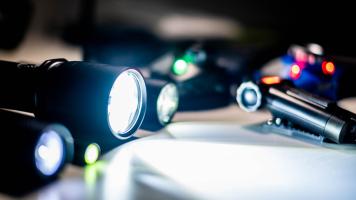
There is an adage that goes: “A good brush does not make a good painter.” But what if one particular brush were better for the task than others? When it comes to light painting, COAST’s “inspection beam” flashlights will certainly give the light painter a tactical advantage and, for those not painting the night, these COAST flashlights and

by Jess Santos ·Posted
Imagine yourself in the middle of nowhere, before sunrise, there’s a quiet around you, the stars start to fade and the light of the sun begins to bring everything to life in blue hues. There’s a magical moment that happens in between day and night. Light gets softer and the glow of the sun still affects the landscape in a beautiful way. Most people underestimate this time of day, forever chasing golden hour and the colors against the clouds as the sun sets, but this has easily become my favorite time of day to photograph. I’ve become obsessed

by Stan Moniz ·Posted
It's no secret that photographing the night sky and everything astrophotography related has been a big part of my life for many years now. Staring up at the sky on a dark night is so inspiring. It's a time where I can relax, but at the same time find that creative spark that keeps me moving forward in my career as an action/adventure photographer. It just never gets old.
Every year, I set a new goal. Moving forward and keeping things new and always learning has been my basic philosophy during this walk in the creative arts and recently, I’ve

531 Views ·Posted
Join B&H’s Gabe Biderman as he provides tips on how to incorporate light writing into your photography. In the video, Biderman discusses camera settings, light sources, and accessories for maximizing the creative possibilities this technique offers. Read more about night photography here. Be sure to drop by BandH.com for more videos, informational articles, and more.

3,483 Views ·Posted
In this installment of our night photography series, Gabe Biderman, from National Parks at Night, teaches us how to capture star trails effectively. Good technique is critical to photographing star trails, as is having a stable tripod and the proper settings, so be sure to listen to Biderman’s excellent tips. Read more about night photography here. For more on everything photography, make sure to stop by BandH.com

3,998 Views ·Posted
Interested in night photography? Want a deep dive into the types of cameras that are best suited to this genre? You are in luck! Educator, author, and co-founder of National Parks at Night, Gabriel Biderman is here to give us a seriously detailed look at some of the most popular cameras for night photography. Biderman talks about megapixel counts, sensitivity ranges, and other concerns photographers may have while providing numerous examples and comparisons. Read more about night photography

855 Views ·Posted
In this video, photographer Gabriel Biderman shares his picks for best cameras for night photography. Biderman stresses that most new cameras have specs that make them capable of taking high-quality photos, so much of your decision will come down to application and personal preference. From the Canon EOS R, with its large viewfinder, to the