Film Cameras

by Allan Weitz ·Posted
Picture editing is an integral part of the photographic process, and this holds true whether your format is film or digital. Digital shooters typically upload images to their computers, tablets, or phones, edit the files in Lightroom, Photoshop, or comparable editing program, and, with a few keystrokes output wall-size murals or scaled-down Instagram posts.
The tools and workflow of film editing are different. Editing film requires a light table, magnifier or loupe, storage sleeves, and, if you plan on digitizing your film images, a film
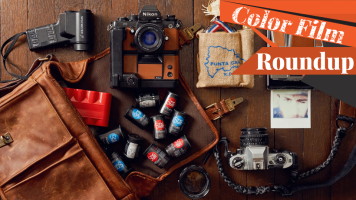
Recently, I wrote the Black-and-White Film Roundup, and started the article with the claim that “despite film being ‘dead,’ there’s still a surprising number of different and unique films to choose from in 2020.” The same holds true for color films, both negative and reversal types, with many contemporary classics still readily available, along with a surprising number of new films recently arriving on the scene.
Let’s take a look at the

If you wanted to be considered a professional photographer in 1979, the year the Olympus XA was released, your choice of cameras was limited. For some in the upper reaches of the profession, Leica was still the only option. For the rest of us, there were large, solid machines like the Nikon F2 and the Hasselblad 500C/M.
But I also wanted something smaller and easier to use when I didn’t have a paying client to impress.
Above photograph: Luxor, Egypt 1982 The Olympus XA is a low-profile camera that doesn’t call attention to itself. Ektachrome
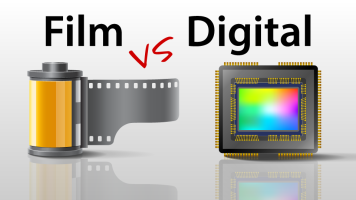
The debate between analog film photography versus digital photography has been settled for most of the photographing populace. This just in… digital is, by far, the choice of today and the future. This article is not about dredging up that debate for the modern photographer—instead, let’s take a look at that discussion through the lens of someone just starting out in photography—a first-year photo student or someone interested in picking up the hobby.
To qualify the analysis, permit me to add my personal background. I started in photography
Where do I begin with the Nikon F4? Is my love of this camera rooted in the fact that four is my favorite number? Is it because one of my favorite jet warplanes as a child was the McDonnel Douglas F-4 Phantom II? Or, is the fact that I just love the look of Giorgetto Giugiaro’s Italdesign bodywork? Is it because when I started out in photography with my Nikon N6006 the F4 was at the top of Nikon’s food chain?

For as long as I can remember, the heavy chunk of black Bakelite and chrome nicknamed “The Brick,” was a staple on a shelf in my parents’ living room. Officially known as the Argus C3, this solid pointy-edged rangefinder is said to be one of the most popular cameras in history, selling about 2 million units during its extraordinary 27-year production run, from 1939 to 1966.
While this camera belonged to my father, I have little memory of him using it, and even less of a sense for when and how he acquired it, or which images were made with the
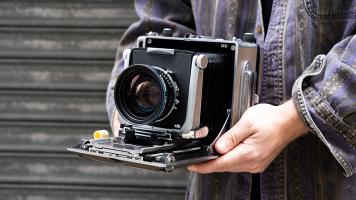
My Linhof Super Technika V is probably the camera I can least justify owning, but it’s probably also my most cherished camera. For me, it represents the type of camera I dreamt of owning, but thought I probably never would. The reason for this? It’s a luxurious camera. Akin to something like a Leica of large format, Linhof is a premium brand known for making the best of the best, having strong niche appeal and, of course, coming in at a premium price. I previously wrote about the
by Allan Weitz ·Posted
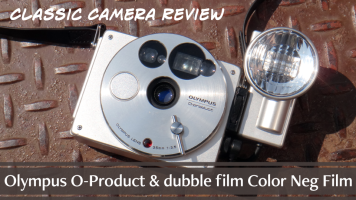
The Olympus O-Product is a perfect real-world example of the phrase ‘You can’t tell a book by its cover.” Designed and produced in 1988 by industrial designer Naoki Sakai of Water Design to commemorate the 70th anniversary of Olympus cameras, under its skin the all-aluminum, retro-styled Olympus O-Product was in fact a plain Jane Olympus Infinity Junior point-and-shoot camera. Produced in a limited run of 20,000 units - half of which were strictly for the Japanese market, the O-Product was also about as tongue-in-cheek as production
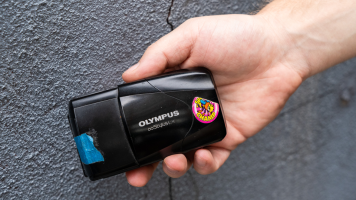
Printed on the back of the camera is “ULTRA COMPACT 35mm CAMERA,” which is an apt descriptor of the Olympus Stylus Epic. However, this certainly isn’t a fully fleshed-out description of what this camera is, what it can do, or how well-received this camera has been since it was introduced in 1997. Known outside of North America as the μ[mju:]-II (or just “mju-II”), the Stylus Epic could be considered one of the cult classics of premium 35mm point-and-shoots. Compared to some of the other popular cameras from Contax, Yashica, Konica, Ricoh, and

Just when you thought you were saved from the Upside Down, Polaroid Originals brings you the Stranger Things Edition i-Type Camera and instant film. The original OneStep Polaroid camera, from 1977 (for those of you who may remember the 1970s), was the inspiration for the design of this analog instant camera. However, in an homage to its television-series namesake, the camera features a design like that iconic Polaroid of
by Allan Weitz ·Posted
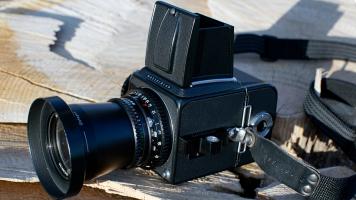
Early in my career I took a job as a one-man studio photographer for a Swedish toy company called Creative Playthings. There were two camera systems I was required to know–a 35mm Nikon F system and a medium-format Hasselblad system. I knew the Nikon system inside out. I lied about the Hasselblads—I had never touched one, and I spent my first day figuring out how to use it. The job lasted two years. My love for Hasselblad cameras continues to this very day.
Photographs © 2019 Allan Weitz
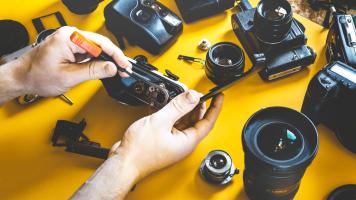
Over the past fifteen years, we have seen the rise of the digital camera and the general abandonment of film cameras, with many photographers giving them away or just leaving them to collect dust. It’s also true that with digital cameras, we tend to replace rather than repair, either due to costs associated with the repair or the fact that digital cameras have significantly improved, generation to generation. This has led to a demise of the once-common camera repair shops that dotted most major cities or suburban strip malls. But of course,
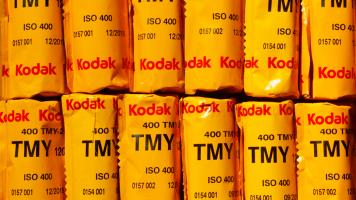
Throughout my career as a film photographer, I’ve gone through numerous favorite films. With the unfortunate, yet consistent, demise of some of my favorites over the years, I’ve had to re-adjust and adapt to new films. While nothing can ever replace my true all-time beloved film (Kodak Tri-X 320, in 220) since it’s discontinuation, I’ve learned to love Kodak T-Max 400 as my go-to choice for pretty much anything and everything. It’ll never have

Thanks to the ongoing film revival, B&H currently sells more than 200 unique 35mm film stocks. That's an astonishing number of choices, from major manufacturers like Kodak, Ilford, and Fujifilm, to smaller suppliers like Foma, Rollei, Agfa, Lomography, Kentmere, and Arista.
Obviously, we can't include comprehensive info and hands-on impressions for the scores of films currently available, but we will recommend some black-and white, color negative, and color

Megapixels. Pixel pitch. Flange distance. Inner diameter. Sensor ratings. Video specs. Frame rates. When did photography leave the fun side of the island? Well, for one product category at B&H Photo, photography is still pure, exciting, organic, and freaking fun. If you want to escape from under the at-times-unbearable technological avalanche of digital photography, I have a solution for you: Holga and Lomography cameras. [Note: Millennials might be