Photography
- Recently Added
- Popularity
- Name
About 644 filtered results

by Shawn C. Steiner · Posted
Pitting mirrorless against DSLRs has been happening for a decade. The variables have also completely changed after the past couple of years. This year saw the introduction of just two DSLRs from Canon and a development
686 Views· Posted
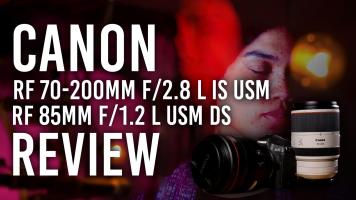
Canon just announced two exciting new lenses: the RF 70-200mm f/2.8L IS USM and the RF 85mm f/1.2L USM DS. We put these lenses to the test in a portrait session. We were impressed by how lightweight and compact the 70-200mm is and tried out its Stabilizer Mode 3 and 2.3ft minimum focusing distance. We also looked at the Defocus Smoothing of the 85mm,

by Shawn C. Steiner · Posted
To say I was a bit surprised to learn that Sony's latest full-frame release was the a7R IV would be an understatement. There were plenty of other picks that I thought would be upgraded first (a7S III anyone?). Fortunately, this is no minor tweak, even though it may look like it on first glance. We are seeing a brand-new 61MP CMOS sensor, an updated physical design that signals it may be the fourth try that is charmed, and various other
by Shawn C. Steiner · Posted
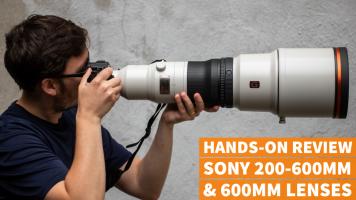
Big lenses are a big deal for Sony mirrorless, and the latest are its biggest and best yet. The just-launched FE 600mm f/4 GM OSS Lens and FE 200-600mm f/5.6-6.3 G OSS Lens are impressive by their specs with both reaching the new maximum focal length of Sony's entire lineup.
The Biggest and Best Sony Lens: the 600mm Prime
With the
by Allan Weitz · Posted
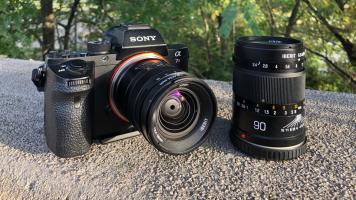
If KIPON IBERIT manual focus lenses seem “deja-vu-ish” to you, it’s probably because they were once marketed under the name HandeVision IBERIT, which was a partnership between German optics manufacturer IB/E Optics and the Chinese Shanghai Transvision Photographic Equipment company which, as you might have guessed, is based in China.
All KIPON IBERIT lenses feature maximum apertures of f/2.4, 58mm filter threads, solid, all-metal construction, and engraved depth-of-field and focus-distance scales. Plastic rear caps and 58mm metal screw-in
by Todd Vorenkamp · Posted
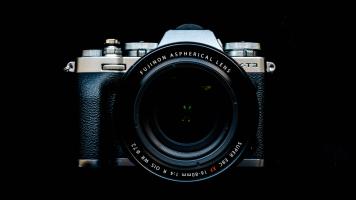
Did you just tune in here for the pictures and pizza? If so, I will save you the trouble of reading the rest of the text by telling you that the Fujifilm XF 16-80mm f/4 R OIS WR lens is very good. Compact, sharp, light, beyond silent, and almost perfect; the lens is sure to make a lot of Fujifilm X shooters delighted.

1,102 Views· Posted
We took the Nikon Z6 Mirrorless Camera Filmmaker Kit out on a night shoot to test the camera's low-light capabilities. By combining the Z6 with the Atomos Ninja V, this kit gives you added options such as N-Log, 10 bit 4:2:2 color and
by Allan Weitz · Posted
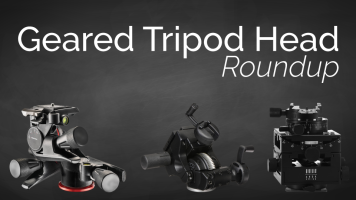
When photographing situations that require exacting camera positioning, a geared tripod head should be at the top of your must-have list. Why a geared head? In a word: precision. When photographing architecture or similar venues in which it’s imperative that the camera and lens be level to the ground, if your camera is even slightly askew on the horizontal and/or vertical planes, you’re skunked.
What separates geared heads conventional ball and tilt-pan style tripod heads is that geared heads enable you to position your camera independently
by Todd Vorenkamp · Posted
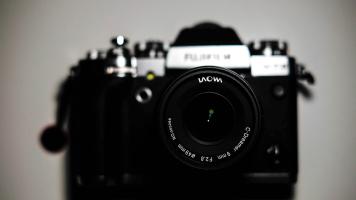
If Venus Optics were an athlete, its motto for the Laowa lens line would not be “Farther, faster, stronger,” but, “Wider, Closer, and Even Wider and Even Closer.” One look at the Venus Optics Laowa lens lineup and you will see that the company is, with a couple of exceptions, carving out the turf in the ultra-wide-angle lens and macro-lens markets.
Photographs ©Todd Vorenkamp

by Boyd Hagen · Posted
If you wanted to be considered a professional photographer in 1979, the year the Olympus XA was released, your choice of cameras was limited. For some in the upper reaches of the profession, Leica was still the only option. For the rest of us, there were large, solid machines like the Nikon F2 and the Hasselblad 500C/M.
But I also wanted something smaller and easier to use when I didn’t have a paying client to impress.
Above photograph: Luxor, Egypt 1982 The Olympus XA is a low-profile camera that doesn’t call attention to itself. Ektachrome

by Todd Vorenkamp · Posted
How difficult is it to be a virtually brand-new lens-manufacturing company in today’s digital world? I am guessing it is not easy. Luckily, you have the Internet available as a marketing tool, but you are also entering a competitive arena to battle for sales against several companies that are more than 100 years old and have passionate and dedicated brand loyalists as their customers. Enter 7Artisans—a true startup in the world of lens manufacturers. Many “off-
by Allan Weitz · Posted
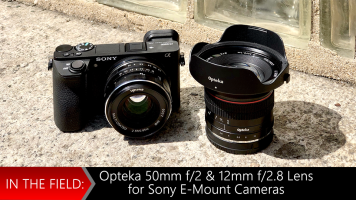
Opteka, a Chinese optical manufacturer, has been producing manual-focus lenses and lens accessories for the consumer market since 2002. Like other lenses in this series, Opteka lenses are designed for photo enthusiasts who want to expand their lens choices without having to expand their credit line.
For this review we included two manual-focus Opteka lenses: the Opteka 50mm f/2 lens for Sony E-mount cameras, which has the FoV of a

by Allan Weitz · Posted
Have you ever wondered why the design, specs, and selling prices of Rokinon, Samyang, and Bower lenses seldom differ from one another? This is because nameplates aside, they’re one and the same. Why? It all has to do with regional distribution agreements. In North and South America, a company named Elite

970 Views· Posted
The new C1 Plus from Profoto is a high-quality, handheld flash and continuous light unit that syncs perfectly with your smartphone. We took it out for a test run in the streets of New York City to see how this light performs. We also take a quick look at the Profoto C1. Both models work with your smartphone and are great for photographers and content creators
by Todd Vorenkamp · Posted
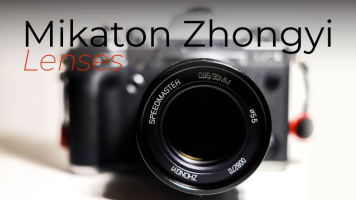
Enter the Speedmaster! Since 2014, Mitakon Zhongyi has been making its rival version of the legendary Leica Noctilux—the Mitakon Zhongyi Speedmaster. Today, the company sells the 50mm f/0.95