Photography
- Recently Added
- Popularity
- Name
About 426 filtered results

by Jill Waterman · Posted
For photography enthusiasts seeking to expand their horizons from pictures made with a mobile phone or a point-and-shoot, the major benefit in of upgrading to a DSLR or mirrorless camera system is the ability to swap out different lenses to fit your specific needs. Prime lenses are available in all lengths and varieties and offer numerous advantages in performance when compared to their zoom-lens brethren. Also, the particular choices associated with sticking to a specific focal length can help improve your photographic technique, as well as

by Cory Rice · Posted
Looking for a light stand? Seems like a simple task, until you head to the category and find that there are hundreds of options, each with its own set of features and specifications, which can make the whole experience a little overwhelming. We are here to help. Whether you are a beginner or experienced photographer, choosing the right light stand comes down to answering the same set of questions. This guide will take you through them one at a time.
How Heavy Is Your Light?
The most important job of any light stand is to provide a solid,

by Allan Weitz · Posted
How many times have you looked at something and said, “Why didn’t I think of that?” That’s exactly what I said the first time I saw a miniature tripod made by JOBY. They’re brilliant, they perform as advertised, and they’re as popular among shooters as ice pops on a hot summer day.
Designed to handle a range of weight loads and available in a variety of configurations, from JOBY’s ever-popular GorillaPod

by Shawn C. Steiner · Posted
Considering the amount of video content now consumed daily by most people, it’s becoming harder and harder for photographers to isolate themselves fully from video. It’s an asset, and practically every DSLR and mirrorless camera made in the past five years not only has video recording but has near-cinema-quality video.
Whether you are learning video for work, want to use your best camera for family videos, or perhaps just want to gain a following online, there are some good tools you should acquire.
For Better Audio: Microphone
One thing

by Shawn C. Steiner · Posted
To answer the question posed by fellow writer Todd Vorenkamp in his article about the venerable 50mm prime, the lens I would choose if I were to be stranded on a desert island would have to be a 35mm prime. Sure, the 50mm is an old and reliable choice that should cover most subjects, but it doesn’t work amazingly for anything specific and, frankly, I think it’s a little boring these days. The 35mm, on full-frame of
by John Harris · Posted
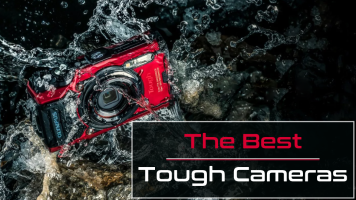
Waterproof, durable, and versatile are three of the best descriptors for the point-and-shoot cameras that are commonly known as “tough” cameras. In a camera market that has seen smartphones become our de facto compact cameras, tough cameras have filled an important niche, satisfying the needs of a range of photographers who want a stand-alone camera that can take high-quality images and be safely used underwater, while hiking or skiing or poolside. They are a great vacation camera or an everyday “don’t worry about it” camera and very useful if

by Allan Weitz · Posted
Macro photographs enable you to capture in-your-face close-ups of flowers, bugs, peeling paint, and—depending on your personal aesthetics—anything encrusted in rust. The following are 10 gift ideas designed to help you with tight close-ups of objects, rusty or otherwise.
1. Macro Lenses
Macro lenses are specifically designed to capture sharp close-up photographs. Available in
by Bjorn Petersen · Posted
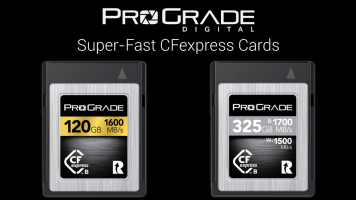
The state of memory cards is evolving almost as quickly as digital cameras themselves, but I think we’ve finally hit a new standard that has some staying power. CFexpress is the fast and robust memory format that’s being employed by some of the hottest new cameras, including Canon’s EOS R5 and C300/500, Nikon’s D6, Z 6 and Z 7, and Panasonic’s S1 and S1R, among others, and is a card format that’s sure to be seen in future cameras as well. At the forefront of this new memory card format is ProGrade Digital, who has recently released an improved

by Cory Rice · Posted
Ahhhhhhhh, the hot summer sun, cool waves along the shore, sand between your toes—what’s not to love about the beach? If you are a camera, all of the above. Extreme heat, corrosive saltwater, and tiny particles can destroy a vulnerable camera faster than you can slather on sunscreen. Luckily, with a little preparation, you can safely take photographs at the beach while minimizing risk to your gear. Read on to learn how.
Tough Cameras
If you plan on making a habit of bringing a camera to the beach, your best bet is to invest in a

Posted
When it comes to moon photography, you might have many questions. How do you prepare for a moon photo shoot? What camera settings should you use? What gear do you need? Maria answers all these questions as she shows you how to photograph the moon!
Read more moon photography tips at B&H Explora:
14 Tips for Shooting the Moon

by John Harris · Posted
If you have someone under 20 years old in your life, you probably know that photo prints are in fashion again. I’m not necessarily referring to darkroom prints on fiber paper, but prints made from disposable cameras that appear in an envelope after being sent “somewhere” and, more so, prints from instant cameras. FUJIFILM and the INSTAX series of cameras have been popular for years, but several other brands have entered the market and are making
by John Harris · Posted
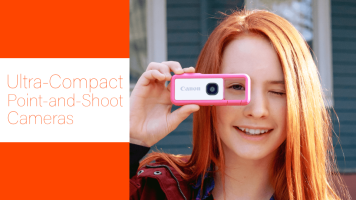
The supposed death of the point-and-shoot camera notwithstanding, there are many types of compact cameras available for the novice and pro, and many reasons to enjoy a point-and-shoot instead of the phone camera. At prices of less than $100 and lengths less than 4", there exists a group of stand-alone cameras that offers features most smartphones still do not—optical zoom lenses, image stabilization, and grips you can really grip. Of course, one photographer’s definition of compact is never the same as another’s, and almost every type of

by Bjorn Petersen · Posted
One of the best things about shooting film is the complete control you have over the process, from film choice and exposure to development and either scanning or printing. We spend a lot of time focusing on the different films you can use and then a lot of time on how to produce your finished images from that film, but there’s general oversight on the development stage. I’m certainly guilty of not paying much attention to developing since it’s become a more automated, mindless process for me in recent years, but every once in a while, I like

by Allan Weitz · Posted
Camera gear protectors accomplish several goals. If you should accidentally drop or otherwise bump your camera or lens against a hard surface, depending on the particulars—including the degree and point of impact—camera protectors can minimize, if not prevent, serious damage or dents to your gear, and possibly spare you the time and expense of repairs. Depending on the product, many gear protective products offer varying degrees of added weather- and moisture proofing, which is important if you have a proclivity to photograph in inclement
by Cory Rice · Posted
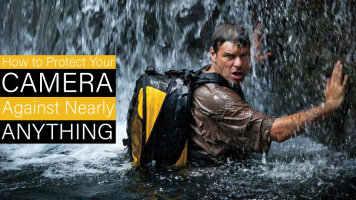
The phrase “dust and water resistant” has become so pervasive in the camera industry that it nearly comes as a given with any new camera or lens. Nobody wants to invest a considerable chunk of money on a camera only to have it melt in the rain like the Wicked Witch of the West. The same goes for dust, dirt, and sand—all of which share an unwavering attraction to camera equipment. But what does “dust and water resistant” mean? Each manufacturer has varying approaches to protecting its camera equipment depending on how it is expected to be used