Photography
- Recently Added
- Popularity
- Name
About 62 filtered results

by Bjorn Petersen · Posted
When assembling a kit of lenses for photographing a wedding, one should take into consideration the location in which the wedding is taking place, the number of guests and, of course, the type of imagery you are seeking to create. To best represent a wedding in a dynamic manner, it is often preferable to have a range of lenses to achieve different perspectives of the event, rather than maintaining a constant perspective of your subject matter. A wide-angle lens, specifically, is a highly effective tool for capturing many of the scenes that

by Mathew Malwitz · Posted
If renowned landscape photographer Ansel Adams were alive today, he would surely be astounded at the variety of cameras available. When compared to his hulking 8x10 view camera, today’s cameras look like child’s play. He would also be flabbergasted at the image quality these little devices produce.
This year, we have a bottomless well of cameras
by Luke Rollins · Posted
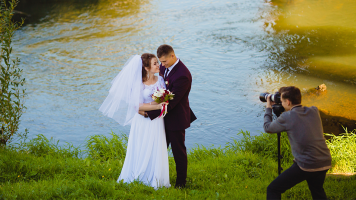
Many hobbyists reach a turning point in their craft when they decide to pursue wedding photography seriously. With the transition to pro comes the task of updating your lens kit accordingly, and most photographers would agree that investing in quality glass is essential. Unlike the rapid turnover of camera bodies, lenses will last for years and can make all the difference in creating quality images. Understanding what some of the best available options are will help you invest appropriately.
What to Consider
Weddings are long affairs, often

by Mathew Malwitz · Posted
Typically confined to the northernmost latitudes of our planet, the northern lights—or "aurora borealis"—are a natural spectacle many dream of seeing. Recently, it may seem like auroras are occurring more often and are visibly farther south than ever before. Maybe you've already seen one or even photographed one with your phone.
While rare, exceptionally powerful auroras have been seen with the naked eye as far south as Alabama. These are uncommon, but in mid-latitude states, visible auroras are a bit more frequent. Last summer, I found myself

by Mathew Malwitz · Posted
Wedding and portrait photographers looking for a lightweight, compact system with exceptional performance need look no further than the FUJIFILM X cameras and lenses. While the size and weight advantage of mirrorless cameras spans from Micro Four Thirds to full frame, the APS-C sensors in the FUJIFILM X system allow the cameras and lenses to be relatively small and light. Full-frame mirrorless is attractive to many, but the portability advantage of APS-C sized lenses is not to be understated.
For those looking to one-up the full-frame shooters

by Mathew Malwitz · Posted
There’s more to landscape photography than just cameras and lenses. While these are the most essential pieces of gear in our bag, they can’t do it all. We need to rely on other tools to take our craft to the next level. Whether it be something to stabilize our camera, a way to trigger the camera without shaking it, or a filter to make that blue sky pop, there’s a tool to help us do it all.
Accessories
Remote Shutter Release
To take a photo without shaking the camera, you’ll want to use

by Todd Vorenkamp · Posted
The Micro Four Thirds system is becoming popular among a passionate group of wedding photographers. The compact size of the cameras and lens system, as well as the sheer number of available lenses from, OM System, Panasonic, and other manufacturers, not to mention the nearly limitless option of adapted lenses, means that the wedding photographer has many options for capturing the action.
It’s worth noting that OM System, formerly known as Olympus, has lenses with both branding. As lenses are updated, they’ll adopt the OM system name, but as

by Mathew Malwitz · Posted
Lens selection is a highly personal choice for the professional photographer. Your shooting style, client needs, and cost all factor into how you choose to build your kit. Wedding photographers require a greater variety of lenses as they must cover a diverse assortment of compositions in various environments and lighting conditions. As working professionals, it’s only natural to begin investing in high-quality professional glass. For Canon users, this is the L series.
Easily identified by a thin red line circling the lens barrel, L glass is

by Bjorn Petersen · Posted
As a student, much of your life is about making choices and sacrifices. “Should I skip this class and sleep in?” or “Should I go to class even though I’m too tired to pay attention?” There are a lot of hard decisions to make as a student, especially if you’re a burgeoning photographer looking to attain professional status.
But, as a student, means are often limited and you need to be more conscious about what gear to add to your kit. What gear is critical and worth the investment versus what are some of the things you can ignore for now and

Posted
Choosing the right camera gear can feel overwhelming, especially when you're just starting out. Whether you're venturing into wildlife photography, launching a portrait business, diving into travel photography and videography, or exploring landscape photography, having the right setup is important. To help you navigate your choices, our resident photographers and videographers share their top gear recommendations based on their own experiences.
0:00 - Intro
0:25 - Portrait Overview
0:45 - Portrait Gear Under $500
1:36 - Under $800
2:22 -

by Todd Vorenkamp · Posted
Leave it to the world of photography to confuse size and speed. In lens-speak, the term “fast glass” refers to lenses with large apertures. In this article we take a look at the lenses with the largest-opening apertures. The aperture is the opening of a lens. The aperture’s size is expressed as a number that shows the ratio of the opening to the lens’s focal length. This number is referred to as an f/number, f/stop, focal

by Bjorn Petersen · Posted

by Todd Vorenkamp · Posted
What is the best lens for landscape photography? The answer is that any camera lens can and will be the perfect lens for capturing a landscape, depending on your viewpoint and the subject. But if a landscape photographer is heading out into the world with a single lens, betting money says they will go with a wide-angle zoom or prime lens affixed to their camera.
How to Choose the Best Focal Length for a Landscape Lens
We started this buying guide by saying that almost any lens could be used as a landscape lens. Let’s refine that premise to

by Rachel Leathe · Posted
No matter what adventure you’re planning, finding the perfect pack is the first step. You don’t want to be ten miles deep in the backcountry, realizing that your bag lacks weather coating, or that the shoulder straps you thought were sufficiently padded now feel like a taut seatbelt. Before you run out and buy your first bag, you’ll need to think deeply about what kinds of pictures you will be taking. Are you more interested in trail hiking or ski touring? Will you be bringing telephoto lenses to photograph wildlife, or will you be taking

by Todd Vorenkamp · Posted
The ubiquitous shoulder-mounted camera bag is a fantastic camera carrying solution for almost any type of photography—except when it comes to wildlife and nature photography. If you are hiking far from civilization and deep into nature—be it a forest, tundra, mountains, desert, or jungle—you’ll likely bring a dedicated hiking backpack. Luckily for nature photographers, camera bag manufacturers and manufacturers of traditional hiking packs have created