Video Lenses
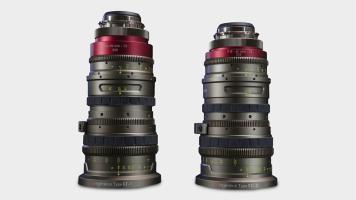
The new EZ series lenses from Angenieux are now available at B&H! This series of zoom lenses was designed from the ground up to be versatile, physically robust, and optically consistent. Currently, the line is based on two zooms, the EZ-1 30-90mm T2 and the EZ-2 15-40mm T2. These lenses offer a constant fast

If you’ve been following the latest goings-on in the video gear market, the Fujinon MK zoom lenses have probably not escaped your gaze. Originally announced in February, Fujifilm declared that the MK lenses would offer features from both its ENG and cinema lens lines. In January, I was beckoned into a tiny meeting room, here at the B&H offices, to see a pre-production version of what would be the 18-55mm lens, and learn about the

Watch Doug Guerra as he focuses his attention on the Canon 70-200mm T4.4 Compact-Servo zoom lens. The video will include footage shot through the 70-200mm compact -servo lens, as well as footage shot through a similar Canon lens that is not designed for the demands of cinema and ENG production. Guerra will also highlight the features of the lens including its fully functional EF mount that provides power through the body, the zoom rocker, and
Without a doubt, one of the requirements of a cine/video zoom lens is that it holds focus throughout the zoom range. What this means is that with a cine zoom, when you zoom in and focus, as you zoom out, the focus holds and doesn’t drift or require adjustment. In the cine world, this has led to strong spring-less lens mounts and collimation to tolerances of hundredths of an inch. Even in the ENG world, lenses are fitted with a back-focus adjustment, allowing for in-field adjustments, because news cameras didn’t have mounts that were quite as
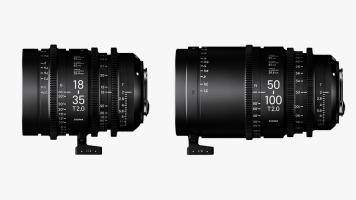
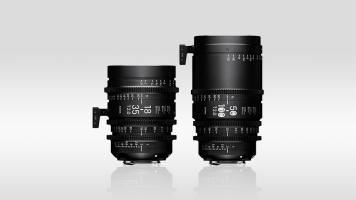
The B&H SuperStore is pleased to announce the introduction of two new Sigma high-speed zooms, designed specifically for digital cinematography. The wide 18-35mm and the longer 50-100mm are available in two popular mount versions: Canon EF 18-35mm, Canon EF 50-100mm,

PTZ stands for “pan/tilt/zoom” and denotes robotic cameras that typically (though not always) have integrated pan/tilt motors and zoom lenses. The Sony EVI series cameras are popular examples. Pan/tilt/zoom cameras may look like outsized surveillance cameras, and in many ways, are like them. They are designed to be installed permanently and can be enclosed in dome housings for protection or aesthetics. However, the benefits of PTZ cameras are

Cinematography, videography, photography: ultimately, it is about showing something in a way that hasn’t been seen before. How you achieve this is a combination of framing, exposure, and post effects. It is the Digital Age—you can create just about any effect you want if you have the time, tools, talent, and software, of course. You can also hire someone to pull it off for you. While either of those options are valid, as you probably know, there is more than one way to skin a cat, so the focus of this article will be practical lens
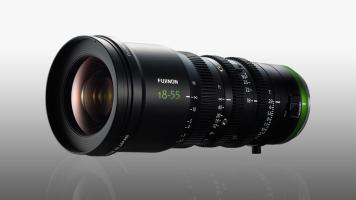
Here at B&H Photo Video, we are pleased to share Fujinon’s introduction of a new pair of cine-style zoom lenses—the 18-55mm T2.9 and the 50-135mm T2.9. Whether your productions are feature or short films, dramatic television series or commercials, the MK lens series provides both the superior look and professional performance

As someone prone to discussing video gear with just about anyone willing to engage in related conversation, one topic that is frequently brought up to me is the price and purpose of professional video gear and the seeming price disparity, in contrast to consumer or prosumer gear. In this installment of pro gear discussions, I will delve into what separates professional cinema lenses from their prosumer and consumer ilk.
Questions that I used to get while I worked in equipment rentals would commonly include, “Why do these cinema lenses cost so

Things aren’t as simple as the days when most video cameras (broadcast and ENG cameras aside) just came with a built-in lens and that was that. Now, between DSLRs, mirrorless cameras being used for video, and cinema cameras that have still-camera lens mounts, one is stuck with the daunting task of picking out a set of lenses.
If I can only choose one lens, what is the best?
First, I would like to dispel any notion that there is one “best” lens. There isn’t. Lenses come in different focal lengths because different shots work best (or at all)
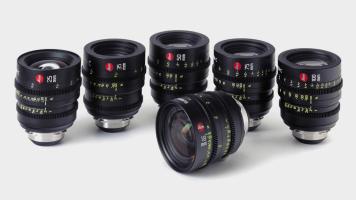
As the market for cine-style lenses has grown, users are faced with an ever-expanding choice of lenses. To make choosing a set easier, several manufacturers have put together kits of popular focal lengths, enabling you to purchase a pre-grouped set of primes. Cine-Style Prime

It always seems to be a battle, doesn’t it? What do I get? Do I go for a kit of prime lenses, or jump into a zoom and then I can pick up primes later? Well, if we all had unlimited resources, we would just get both, but that isn’t always possible for most of us. Having faced this very dilemma in the past, I thought I would share the strengths and weakness of each so you can have a better idea of which is best suited to your needs.
Prime Lenses (Fixed Focal Length)
Prime lenses, also known as fixed focal length lenses, tend to weigh

Anamorphic is everywhere. From epic drama and science-fiction films to football’s cheesy Big Game advertisements, it’s hard to escape that ethereal, otherworldly aesthetic of the “anamorphic look” that just seems to imply the term “high budget.” In this article, I will teach you a few tips and tricks to “fake” this prized and stylized look. Why would anyone want to “fake” the look? The reason is that true anamorphic productions require very expensive, and often rare, lenses that very few filmmakers can afford to own and properly maintain. Some
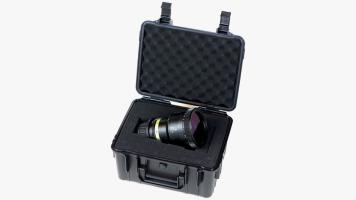
Recently, it’s been a mission for SLR Magic to democratize exotic optics that are normally out of the reach of independent filmmakers and equipment owner-operators. Here at B&H, we are pleased to announce that we have SLR Magic’s 1.33x Anamorphot-CINE and APO HyperPrime CINE Lenses, as well as its selection of
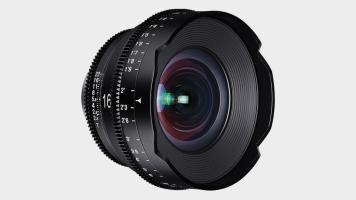
Rokinon adds the 16mm focal length to its lineup of XEEN lenses. With a maximum aperture of T2.6, the 16mm fits neatly between the wider, but half a stop slower 14mm T3.1 and the 24mm T1.5. As with the other