Desktop Computers
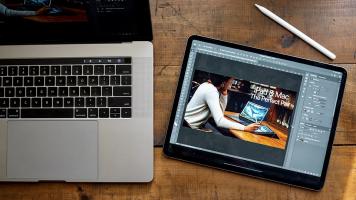
Macs have long been the go-to choice for creative professionals. Still, even with that legendary legacy it’s easy to see that there are a few relatively common features that haven’t quite found their way into the latest Mac. Many users find a solution by adding various accessories, such as a drawing tablet or secondary display. However, I would argue there is a better choice—the iPad. The

If you’re a long-time Windows user, it can be intimidating to switch over to a Mac. You’re probably worried about learning a new operating system, as well as losing all your data. However, with the Migration Assistant app from Apple, it’s easy to transfer important data from your Windows computer to the Mac. With Apple recently updating some of its Mac models
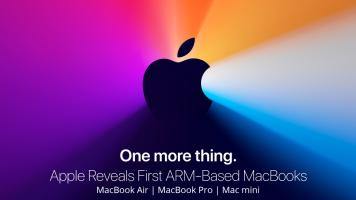
Today, during its special “One More Thing” live event, Apple launched its new line of ARM-based computers: the MacBook Air, Mac mini, and 13" MacBook Pro. Each new Mac features Apple’s new M1 chip, which was designed specifically for Mac computers and kicks off a bold new era for Apple’s computer
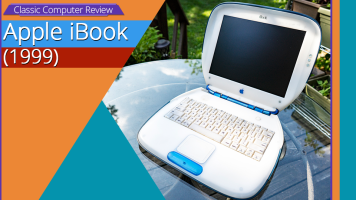
by Allan Weitz ·Posted
My writing career began in the late 1990s when Mike McNamara, the Executive Editor of Popular Photography magazine, offered me an opportunity to write a monthly column.
At first, I was fine working after hours on my Apple Power Macintosh G3 desktop, which featured a speedy-at-the-time 266MHz 5600rpm Motorola CPU, a 4GB hard-drive, Mac OS 8, and a choice of a floppy drive, a Zip Drive, or a CD Reader/Writer for transferring and backing up data and image files.
In crafting its Mac mini (Early 2020), Apple chose to focus on the ever-expanding storage needs of its users. While the Mac mini may be on the smaller side in terms of its physical size, that in no way means that its user base has equally tiny storage needs, and thanks to PCIe M.2 SSDs, larger capacities can fit in smaller form factors. So, what does this mean for the Mac mini? The base SSD capacity is now 256GB, which is up


While huge screens are taking off lately, many of us still appreciate more manageable sizes and resolutions, as long as image quality is top notch. That is the appeal of BenQ’s latest photography-oriented display: the SW240 24.1" PhotoVue IPS Monitor. It stars BenQ’s AQCOLOR technology for “Accurate Reproduction,” one of the most critical features of any display during the editing process, and can cover up to 99% of Adobe RGB for more true-to-life
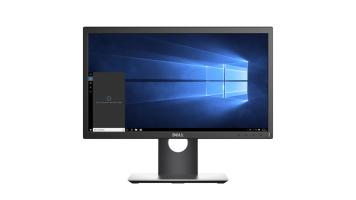
Whether at work or at home, having an additional monitor makes life easier. You’ll no longer have to constantly minimize or “alt-tab” through multiple windows to check documents, edit spreadsheets, or answer instant messages. With multiple displays, you’ll have more screen real estate so you can keep what matters most on top at all times. Dell’s P-Series monitors, available in 19
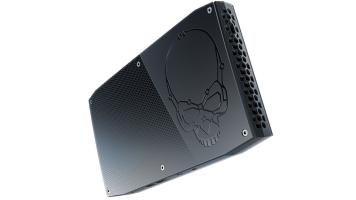
Today’s Intel® Next Unit of Computing (NUC) covers a wider range of needs by sporting cutting-edge technologies such as a 6th-generation Intel® Core™ i7-6770HQ processor and a Thunderbolt 3 port. Compared to previous versions of the Intel NUC series, this “Skull Canyon” version comes with a redesigned chassis that features

It used to be a binary choice: Do you go with the Mac Pro and purchase peripherals as needed, or do you want to save space with an iMac? Souped up, the iMac could handle large track counts and heavy processing. The Mac Pro, on the other hand, could handle the most demanding, CPU-hogging tasks for pro audio, including post-production

For many years, professionals around the globe have been using Mac desktop computers to create some of the most impressive content in the video world. This is, in part, because industry-standard software suites, including Apple’s own Final Cut Pro, Adobe’s Premiere Pro and After Effects, and Blackmagic Design’s DaVinci Resolve, run exceptionally well on macOS.
iMac Pro
Creative professionals and video editors have been clamoring for a new “Pro” Mac, and Apple has delivered that in the surprising
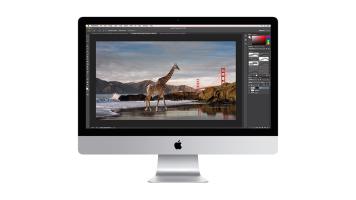
Among Apple’s latest taglines is, “Power to the pro” and, if you are looking for the ultimate photo editing experience, you can get on a Mac platform—the desktop models are where you are going to want to look. There are currently three main series to check out if you want a Mac workstation: the iMac Pro, iMac, and Mac Pro.
iMac Pro
I think many people would be surprised if, a couple of years ago, you told them an iMac would be the most powerful machine Apple makes. Well, that is certainly the case since the release of the
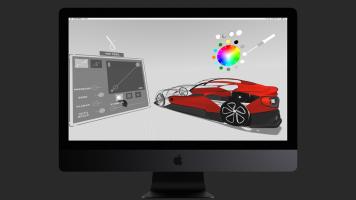
For serious designers, Apple’s Mac desktops offer powerful, all-in-one performance capable of bringing any task to life. Thanks to multiple configuration options, including choices on RAM, SSD drive, screen size, and connectivity options, there’s a Mac for every level of user.
iMac and iMac Pro
For most designers, either the iMac or iMac Pro will be an excellent solution. Featuring hi-res graphics, a ton of storage and RAM, and plenty
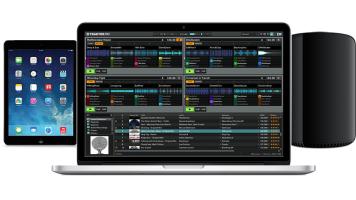
If you have five recording engineers or producers in a room, you will undoubtedly see five different approaches to any one task, all equally successful. A comfortable workflow is a key component to just about every creative pursuit, and your typical modern recording or production studio is going to be centered around your computer (to the chagrin of tape-only purists).
Even with the multitude of approaches different music makers have, it is no secret that Macs and their more recent iOS counterparts have long been the preferred computing
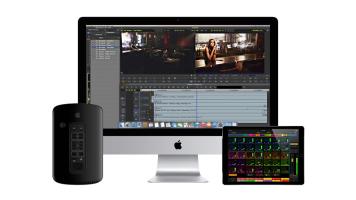
For a long time, professionals the world over have been using Apple computers to create some of the most notable content available. It says something about a company when its customers refuse to use anything but the products made by that company. While it may seem “cultish” to some, there’s a good reason for it. Apple computers have generally always been stable, reliable, innovative, and run some fantastic professional software with aplomb. Full disclosure—I am a Mac user and I own an iPhone, but the reason I own them is not necessarily