Pro Audio
- Recently Added
- Popularity
- Name
About 19 filtered results

by Freddy Gerngross · Posted
Since its founding in 1992, DPA Microphones has gained a prestigious reputation in the audio industry for their mics' exceptional quality, crystalline transparency, and rugged and reliable build quality. And while DPA's microphones have found their way onto the stage with Beyonce, onto the sets of Game of Thrones, and into the concert halls of the world's greatest orchestras, what's perhaps most impactful to our world is the contributions they've made to the scientific community: DPA's microphones have enabled advancements in medicine,

by Gabby Bloch · Posted
If you’ve just started diving into the world of microphones and are overwhelmed by all of the options out there, you’re not alone. There is a myriad of mic types to choose from, and it can be challenging to understand how each one works. So, we’re going to give you a brief breakdown of the different categories of microphones to help you find the most suitable type for your needs.
Condenser Microphones
Large-Diaphragm Condenser Microphone
If you’re recording vocals, it’s likely that you will be using a

by Gabby Bloch · Posted
Whether you're a freelance journalist, vlogger, independent filmmaker, or rising influencer, a shotgun microphone is one of the most important tools you can add to your production kit. But what exactly is a shotgun microphone? How does it work and when should you use it? Let's look into and the ins and outs of shotgun mics, and explore some microphone recommendations that would best suit your recording needs.
A shotgun mic is designed to pick up sound from one specific

by Gabby Bloch · Posted
Whether you’re a freelance journalist, interviewer, director, or vlogger, a lavalier mic (also known as a lapel mic) can be a powerful tool in the right situation. In this guide we’ll explore what lavalier mics are, how they work, the different types, as well as some recommendations and tips on how to use them effectively.
What Is a Lavalier Mic?
A lavalier mic is a small clip-on mic that is meant to be attached to clothing, typically around the collarbone or upper chest area. They're designed to capture vocals in proximity and make recording

Posted
What makes Shure's Nexadyne 8/C Cardioid and 8/S Supercardioid mics ideal for live vocals? Andrew gets technical and shares the engineering that went into creating the Nexadyne series. You'll also see a comparison between these
Posted
If you have a phone full of rough song ideas and recordings and are wondering what to do with them, this workshop is for you. Join 25-year music industry veteran Cliff Goldmacher as he walks you through the process, from defining a rough recording to the overall importance of why sound quality matters when capturing your ideas. Whether you’re recording just vocals or an entire song, a rough recording can help you get your ideas down before recording a song in studio!
How do you make your own rough recordings for song ideas? Tell us about it in

by Jason T · Posted
When I used to hear people talk about recording vocals in their bedroom, the first thing that would enter my mind is the annoying sound of every single noise in the house along with the voice in the recorded audio. Sure, you can install some acoustic treatment panels and use a pop screen, but getting that supertight, vocal booth sound in your bedroom is pretty tough without actually building a vocal booth. Plus, acoustic treatment can be unsightly, and while you may think it looks cool, your partner or family members may think it’s

by Nicholas Messitte · Posted
In this article, we’re going to cover how to set up an audio stream for your house of worship, so that you might reach people in their time of need. We will start by providing you options that let your congregation gather in the safety of their own vehicles in your parking lot—specifically, short-throw FM transmitters and networked solutions. Finally, we’ll cover ways to stream your service across the Internet as a whole, so you can reach your parishioners in their own homes.
Localized Broadcasting Solutions
Our first option involves FM
by Nicholas Messitte · Posted
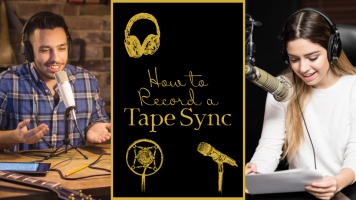
Let’s talk about the Tape Sync. It’s a term you may not know if you work in music or film. However, the Tape Sync is a good gig in the radio and podcast work, because it can supplement your income, especially during relatively slow weeks.
“Tape Sync” is a technical term for a remote interview. If you listen to talk radio, often you’ll hear your favorite host interview a guest. They sound like they’re sitting in the same room—but frequently, they are not. Sure, the host was in the studio, but the guest was hundreds of miles away.
How does it

1,276 Views· Posted
In this second video in the Audio for Video series, AB discusses ways to choose the best mic for the type of content you’re recording. He discusses pickup patterns, lavalier and shotgun mics, mic placement, and more. If you want to know how to use the right mic to capture audio for different video applications effectively, this is a great resource.
If you would like to continue reading about the Audio for Video series, be sure to check out all of our related content

by Nicholas Messitte · Posted
Podcasts. Still strong in the boom phase, it’s a good time to get in while the getting is good, and you’ll want to do whatever you can to make your podcast stand out. But here’s the thing: different types of podcasts require different ways of working. So, we here at B&H thought we’d give you a five-tip primer to get you inspired. Be sure you check out the last one—it’s the most important tip by far.
Tips for a Two-Way
A two-way is a show that typically involves one host and one guest. Pieces of gear I’d recommend for such an interview

by Phillip Nichol… · Posted
Some microphones look the same, some look wildly different. Reading each manufacturer’s product description leaves you with the impression that every mic is the best for everything. Microphones in the sub-$100 range are often described the same way as mics in the territory of several thousand dollars. So, how do you determine what sets them apart? You can get your first clue in those ultra-boring and seemingly pointless specifications. I know it would be much more fun to just try all the mics, but that’s not possible, is it? As you dive into

by jaime traba · Posted
The frequencies they are a-changing. If you followed the unfolding drama of the FCC Incentive Auction, in 2016 and 2017, this comes as no surprise to you. If "FCC Auction" doesn't hold special meaning to you yet, you need to prepare for some important news. Anyone currently using wireless systems that operate in the 600 MHz band should pay close attention to avoid breaking laws and proper functionality. It's quite possible, and even likely, that you'll have to trade in your current system. Many wireless mic systems operating in the 600 MHz
by Nicholas Messitte · Posted
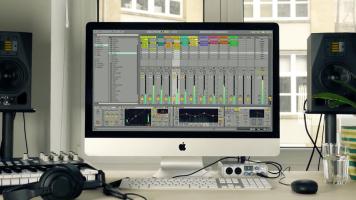
Hi there! Do you have a rich, velvety voice that people compliment all the time? Do you have secret desires to cut out of your nine-to-five grind and get into the illustrious world of voice-overs? Of course you do! (You clicked the headline, didn’t you?)
Let me start off by telling you two things: To get sustainable voice-over work is harder than you’d think—lots of people want to do it, and networking, no matter the industry, is a deleterious task worthy of all your contempt. However, it’s never been easier to produce professional-grade

by BH Online Videos · Posted
In this video, Sonic Scoop’s Justin Colletti takes to Braund studios to show you how to mic an acoustic guitar with two microphones. Watch as he tests out spaced pair, X/Y, vertical X/Y, ORTF, and mid/side configurations; more importantly, hear the difference from example to example. You’ll not only learn how to mic an acoustic in a stereo fashion—you’ll learn when to do so, and when to go mono instead.