Photography
- Recently Added
- Popularity
- Name
About 644 filtered results
by Shawn C. Steiner · Posted
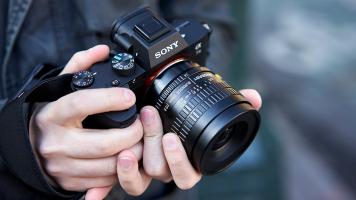
Lensbaby has always been good at creating unique and interesting lenses, and the Burnside 35mm f/2.8 is merely a continuation of that tradition, with its distinct swirly bokeh and dual-aperture design for controllable vignetting. Special effects are Lensbaby’s calling card, and the Burnside draws on that experience by using the swirl from the Twist 60 Optic and building on it as it joins the company’s relatively recent adventure into
by Bjorn Petersen · Posted
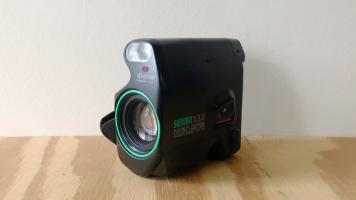
What looks like a camcorder from the 1980s, takes upwards of 75 shots per roll, and is really an SLR with a built-in 3x zoom lens? The answer: the Kyocera/Yashica Samurai X3.0. This uniquely little, albeit somewhat big, camera is a half-frame 35mm film camera, meaning that instead of taking 24 x 36mm images, it records 17 x 24mm images. And since these frames are half the size of a standard 35mm frame, you get twice as many frames per roll. Half-frame camera aside, what really drew me to this camera was how strange and distinctive it looks. It
by Allan Weitz · Posted
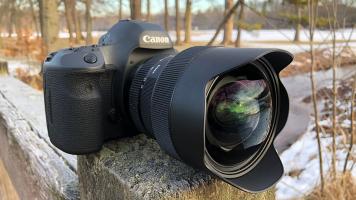
Getting excited about a lens with a 10mm zoom range might sound odd, but when the lens in question is the new Sigma 14-24mm f/2.8 DG HSM Art lens, the excitement is understandable. Available for Canon EF,

by Rowynn Dumont · Posted
The Graflex Speed Graphic, to the touch, is boxy, with a leather side strap for a sturdy on-the-go grip, denoted for its press-style aesthetic. Only those considered truly serious photojournalists from the 1900s-1950s used the Graflex. The camera’s most renowned debut was when Weegee, the newspaper photographer, decided to pick up the camera to capture the seedy underbelly of Manhattan’s Lower East Side during the 1930s and ’40s.
I originally became familiar with the Graflex Speed Graphic when I was a graduate student in San Francisco. My

12,783 Views· Posted
In the following video, photographer David Flores takes a look at Panasonic’s new high-end photo-centric mirrorless model: the Lumix DC-G9. This Micro Four Thirds camera has many distinct features that separate it from the more video-heavy GH-series cameras, especially with updates to the body design. Flores takes the camera out to experiment with the G9’s AF speed, overall image quality, and more. We hope you enjoy the video

by Cory Rice · Posted
If I had to recommend one accessory to photographers getting started with portraits, it would be a reflector, over and over and over. Cheap—especially by photo-gear standards—and extremely versatile, reflectors are matched only by gaffer tape on the scale of photographic utility. Depending upon your needs, they come in all shapes and sizes, from hulking 5 x7-foot behemoths to dainty

by Todd Vorenkamp · Posted
Am I alone in having such strong tactile preferences that they guide purchase decisions for me? In the world of threaded cable releases, one—the Nikon AR-3 Threaded Cable Release—stands alone, not for its diverse functionality or plethora of technological capabilities—they all do the exact same thing—but simply because of the way it feels.
by Shawn C. Steiner · Posted
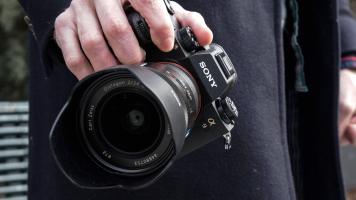
After working with a combination of the Sony a7R II and a7S II for years, switching out as the scenario dictated, I was surprised by how well the a9 managed to replace both of them as the most used camera in my arsenal. When I first reviewed the a9, when it was released, I was impressed with its performance, but a sports camera isn’t exactly the primary thing on my list when most of my photos are of food and the other half of my work

by Allan Weitz · Posted
In the 78 years that Kodak Tri-X has been in existence, there have been finer-grained or faster films available, as well as films with more exposure latitude, better contrast, and even better tonality—but none of them have the signature look and the history of Tri-X.
Tri-X was originally released in 1940 as a 4 x 5" sheet film, followed by 35mm and 120 roll film versions, in 1954. It wasn’t long before the name Tri-X became synonymous with black-and-white

by John-Paul Pale… · Posted
Although I’ll always be a film photography enthusiast, one of the things I love about digital cameras is the ability to create a more classic look by adapting vintage glass to DSLR and mirrorless models. Shooting with the optics of yesteryear opens you up to a world of alternatives, some of which are no longer made and, some of which, in my opinion, rival their modern counterparts. While there are modern lenses that offer advantages and improvements, photography isn’t always about maximum sharpness, intense contrast, super saturated colors,

by Cory Rice · Posted
Less than a year after releasing the action-oriented a9, Sony has followed up with a resolution powerhouse in the a7R III camera. As heir to the wildly popular a7R II, the new camera is aimed at still shooters
by Bjorn Petersen · Posted
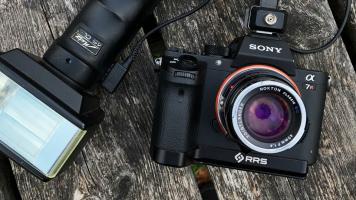
After a long time denying my eventual acceptance of mirrorless cameras, early in 2017 I finally made the switch. No, this isn’t an article about why I switched from so-and-so to so-and-so.Tthis, rather, is about why I have grown to accept—to love—the Sony a7R II for what it is and what it allows me to do. I never felt at a loss with other camera systems, nor do I feel an especially strong kinship to mirrorless over a DSLR (I do still miss my optical

by Bjorn Petersen · Posted
Every photographer has that dream piece of equipment that they aspire to own someday. You know, the one thing that’s just a little bit out of reach, whether because of price or rarity, or even just because you can’t justify owning it. It’s that one piece of gear you think about often and tell yourself that it will change the way you make photographs. No matter how incorrect this statement might be, you hope to someday catch your judgement off guard and splurge on something lavish. Well, maybe I had some loose judgement one day but, after years

by John Harris · Posted
A $10,000, 400mm f/2.8 telephoto lens is awesome, but awesome + sauce is getting that same focal-length reach from a 200mm lens that costs around $800, or even from one that costs $5700. Teleconverters, which are produced by all the major lens manufacturers and by noted secondary makers, mount on your camera to attach your lens for increased telephoto reach. Except for a few exceptions, they enable
by Allan Weitz · Posted
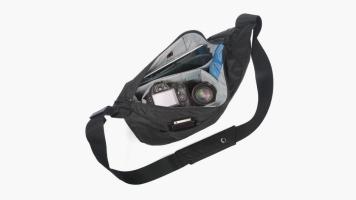
Camera bags: we all love them, and many of us own more than one. Over the years, I’ve owned dozens of bags, and I can justify buying just about all of them. I’ve owned canvas bags, leather bags, and ballistic bags, each of which has its merits. Although I will always love the look, feel, and durability of leather and heavy canvas, I’ve also come to realize leather and canvas bags are, by nature, heavy before you even pack anything in them.
With that in mind, I started looking for lighter-weight alternatives and what I ultimately chose has