Photography
- Recently Added
- Popularity
- Name
About 644 filtered results

by John Harris · Posted
For news and event photography, I completely rely on a 24-70mm f/2.8 lens. I know the advantages of shooting with prime lenses, but for the flexibility required in these (and other) types of photography, a 24-70 is a dependable friend with a sufficiently wide f/2.8 maximum aperture to work interiors with mixed light, the versatility to go wide and cover a room or compose using background and foreground elements, and also to “zoom-in” for two-shots and even portraits. Fortunately, the major lens manufacturers have put a lot of time and thought

by Shawn C. Steiner · Posted
AI flash is finally here! Though in this case it refers to Auto Intelligent instead of the simultaneously exciting and scary thought of artificial intelligence that has caused the fall of humanity in more than one fictional universe. Anyway… today we are referring to Canon’s latest flash, the Speedlite 470EX-AI, which becomes the first on-camera option to have a fully automatic bounce function. Beyond being a fun party trick, the creating of
by Allan Weitz · Posted
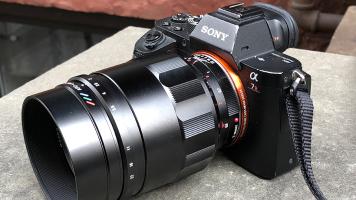
Voigtländer, a division of Japanese lens maker Cosina Optical, is known for producing surprisingly affordable lenses that, with few exceptions, deliver outstanding image quality. One of the company’s latest offerings is the Voigtländer MACRO APO-LANTHAR 65mm f2 ASPH, slightly longer than normal and faster than most macro lenses, which focuses down to 12.2" from the image plane. The new MACRO APO-LANTHAR features 10 elements in 8 groups

by Allan Weitz · Posted
Some cameras challenge you every step of the way. The Fujifilm G617 is such a camera, but the results are worth it. First introduced in 1983, the G617 is a wide-field camera that captures photographs with 3:1 aspect ratios measuring 2.25 x 6.5" (6 x 17 cm). The G617 was designed for shooting landscapes, architecture, and—from personal experience—speedboat catalogs (more on this later).
The G617 is fully mechanical and fully manual—no batteries required. Ever. You compose pictures using the camera’s fixed optical finder, which isn’t coupled to
by Allan Weitz · Posted
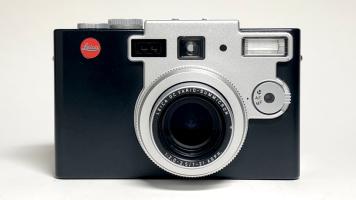
When the first consumer digital cameras began coming to market in the mid-1990s, they were nowhere as svelte and graceful as their analog counterparts. It would take a few more years before the hardware under the skin would come down in size to a point where film and digital cameras could compete in a bathing suit competition, without having to grade them on a curve.
In 2002—eight years before Leica rolled out the M8, the first digital M-series camera, Leica introduced the Digilux 1, the company’s first point-and-shoot collaboration with

by John Harris · Posted
My first thought when asked to test the Cotton Carrier CCS G3 Harness system was, “why would I need a harness? I’ve been operating just fine with basic camera straps over my shoulder for years, and a harness will only impede access to my cameras.” It didn’t take long to realize how wrong I was and, while I may not need a harness, I certainly benefitted from its advantages. Yes, you will need to get past the baby carrier and bullet

by Cory Rice · Posted
In all of the hype surrounding the announcement of Sony’s a7R III, you may have missed the unveiling of the company’s latest flash, the HVL-F60RM. The updated flagship flash prioritizes portability and versatility by slimming down its physical size and adding wireless TTL capabilities. Additionally, the new flash can be accessorized with the
by Cory Rice · Posted
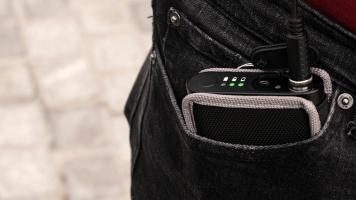
No photographer wants to miss a great shot while waiting on a recycling flash. Bolt’s Cyclone PocketMax Compact Power Pack is designed to save you from the frustration of underexposing a critical moment when shooting an event or trying to capture a fast-moving subject. This 5200mAh lithium-ion battery pack is compatible with select Canon, Nikon, Sony, Nissin, and Bolt flashes, making it an appealing option for photographers who shoot across
by Allan Weitz · Posted
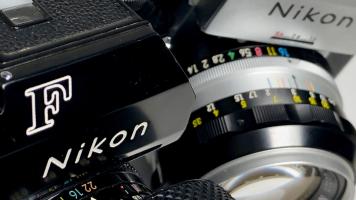
The Nikon F was introduced in 1959. Integrating a newly designed mirror box, pentaprism, and bayonet lens mount with existing components from Nikon’s popular SP rangefinder camera, Nikon’s engineers were able to design a pro-quality 35mm camera that could be used with lenses longer than 135mm without having to resort to a reflex housing, which has its own limitations. Nikon’s management and engineering team wanted a professional-quality reflex camera system that would surpass the limitations of rangefinder cameras and, hopefully, expand the

by Shawn C. Steiner · Posted
Spring has finally arrived, for the most part, and for those looking to spend some time traveling or outdoors, we have been testing an excellent compact lens for you: the Sony E 18-135mm f/3.5-5.6 OSS. Designed for Sony’s APS-C mirrorless cameras, such as the a6500 I used here, this all-in-one offering provides an equivalent zoom

by Todd Vorenkamp · Posted
There is no end in sight for the bokeh craze these days, and Meyer-Optik Görlitz has engineered lenses with that in mind. The new P58 (type Primoplan) 58mm f/1.9 lens is designed to produce a swirly-er form of bokeh and the triplet optical design of the Trioplan 100mm f/2.8 is made for classic “

297 Views· Posted
Join world-renowned travel photographers Ira Block and Colby Brown as they connduct an in-depth discussion about how they got started in photography, the challenges and rewards of travel photography, and how tools like the Sony a7R III have reshaped the way they shoot out in the field. We hope you enjoy the video, and invite you to view the wide selection of other instructional and

by Elizabeth Groeschen · Posted
If you don’t have a pocket-sized camera that can change lenses and offer abundantly more capabilities than your iPhone, or you’re already an Olympus PEN believer, you’re going to want to check out the upgraded Olympus PEN E-PL9. While many of the technical specs haven’t changed between the E-PL8 and E-PL9, enough has been added to make this camera worth the upgrade.
The biggest change, especially if you’re into recording video, is the 4K Video and Still Image Capture From 4K video—both added because of the upgraded Image Processor. Built-In
by Shawn C. Steiner · Posted
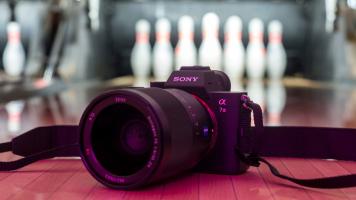
It was only a matter of time before Sony released the a7 III, though I don’t think anyone would have been able to predict just how much Sony was going to improve its “basic” model. Considering that the plain old a7 has always been the most affordable of the full-frame mirrorless options in each round of updates from this company, the fact that the a7 III is equipped with so many upgrades is surprising. Just to run through the most

654 Views· Posted
Join New York City-based commercial photographer and Sony Artisan of Imagery Tony Gale for a presentation and live shooting demonstration on portrait photography with the new Sony a7R III. He covers some of the improved features of the a7RIII that can help you take your portrait photography to the next level, break boundaries, open new frontiers, and push the envelope.