Photography
- Recently Added
- Popularity
- Name
About 77 filtered results

by Bjorn Petersen · Posted
When assembling a kit of lenses for photographing a wedding, one should take into consideration the location in which the wedding is taking place, the number of guests and, of course, the type of imagery you are seeking to create. To best represent a wedding in a dynamic manner, it is often preferable to have a range of lenses to achieve different perspectives of the event, rather than maintaining a constant perspective of your subject matter. A wide-angle lens, specifically, is a highly effective tool for capturing many of the scenes that

by Luke Rollins · Posted
If your mom isn’t just the family photographer, but the family’s director of photography, production designer, and art director as well, chances are she’ll appreciate a photo-related gift for Mother’s Day. But if she’s the type of mom who loves to research and investigate every purchase she makes, you might want to think outside the box to find a gift that surprises or excites her or is just something she doesn’t already have. Here are some suggestions for Mother’s Day photo gifts for the mom who has it all:
Fun Little Digital Point &
by Luke Rollins · Posted
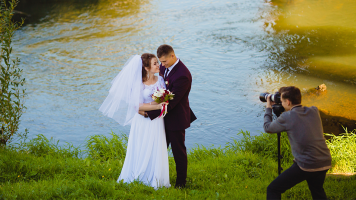
Many hobbyists reach a turning point in their craft when they decide to pursue wedding photography seriously. With the transition to pro comes the task of updating your lens kit accordingly, and most photographers would agree that investing in quality glass is essential. Unlike the rapid turnover of camera bodies, lenses will last for years and can make all the difference in creating quality images. Understanding what some of the best available options are will help you invest appropriately.
What to Consider
Weddings are long affairs, often

by Mathew Malwitz · Posted
Wedding and portrait photographers looking for a lightweight, compact system with exceptional performance need look no further than the FUJIFILM X cameras and lenses. While the size and weight advantage of mirrorless cameras spans from Micro Four Thirds to full frame, the APS-C sensors in the FUJIFILM X system allow the cameras and lenses to be relatively small and light. Full-frame mirrorless is attractive to many, but the portability advantage of APS-C sized lenses is not to be understated.
For those looking to one-up the full-frame shooters

by Todd Vorenkamp · Posted
The Micro Four Thirds system is becoming popular among a passionate group of wedding photographers. The compact size of the cameras and lens system, as well as the sheer number of available lenses from, OM System, Panasonic, and other manufacturers, not to mention the nearly limitless option of adapted lenses, means that the wedding photographer has many options for capturing the action.
It’s worth noting that OM System, formerly known as Olympus, has lenses with both branding. As lenses are updated, they’ll adopt the OM system name, but as

by Mathew Malwitz · Posted
Lens selection is a highly personal choice for the professional photographer. Your shooting style, client needs, and cost all factor into how you choose to build your kit. Wedding photographers require a greater variety of lenses as they must cover a diverse assortment of compositions in various environments and lighting conditions. As working professionals, it’s only natural to begin investing in high-quality professional glass. For Canon users, this is the L series.
Easily identified by a thin red line circling the lens barrel, L glass is

by Bjorn Petersen · Posted
As a student, much of your life is about making choices and sacrifices. “Should I skip this class and sleep in?” or “Should I go to class even though I’m too tired to pay attention?” There are a lot of hard decisions to make as a student, especially if you’re a burgeoning photographer looking to attain professional status.
But, as a student, means are often limited and you need to be more conscious about what gear to add to your kit. What gear is critical and worth the investment versus what are some of the things you can ignore for now and

by Bjorn Petersen · Posted
Not all fathers are photographers, but for those who are, I’d argue that a point-and-shoot camera is essential tech for the dads in the world. Even for those with the latest smartphone, point-and-shoots are dedicated, purpose-built tools that excel in areas where phones can’t quite keep up. And, besides, dads love tools, right?
OM SYSTEM TG-7 Digital Camera
If Indiana Jones had a point-and-shoot digital camera, it would be the

by Todd Vorenkamp · Posted
Leave it to the world of photography to confuse size and speed. In lens-speak, the term “fast glass” refers to lenses with large apertures. In this article we take a look at the lenses with the largest-opening apertures. The aperture is the opening of a lens. The aperture’s size is expressed as a number that shows the ratio of the opening to the lens’s focal length. This number is referred to as an f/number, f/stop, focal

by Luke Rollins · Posted
In a stunning reversal of fortune, point-and-shoot cameras—which have long been dismissed as defunct—are currently experiencing a major resurgence. In both new and used markets, sales of point and shoots are way, fueled in part by nostalgia and the perceived shortcomings of smartphone cameras. With expanded feature sets, manual exposure controls, built-in and/or external flash support, and optical
by Bjorn Petersen · Posted
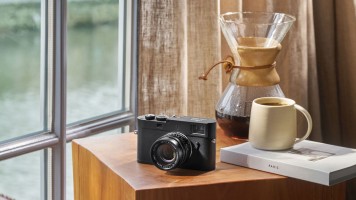
Most of our articles on cameras concern their performance, their features, what’s new, what they’re good for, and where they fit in a brand’s lineup, but it’s worth also considering a camera’s design and aesthetics. While it’s the definition of superficial judgement, thinking about how good a camera looks—how stylish it is—can affect your desire to use the camera. You might be more likely to reach for the camera that looks good, feels good, and is a joy to use and carry rather than a camera that outperforms on paper but isn’t enjoyable to work

by Rebecca Melville · Posted
What do street photographers really need? Give them a compelling scene, contrasting characters, and a stealth camera to capture it all, and they’re happy. While there aren’t really accessories that can make or break a street photographer’s ability to create, there are certainly things to make the workflow smoother, the load lighter, and the photos a little better. Let’s check out a few options you might consider gifting, below.
Camera Grips
Lightweight and easily concealed, compact cameras are the preferred choice of street photographers.

by Todd Vorenkamp · Posted
Gift shopping for photographers is easy—especially with B&H Photo and all our holiday gift guides. But, if you have a night photographer in your life, you might have noticed that they are, by the nature of the craft, equipped with a lot of the gear they need to get shots after dark. Because they likely suffer from a nighttime strain of Gear Acquisition Syndrome (G.A.S.), the gift shopper is left with limited options. Never fear, however, here are a few ideas with the specific needs and wants of the night photographer in mind!
1.

by Jill Waterman · Posted
Bristling along the sidelines of practically every professional sporting event, super-telephoto lenses are known for their ability to reach out and capture distant subjects with exceptional clarity and speed. They feel incredible in the hand, with top-of-the-line build quality and a heft that gives shooters confidence in their equipment. Many feature a variety of switches and buttons that allow users to set up the lens for optimal performance in any situation.
In addition to length, these lenses feature all of the latest technology, such as

by Bjorn Petersen · Posted
Just like any other genre of photography, portraiture is a creative field that knows no bounds. There are no rules dictating how a portrait needs to be made, how it needs to look, or more specifically, how it was shot. On the other hand, photographers love to categorize and label things based on “best” and “typical” usage situations (and I’m certainly guilty of doing this). One of the labels that bothers me is the term, “portrait lens.” I think most photographers would have a decent sense of what kind of lens I’d be referring to if I wrote “