Video
- Recently Added
- Popularity
- Name
About 21 filtered results

by Steven Gladstone · Posted
Mirrorless cameras are small, light, and can get into spaces traditional cinema and ENG cameras just can't. However, mirrorless cameras are not meant to work on a film set all day long—it just isn't in their ergonomics. This is especially true if you are planning on handholding a camera all day, or working with accessories such as follow focus units, zoom motors, or external monitors.
Build Your Own or Pre-Made
You can build your own support rig, if you like. Head out to your machine shop and have at it. But, most likely, you lack the milling

by Mary Latvis · Posted
Recording “live-to-tape”… what may seem like an oxymoron is really a common practice that can save you time and money on your multicamera video production. Read on to discover why recording your switched output reduces time spent in the editing suite, reduces your media costs, and allows for audience input into the final version.
1. Get a Jump on Editing
Using an AV switcher creates a rough cut of your project as you go, giving the director a leg up on the

by Jennifer Hahn · Posted
I can picture the eyerolls after reading that headline, and I totally understand. Will the cinematography departments of digital films now utilize autofocus in their carefully planned, meticulously lit, and choreographed productions? No, and for many reasons other than to keep focus pullers employed. But, using AF technology in smaller films, documentaries, reality shows, sporting events, and streaming productions can benefit greatly by the use of autofocus for their shots, so the camera won’t lose focus when a compact crew is busy juggling
by Steven Gladstone · Posted
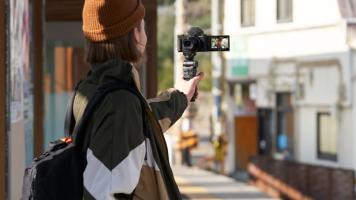
Vlogging—video blogging—has become a powerful way to share your personal experiences with people around the world, and the Sony ZV-1 has established itself as one of the most powerful tools for vloggers who want sharp video and clean audio to reach their followers. Designed for the vlogger, the ZV-1 is tiny and lightweight, which makes it ideal for a vlogging camera, but within its small chassis lives a powerhouse of image capture for video

by Jennifer Hahn · Posted
Sometimes you have to take your multi-camera broadcast studio on the road, or even if it’s in an indoor space, it may need to move around and deploy quickly as the environment and your production needs change. For mobile situations, you may need to find yourself looking for a slightly smaller video switcher than one of those massive, daunting video switchers installed in TV studio consoles. Luckily, there is an impressive new breed of portable video switchers that allows you to live-switch easily and anywhere if you only have two or three
by Mary Latvis · Posted
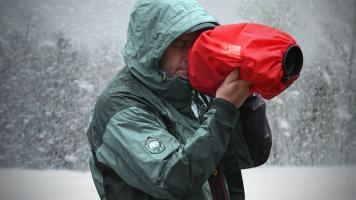
It’s raining, it’s pouring, your lead actor is snoring… in the toasty-dry holding area, while you and the rest of the camera crew wait out the storm in the not-so-great outdoors. Or perhaps your director has decided that their scene would just be so much more emotionally engaging if shot in a downpour and the dreaded rain machine is making its ominous appearance. Here we outline several solutions for keeping your video or film equipment dry in spring showers or heavier precipitation.
Cameraman in the rain
April Showers
When dealing with
by Mary Latvis · Posted
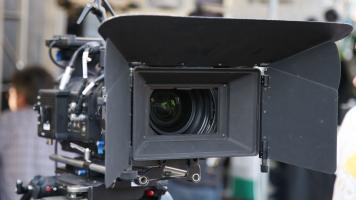
If you’re looking to capture clear, properly exposed video footage, try adding a matte box to your camera rig. These lens accessories are essential for adding creative control to your image (filters) and subtracting unwanted visual elements (flare, glare, and schmutz). Read on for the top three reasons using a matte box will improve your footage and discover why they’re called “matte” boxes.
Above photograph: Matte box with top and side
by Steven Gladstone · Posted
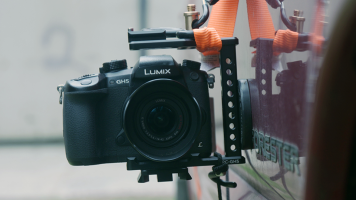
There are many kinds of car rigs, from hood mounts to “hostess trays,” side mounting, car-mounted jib arms, stabilizers, and full-blown process trailers. Each set up provides something different in terms of shot selection, flexibility, and how much you are asking the actor to do. On many large films, when an actor is seen driving a car, the car is often being towed behind a process car, so the actor doesn’t have to drive, and instead can concentrate on their performance. That isn’t possible for every shoot, and it may not work stylistically

by Jennifer Hahn · Posted
If you’ve got your mind set on building your PTZ network but you’re not sure what that will—or should—look like, we’ve got a few diagram examples of how different components work together on a PTZ network. Starting with a single-camera setup, then working forward with multi-camera, then adding components such as encoders, video switches, controllers, and software, we’ll walk through a few basic configurations to help take the complexity out of your setup.
Single PTZ Camera to IP Network
The single-camera setup is the simplest to start building

Posted
Maria teaches you how to make your own food video at home, with tips on filming, lighting, and editing and some fun tricks to make it your own!
Also check out these other At-Home videos for more ways to help you stay creative at home.

by Jennifer Hahn · Posted
In times of transition, such as adding an extension to your business, creating a personal brand, or, especially now, mandatory social distancing during a pandemic, it becomes necessary to connect with friends, clients, or an audience in different ways. Livestreaming video seems fairly easy at its most basic if you're talking to your Mom or a friend on your smartphone, but when, for example, a yoga teacher needs to suddenly transition their classes online or a house of worship needs to reach their congregation, a higher-quality approach may be

by Mary Latvis · Posted
When I’d perform a camera package checkout as a camera assistant, if there was any chance that we’d be shooting outside during the day, guess which filters I would add to the order? Neutral Density filters (aka NDs)! Even if they were not part of the original order, any production office coordinator (P.O.C.) worth their salt would approve this addition by the A.C. Read on to discover why, next to a polarizer, these are the filters most essential to your video shoot.
Shallow depth of field, daylight
ND Basics
Neutral: meaning there’s no
by Ronald Francis · Posted
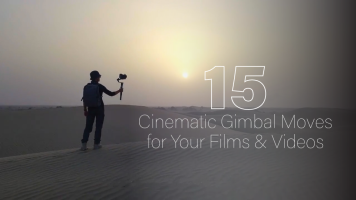
With motorized handheld gimbals being as revolutionary as they are, we’ve put together a list of 15 moves to use in your movies, commercials, music videos, and other projects. Allowing for stabilized motion capture, gimbals have totally changed what can be done on a budget. Gimbals are even being used in press conferences and nature documentaries. Part Two of the popular Planet Earth nature series is shot

by Mary Latvis · Posted
It’s a beautiful day and the sun is shining, with not a cloud in the sky, beaming down plenty of light for almost limitless depth-of-field for your footage. While all that sunshine can produce wonderful exposures, it may not be so great for your health or for the well-being of your equipment. Read on for some ideas on how to beat the heat during a summer shoot.
Desert film shoot: hot!
Camera Crew
Starting with the very basics, outfit yourself with a pair of
by Ronald Francis · Posted
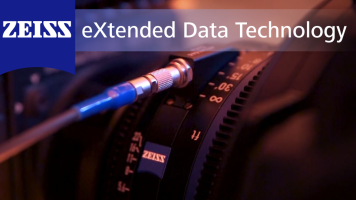
On the side of some ZEISS lenses is a 4-pin LEMO connector, built in, with the words “eXtended Data” inscribed above it. This connector is part of ZEISS’s eXtended Data Technology (XD), which provides lens data for VFX applications. More specifically, eXtended Data efficiently transfers shading and distortion data via a hardware/software workflow. It allows VFX artists to adjust shading and distortion characteristics precisely in post-production. The compatible ZEISS lenses include the