Video
- Recently Added
- Popularity
- Name
About 27 filtered results

Posted
Co-founder and Lead Instructor of Pilot Institute Greg Reverdiau guides you through the initial stages of your drone journey. Greg will review his checklist of prerequisites and review updates in drone technology and changes in federal regulations to keep you current.
0:00 - Intro
0:57 - About Pilot Institute
3:12 - Careers with flying drones
5:18 - Two ways to operate your drone under regulation
7:03 - The 10 Rules - 49USC 44809 & Remote ID
24:31 - Recreational flying made easy
25:44 - Part 107 - Remote flying certificate
30:56 - Pilot

Posted
Matt Zefi has some tips for getting started in, and getting creative with, drone hyperlapses using the DJI Mavic 3. You'll learn to capture beautiful scenery such as clouds rolling over mountains, colorful sunsets, bright car trails, and other subjects.
0:00 - Introduction
0:25 - Setting Up Your Drone
1:13 - Settings (Day and Night)
2:48 - Tips for Improvement
4:03 - Final Thoughts
Click to
by Mary Latvis · Posted
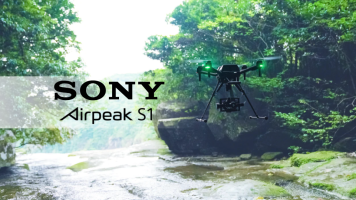
Are you ready to take to the skies with your Sony camera for some amazing aerial footage? Fans of Sony Cinema cameras like the FX3 and the Alpha a1 owe it to themselves to explore the Airpeak S1 Professional Drone. When combined with the Gremsy Gimbal T3, the Airpeak S1 supports the

by M. Brett Smith · Posted
DJI's latest drone, the Air 2S, has officially taken flight. And while early reviews seem overwhelmingly positive, one big question about the new flyer remains: Is it that much better than the original Mavic Air 2? To find out, we put

by M. Brett Smith · Posted
First-person view (FPV) drones have increased in popularity in recent years, evolving from a niche collection of specialized flyers to a robust category of remotely operated aircraft designed for specific-use cases and applications. In this primer, we’ll cover the basics of FPV drones, including what they are, how they’re used, and the equipment you need to become an FPV drone pilot.
What Are FPV Drones?
The first thing to know about FPV drones
by M. Brett Smith · Posted
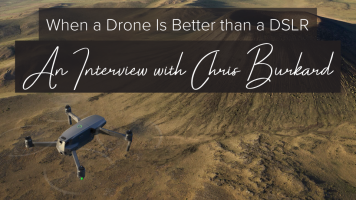
Chris Burkard wears many hats. He’s an award-winning photographer, filmmaker, author, and public speaker. He’s the founder and creative director of his own studio and art gallery, a world-renowned traveler and adventurer, and, at the young age of 32, has already established himself as a prominent global influencer. We were lucky to talk with Chris about one of his many award-winning passions, aerial photography, and discuss the ever-developing role of

by Steven Gladstone · Posted
In this segment of Show Us Your Shot, filmmaker Alec Kubas-Meyer gives us a behind-the-scenes look at a video review of the 2018 thriller, Searching. Because the film takes place entirely on a computer desktop, Kubas-Meyer deviated from his usual review technique and chose to mimic the visual style of the film itself. So watch and follow along as he shows his filming setup, and how he accomplished his result.

by Steven Gladstone · Posted
In this segment of Show Us Your Shot, skydiver and aerial cinematographer Laszlo Andacs discusses the possibilities and the challenges of camera work while jumping out of airplanes. The piece is illustrated with breathtaking aerial sequences that capture the beauty and technique of aerial cinematography as the cameraman hurtles toward the ground with cameras mounted on his helmet. You can see footage of jumps and the preparation behind them as Andacs and other cameramen capture various projects, such as Anthony Flammia's music video "My Life

by Steven Gladstone · Posted
In this segment of Show Us Your Shot, visual effects supervisor Adam C. Sager discusses how the team behind the 2018 Tribeca-selected, stop-motion animated short film, Two Balloons, utilized green-screen compositing to isolate and combine various shot elements together into seamless compositions.
Writer/Director/Producer: Mark Smith
Animation Director: Teresa Drilling
Art Director: Kathleen Chamberlain
Director of Photography: Reijean Heringlake
Motion Control Operators: Mark Eifert, Jim Birkett
Special Effects Supervisor: Javan Ivey

by Steven Gladstone · Posted
The filmmaker behind Learning to Drive, Roderick Stevens, shares his thoughts on his film and filmmaking.
Steven Gladstone: How long have you been working in the industry, and how did you get started?
Roderick Stevens: I’ve worked in the film industry in some capacity or another for just shy of 30 years. I moved from a small town in southeast Arizona to Los Angeles, in 1990, to attend the since defunct Film

by Steven Gladstone · Posted
In the segment of Show Us Your Shot, Director Roderick E. Stevens and Cinematographer Daniel Gonsalez, in an effort to accentuate the grounded reality of their hero's journey in the latter half of the film, chose to mix shooting styles and formats, including Super 8 film for the opening flashback scenes, 4k RAW (on a Sony F55) for the first half of the roadtrip with the two brothers, and 35mm (Arricam LT) once protagonist Michael steals the car to embark on his own adventure. Both larger formats were captured with vintage, Todd AO, anamorphic

by Steven Gladstone · Posted
Steven Gladstone: You wear many different hats—writer, producer, director, actor, etc. Do you go by Filmmaker, or is there a distinction?
Gregory Blair: If I’m relegated to a single label, I use “Entertainment Professional,” because it is generic and inclusive enough to represent my writing consulting, TV, and theatre work in addition to my various roles in the film industry.
SG: How long have you been working in the industry, and how did you get started?
GB: Seems like forever, but I didn’t really start until I was in my twenties and, despite

by Steven Gladstone · Posted
Making a complete film that lasts only a minute takes far more time to shoot and edit. Kelly Murray and Hillary Hanak opened up to me about what was involved in making the one-minute-long horror film, 3:13.
Steven Gladstone: How long have you been working in the industry, and how did you get started?
Kelly Murray: I've been working in film for seven years, since 2012. Growing up, I was involved in the arts and was a strong writer, so I studied English literature and writing at college. I was, however, involved in the University's student

by Steven Gladstone · Posted
I had the opportunity to catch up with Jillian Bullock, the filmmaker and creative force behind A Sense of Purpose: Fighting for Our Lives, and she shared some thoughts on making the film and the filmmaking process in general.
Steven Gladstone: How long have you been working in the industry, and how did you get started?
Jillian Bullock: I’ve been in the industry since 1991 when I graduated from La Salle University and got an internship on the set of Spike Lee’s movie, Malcolm X.
SG: Did you go to school to learn about filmmaking?
JB: I went to

by Steven Gladstone · Posted
In this segment of Show Us Your Shot, filmmaker Jillian Bullock filmed a scene in Fairmount Park, in Philadelphia, in the summer: “We headed out early to beat the heat, but we had a problem with the DJI Ronin Gimbal, which wasn’t cooperating. This meant we had to do more takes of the scene. I made sure we had plenty of water bottles available for cast and crew. More care was given to the lead female actor, Tamara Woods, who was pregnant at the time. We kept taking breaks in order for her to hydrate and get a little rest. I told her to stand in