Video Tripods & Accessories
by Justin Dise ·Posted
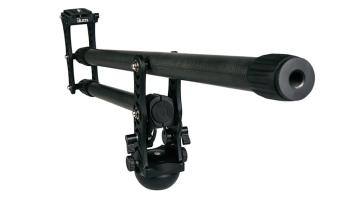
Adding controlled camera movement to your shots is one of the easiest and most effective ways to boost the production value of your videos. While camera sliders and modern stabilizer systems have made it easier for amateur filmmakers and small production crews to get smooth, professional-looking movement, they aren't very effective at replicating the boom moves of traditional jib arms. The problem is that jib arms are often bulky, cumbersome, and

by Peter Ward_1 ·Posted
At the 2013 NAB trade show, Freefly Systems introduced the world to a new concept in camera stabilization—the motorized gimbal. A device giving operators the ability to capture dolly-smooth shots while enjoying something close to the freedom of handheld shooting has been around since 1976; of course, I’m referring to the “arm-and-vest” stabilizer. Amazingly, it took 37 years for a serious competitor to this classic-design stabilizer to emerge. This competitor is the MōVI.
Arguably, the arm-and-vest design works so well there was little reason
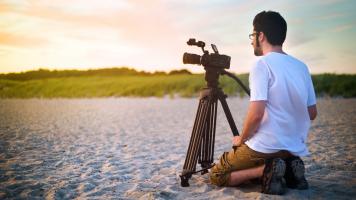
Tripods legs and heads are not the most enthralling subject in the universe. At first glance, they can seem to be boring pieces of gear. They support the camera. Big deal. What you may not realize is that cheap tripod systems usually leave a lot of room for improvement. That’s not to say that you need to spend top dollar to get the absolute best system, but it's important to avoid compromising to the point that your work suffers. In this article, I’ll introduce you to a variety of tripod and fluid head systems for every budget, featuring
In this B&H video, Mia McCormick, from Kelby Media, enlightens us about video monopods. She begins by touching on the differences between photo and video monopods, and then moves on to compare a few of the more popular models. The video highlights the features of video monopods, with McCormick offering her impressions after working with each monopod. We hope you enjoy the video, and invite you to view the wide selection of other instructional and informative videos