Filmmaking
by Staff Writer ·Posted
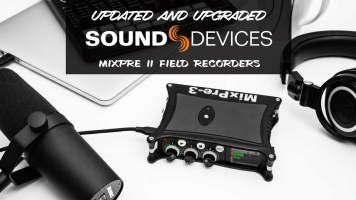
With the release of the Sound Devices MixPre II series, the already capable line of recorders is now expanded to include new functionality, increased precision, and heightened sonic performance. These new portable field recorders are presented in three configurations—the 3-channel / 5-track MixPre-3 II, the 6-channel / 8-track MixPre-6 II
by Staff Writer ·Posted
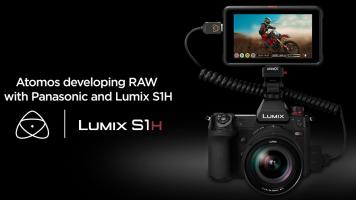
Still hot off the presses, the Panasonic Lumix S1H is getting an extra boost in the future, from a partnership with Atomos that will bring raw over HDMI to the video-centric camera. A new firmware program for the S1H full-frame mirrorless camera enables the output of maximum 5.9K/29.97p

In the segment of Show Us Your Shot, Director Roderick E. Stevens and Cinematographer Daniel Gonzalez explored a few options for safely capturing the driving scenes in this road movie, including using a 70" LED TV as a background, before settling on green screen for compositing. This also freed Stevens up to manipulate the art direction and color grading further to create a contrast between the heightened, almost surreal first half against the familiar reality of the latter half.
Roderick Stevens’s Bio
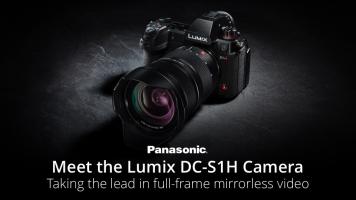
Video has never been this good in a full-frame mirrorless camera. The now officially released Panasonic Lumix DC-S1H is the new leader in full-frame video and once again proves that Panasonic is willing to give filmmakers the features they need. Part of this is accomplished through the development of a new 24.2MP full-frame MOS sensor and Venus Engine image processor to handle full-width video, including full 3:2

383 Views ·Posted
Panasonic just announced the new S1H full-frame mirrorless camera, its video-centric follow-up to the S1 and S1R, so we decided to try it on a commercial video shoot. We filmed at Frames Bowling, in New York City, with mostly available light, testing the camera’s low-light capabilities, as well as 6K and 4K video modes. We run through some of the features, as well as compatible lenses and accessories, to put together a

295 Views ·Posted
Walkie-talkies are a staple on film sets, and it's important that you know the rules and jargon so you don't get lost on your first day. In this video, we cover the basics of how to use the walkie, as well as some common references you'll hear on set.
Want to learn more about film set lingo? Click here.

1,527 Views ·Posted
The movie business has a long history of giving unique nicknames and phrases to everyday tasks. In this video, Jake Estes takes a look at some of the more common ones you may come across on your first film set. Do you have a favorite film set word or phrase? Let us know in the Comments section!

Green screen compositing today is ridiculously easy compared to days gone by. Years ago, when shooting and finishing on motion picture film, one had to shoot the subject against a green screen, then create film mattes, and combine it all using an optical printer. Generation loss, contrast shifts, and registration problems were the bane of the filmmaker. This doesn’t even begin to encompass all the other problems, such as matte lines, elements that drift out of alignment, transparency issues, and garbage mattes. The introduction of high

The test involved an actor, dressed in a cowboy outfit, lighting up and smoking a cigar. The test was done late in the day, with no additional lights, and we were racing against the sun. The green screen we had was a little bit on the pale/unsaturated side, but we went ahead with it anyway. We imported the footage into Final Cut Pro and applied the Keyer effect.
Most of it was working well, except there were some areas that were bleeding through the image so we tried to clean that up with the addition of masks/garbage mattes. You can see where

In Learning to Drive, Director Roderick E. Stevens wanted the camera to drop straight down over the actor, the way it might on a telescopic crane. Without the budget to rent one, that seemed impossible. It’s a simple shot that only lasts a few seconds, but it occurs at a crucial turning point in the film, and the director is far too stubborn to give up. About $150 in electrical conduit and hardware and some funky engineering resulted in a vertical slider that accomplished the shot.
Roderick Stevens's Bio

In this segment of Show Us Your Shot, filmmaker Steven Gladstone shares with us the differences between a dolly and a zoom. He begins by recreating a two-dolly combination move using a skateboard dolly and a slider, and then moves on to examine the choice between zoom in and dolly in. “With the small size and lightweight nature of today’s equipment, once-difficult shots become easier to pull off. I took this opportunity to try the shot with a dolly and a zoom, and it makes a great illustration of the differences between the two.”
About

In this segment of Show Us Your Shot, filmmaker Jillian Bullock explains how her DP created a desert shot at night, while shooting in Pennsylvania.
We had filmed some scenes at the Bill Pickett Riding Academy, in Philadelphia, a horse-riding stable. My DP, Lamont Fountain, and I were there trying to figure out where we could shoot to make it look like a battle area in Iraq or Afghanistan. Since we were shooting at night, we figured we could fake out a spot in the woods behind

If you are gearing up to shoot your film, video, webisode, or pretty much any production, don’t forget to take on-set photographs and BTS video. This is something I’m sure you have heard before, but it is one of those things everyone knows, but doesn’t do. In the following two articles, I ask about the value of on-set photos and BTS video, from the perspective of a producer, and then from the perspective of film festivals. In Part 1, I interview JB Bruno, a no-nonsense kind of guy who is a long-time AD, Line Producer, and Producer in the film
From the filmmakers: "3:13 is a one-minute horror short created for Make Long Story Shorts, on Instagram. Inspired by the phenomenon of sleep paralysis, this film follows Maria (Robbie Jean) who experiences a terrifying visit by a shadowy Demon (Diamond Simone) at 3:13 AM, but can't move—only to wake up and realize it was a nightmare. Working within the limited time length, I wrote a 'loop' narrative to make the viewer feel like they're 'stuck' in the nightmare. By using the a7ii camera on a DJI Ronin S rig, we were able to create both fluid

Each year, BRIC, the leading presenter of cultural programming in Brooklyn, awards twelve fellowships through its Contemporary Art and Media Education programs. The fellowship offers recipients several key resources, including access to camera equipment, studios, and editing suites, as well as free enrollment in any course offered by BRIC’s Media Education program. In 2018, B&H was proud to sponsor the fellowship as part of its continued support of Brooklyn-affiliated artists and creators everywhere. I had the opportunity to speak with one