Filmmaking Education
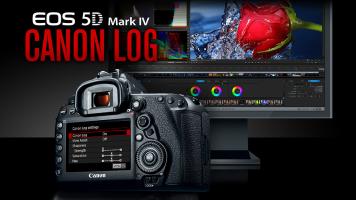
Shortly after Canon announced the 5D Mark IV, the company followed up with an optional upgrade for video shooters who wanted to access Canon Log. Now, Canon is making a 5D Mark IV available with Canon Log pre-installed, allowing filmmakers to have the tools they need immediately at their disposal. For those curious about the feature, Canon Log is an advanced profile that helps boost the dynamic range of recorded video to about 800%, or 12 stops.
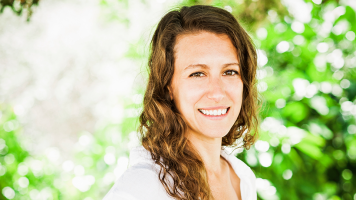
Eve M. Cohen is a cinematographer whose work ranges from independent feature films to television series, documentaries, and cinematic virtual reality. She entered the world of filmmaking through the study of fine art—specifically painting and photography—and holds a BFA in Photography and an MFA in Cinematography, both from UCLA. Her cinematography work for films and virtual reality projects has screened in festivals and theaters around the world. You can find her work on just about every digital platform available, and many TV channels.
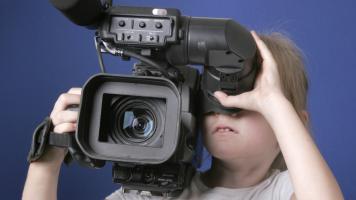
If you have a young filmmaker in your life and you are looking for some way to connect with them, then this is the article for you. From big to small, inexpensive to “it’s more than I paid for my first new car!” this article will briefly touch upon practical and fun gear for young filmmakers, beginning and experienced.
While you may be concerned that gear-buying is a very personal decision (and that is a valid concern), if the young filmmaker is starting from scratch, no worries—and if they already have gear, then there will be

Headed back to school and looking for some portable inspiration to capture and produce your musical musings? Look no further as we explore what B&H has to offer. Whether you are looking to record to your computer and iOS devices, or you need an ultra-portable music production station, synthesizer or drum machine, check out this list of “must have” gear that won’t break the bank.
Audio Interface
If you have a computer or iPad and wish to record and mix using software such as Garage Band, you’ll need some way of capturing sounds into your
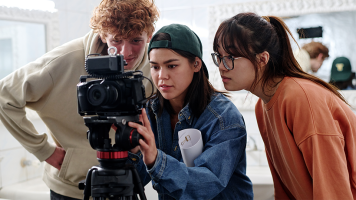
Whether it's a four-year undergraduate program, a two-year graduate school, or a single class, studying film production is different from other fields of study. Film production classes are more like being in a trade school. Students learn and apply work skills, as well as film theory. Most importantly, you will be shooting at least one short film, and to make that film you need equipment, tools, and supplies.
Most film programs provide the cameras, sound equipment, and editing facilities you need, but, to take full advantage of them, some

by Justin Dise ·Posted
One of the first things students are taught in film school is the nomenclature of the basic types of camera shots. This common language is essential for writers, directors, camera operators, and cinematographers to effectively communicate visual elements of a shot, particularly the size of a subject—often a person—within the frame. Provided here is a list of the essential shot types that you need to know, along with a brief description. For the purpose of this article, it will focus mostly on subject size and camera angle and ignore camera

by Justin Dise ·Posted
In today’s digital cinema workflow, you’d be hard-pressed to avoid exposure to Look Up Tables. Whether you’re a director, DP, editor or colorist, Look Up Tables—or LUTs—are something you need to be aware of, because they play a prominent role in many on-set, editorial, and finishing workflows. LUTs have many uses, from calibrating monitors or giving your footage the look of a particular film stock, but can also be a source of confusion for people. What exactly is a LUT? How does it work? Why should I care? If you’ve ever asked yourself any of

During my days as a film student, I shot projects using film and digital media. While digital footage was imported directly from tape, film was sent out, developed, and transferred to tape in standard definition. Now that more than a decade has passed and the industry has gone predominantly digital, what options exist for people looking to transfer their existing film? The answer is: film scanning, but how does this differ from the older telecine process? Before undertaking this journey, users will need to be familiar with items such as film

First, congratulations. You’ve finished your film. It is edited, color corrected, scored, mixed, and you’ve added the credits. Plus, you’ve already found the venue for your cast, crew, friends, and family screening. What is next? Well, that depends on you. Are you ready for the next step? Which to choose: festivals, distribution—both?
Festivals
Festivals are a great way to meet other filmmakers, and there are a lot of festivals; more than I can count. But, before you send out your film or script, do your research. Make sure what you are

A critique is one of the most powerful tools that can help a creative person grow. And it isn’t just a matter of getting a critique of your work that can be powerful; learning to deliver a critique well can also help you improve your own work.
What is important to understand is what a critique is and what a critique is not. A critique is a carefully thought-out response, and not an opportunity to attack someone because you don’t like their work. Similarly, if you ask someone to critique your work, understand that you are asking them to invest