DSLR Cameras

With the year winding down and arrangements for family gatherings in the works, some advance planning for recording these moments through photographs is a worthwhile consideration. It’s no longer the era of your grandfather’s Kodak, with family members captured stiff as a rail or suffering from red-eye. There are lots of exciting imaging options out there, all of which involve slightly different approaches. In an effort to help you to make sense of the current spectrum, we’ve outlined these seven tips to walk you through the process, and to

Congratulations on getting a new camera, and welcome to the world of photography! You are going to love it. Before you go out shooting, take a look at these 10 things you should do first with your brand-new camera.
1. Charge the Battery
Being fresh out of the box, your camera’s battery is unlikely to be fully charged. Plus, manufacturers usually recommend a full charge cycle before you go out shooting for the first time. So, throw it on the charger and fill 'er up!
Also, we highly recommend having a

When photographers get together, they often compare notes on useful DSLR accessories. To anyone but a photographer, this type of discussion might seem a bit obsessive. But, when you’re caught in a downpour without camera rain protection, you’ll soon think differently. There are times you might be presented with a promising landscape and you lack the
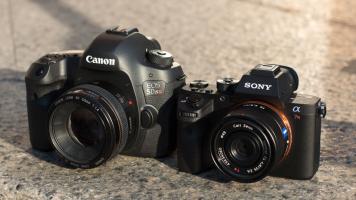
This year saw a huge number of revolutionary cameras, but the obvious standouts were the 50.6-megapixel EOS 5DS R DSLR from Canon and the 42.4-megapixel Alpha a7R II mirrorless from Sony. The main reason was the astounding resolutions and full-frame sensors of each; the second is that this is the first time we have seen such similar feature sets in
11,047 Views ·Posted
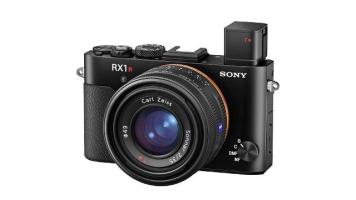
n this video Kenta Honjo from Sony discusses the latest compact full-frame from Sony, the Sony Cyber-shot RX1R II.

In the following video, Larry Becker, from KelbyOne Media, gets his hands on Canon’s megapixel monsters, the EOS 5DS and 5DS R. The video delves deep into the possibilities offered by the 50.6MP CMOS sensor, combined with a variety of underlying technology to maximize quality, such as Dual DIGIC 6 image processors and a redesigned shutter

Over the years, I have noticed how different lens and aperture combinations create distinct effects on the image surrounding distant light sources in photographs. Another place that this effect is commonly seen is in famous astronomical images from terrestrial and space-based optical telescopes. In fact, we are so used to seeing “pointed” stars in photos that many of us, when we hand-draw a star on paper, rarely draw a point of light or a disk; we draw a multi-pointed star. What causes these effects? How can they be altered? Can they be

by Mike Wilkinson ·Posted
As prices continue to plummet and resolution continues to rise, it is becoming commonplace for amateur and hobbyist photographers to purchase a high-quality digital stills camera—mirrorless or DSLR. Even a photographer with a $500 camera can capture amazing clarity with just about no training whatsoever. Almost every one of these cameras now has the option to shoot video, usually in an HD resolution (or even 4K video, on some models). Lots of photographers, even the professional ones, are clueless when it comes to picking the best settings,

In this week’s video, FocusEd discusses ISO. ISO is a measurement of a digital sensor’s (or films) sensitivity to light. This video goes into detail about when to use different ISO settings, as well as explaining native, standard, and boosted ISO for your digital camera.

Have you ever wondered what is going on inside that picture-taking box that you just held up to your eye, or out at arm’s length, to capture a photograph?
The Basics
The camera is, in its most simplified terms, a box that allows light to enter and strike a light-sensitive surface. This surface is either a frame of film or a digital sensor. Cameras can accomplish this task in the most simple way—a pinhole camera, for instance. Pinhole cameras may have only

In this week’s video, FocusEd explains the basics of shutter speed. In no time flat, you will understand the practical uses of shutter speed, and how it interacts with aperture to determine the exposure of your image. The video also offers a few settings tips to get creative shots, by adjusting the duration of the shutter speed. We hope you enjoy the video, and invite you to view the wide selection of other instructional and informative videos at BandH.com.

In this week’s video, FocusEd is focused on the basics of aperture. You will be exposed to how aperture works, find out why aperture numbers are what they are, what aperture priority mode does, and how aperture settings affect your photographs, with some comedy sprinkled in for good measure! We hope you enjoy the video, and invite you to view the wide selection of other instructional and informative videos at BandH.com.

2,931 Views ·Posted
In this week’s video, FocusEd introduces the photographer to the often-confusing world of digital camera sensor size. We tackle megapixel counts, crop factor, and the crew adds some humor, too!

Over the course of the past decade, Sony has transformed itself from being a minor player in the digital point-and-shoot camera market—to being an innovative leader in the design of photographic equipment for professionals and consumers. The infographic below tells the story of the unconventional path Sony has taken, starting with their first DSLR in 2006, the A100, and ending with their most recent cutting edge designs. You can learn all about the fine details of these breakthrough cameras in our Sony's Innovative Journey in Camera Design and

Traveling and photography go hand in hand; the desire to record the places you’ve visited and share your memories with others is an endless fascination that never gets old. The main problem with travel photography is that it’s impractical, if not impossible, to bring all your gear with you, especially if air travel is involved. Most airlines now charge extra to check bags and they typically allow only one carry-on bag. It makes sense to pack as lightly as possible when traveling, but be sure you have just what you can’t do without. Take all