Audio for Video
by Staff Writer ·Posted
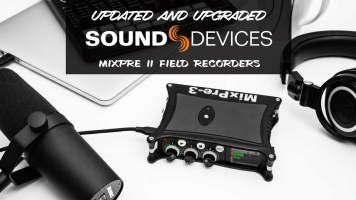
With the release of the Sound Devices MixPre II series, the already capable line of recorders is now expanded to include new functionality, increased precision, and heightened sonic performance. These new portable field recorders are presented in three configurations—the 3-channel / 5-track MixPre-3 II, the 6-channel / 8-track MixPre-6 II
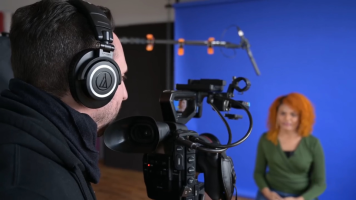
When it comes to producing audio for video and purchasing relevant equipment, one can make many mistakes based upon misinformation and misguided (though well-intentioned) recommendations. Whether you’re relatively new to the audio side of things or you just want to make sure you haven’t missed an important tip, it’s worth reviewing these six common misconceptions about audio for video.
#1: Wireless Is Better Than Wired
Verdict: Misleading
In the context of audio for video, you cannot rightfully state that wireless is better than wired or vice

Look, I get it. You’re a busy filmmaker, a videographer who’s hustling, a visual visionary who needs to create; your talents should be applied to your art, not worrying about the tedious specifics of sound recording. Still, you’ve accepted the reality that without decent audio quality, people won’t take your productions seriously. Since budget constraints sometimes prevent you from hiring a dedicated audio engineer—and using anything more than your camera—you find audio-related responsibilities falling on you with increasing frequency, but

Hey, you’re a video person. All you know is the video don’t sound good. Something’s off—but who knows what! Well, read this article, and you will. Or more accurately, you’ll have some tools for identifying what sounds off as you practice your craft. With some time and patience, you’ll get the hang of fixing the issue yourself. Here are eight tips to help you.
1. Get Familiar with the GUI of an Equalizer
GUI stands for graphic user interface. This is what you will interact with while you equalize your signal in your NLE or DAW. The GUI can look

1,859 Views ·Posted
In Part 4 of our multi-part Audio for Video series, AB walks you through the pros and cons of recording audio to your camera versus using an external audio recorder. Learn about when direct-to-camera recording may be ideal, and when you’ll need to start thinking about additional devices, such as mixer adapters and external multi-track recorders. As usual, AB breaks down many important considerations and helpful tips that you need to know for high-quality audio capture in the field.
If you would like to continue reading about the Audio for

661 Views ·Posted
In Part 3 of our Audio for Video series, AB dives deeper into the process of properly setting recording levels. Follow along as he breaks down everything you need to know about recording levels, from the differences between Mic and Line level recording to the the different types of tools that can assist in the recording process. Along the way, AB also dishes out plenty of crucial tips to help you get the best possible audio out of your recordings.
If you would like to continue reading about the Audio for Video series, be sure to check

1,276 Views ·Posted
In this second video in the Audio for Video series, AB discusses ways to choose the best mic for the type of content you’re recording. He discusses pickup patterns, lavalier and shotgun mics, mic placement, and more. If you want to know how to use the right mic to capture audio for different video applications effectively, this is a great resource.
If you would like to continue reading about the Audio for Video series, be sure to check out all of our related content

1,665 Views ·Posted
Welcome to the first video in our multi-part Audio for Video series. In this introductory episode, AB kicks things off with a quick overview of topics that will be covered in this series. After that, he dives into the basics of audio for video, covering everything from environment prep to situational mic use. If you’re looking for a solid intro to audio for video gear, tips, and techniques, this is a great place to start.
If you would like to continue reading about the Audio for Video series, be sure to check out all of our related content

When producing audio for video, television, or online content, it’s expected that you’ll have to record sound far away from the comfort of a fancy studio. In a house, on a boat, out of state, or at a show; any place including the middle of nowhere is possible for the next shoot. Whether capturing on-set dialog, interviews, sound effects, or music, you’ll need an audio recorder/mixer that is equally portable and powerful. With an assortment of products available from manufacturers such as Lectrosonics, Sound Devices, Tascam, and Zoom, your

Short films—gotta love them! If you’re just starting out in the world of sound design, these will be your bread and butter until you get noticed by the big, gatekeeping fish. They usually don’t pay much, but they’re incredibly rewarding. Why? Because if you make them sound good enough, the director you’re working with has a better chance of scoring a feature; and if that director is loyal, you have a chance of getting hired for that higher-paying project.
One way you can make a film sound better is with judicious employment of sound design—

1,426 Views ·Posted
Join AB and Doug Guerra as they discuss the different challenges and techniques with which one is faced when recording and mixing audio for video. They cover topics such as equipment choice, EQ, compression, room acoustics, and more, and there are in-depth demos with screen captures that show how to go from an initial draft to a completed product. We hope you enjoy the video, and invite you to view the wide selection of other instructional and informative videos at BandH.com.

If you’ve been tasked with documenting a friend or relative’s intimate wedding, due to the simple fact that you own a decent camera, chances are you haven’t given much thought to best practices for capturing the audio. While many of today’s DSLR and mirrorless cameras can capture top-notch video, most of them lack a high-quality built-in microphone; and beware—no matter how great a video is to view, bad sound quality can completely ruin it.
Even though professionals generally rely on high-quality multi-track portable recorders and advanced
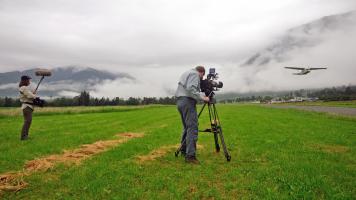
If you’re an audio person who likes the adrenaline rush of on-location recording, you’ve got options for work. On the music side, there are on-sight jazz records, classical concerts, and rock venues. But you also might want to take on-location gigs for other media—movies, TV web series, and our chosen topic of today, ENG.
But wait—what is ENG?
ENG stands for Electronic News Gathering. You know when you watch the news and they cut from the studio to some poor schmoe stuck in a hurricane describing the rain? That’s an example of ENG.
It’s not to
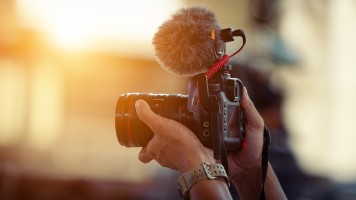
Audio is extremely important. Photographers haven’t really had to worry about this, but it is something that can make or break your videos. Watch some of your favorite movies and pay close attention to the sound—you will probably pick up some audio cues or effects that amplify the scene or action. If recorded poorly, audio can make something completely unwatchable. Have you ever opened a video online to crackling and noise and decided that it just wasn’t worth enduring? Clarity in audio is one of the most important things for keeping your
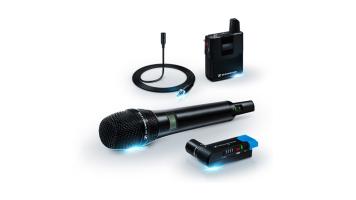
In this video, industry experts Ben Escobedo, of Sennheiser, and Michael Miceli, of Miceli Productions, show us the Sennheiser AVX, a digital wireless microphone system that is specifically designed for capturing professional video sound. Featuring true “plug-and-record” operation, AVX is fully self-configuring, with functions such as auto-dynamic range, which automatically dials-in the output level to match a recording device's input sensitivity,