About 2005 filtered results

by Joseph Albanese · Posted
I was traversing the alder thicket, to try to get to one of the many Bald Eagle nests we were monitoring. Despite having hacked a trail a few days earlier, visibility was exceptionally limited. If I could see more than a few feet ahead of me, it was a lot. As I turned a corner, my nose was overwhelmed by an unfamiliar scent.
It was then that I noticed the patch of black fur barely visible through the bramble. It would seem that I had stumbled upon a sleeping bruin that somehow managed to remain unconscious despite the ruckus I created by

by Todd Vorenkamp · Posted
The world of photo sharing and online photo storage and sharing is ever changing. By the time the ink dries on your screen, much of what you are about to read may be outdated.
There are some inherent advantages to uploading your images to “The Cloud.” Offsite storage of data prevents you from losing your precious photographs in the event of a power surge, fire, or other disaster at your home or studio. With all of your pictures stored online, you may access your images from a remote computer or mobile device with a web browser. Online storage
by BH Event Space… · Posted
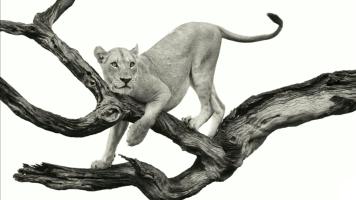
Andy Biggs is an accomplished African wildlife photographer, but he provides an incredibly comprehensive talk on all aspects of photography from composition decisions, to format choices to storytelling and printing. He discusses his “adjective-driven” approach to getting the best shot and also demonstrates how he converts RAW files and color-corrects for printing, all the while demonstrating his color work and gorgeous foray into medium format black-and-white photography. Biggs also leads photography safaris, and his ability to teach his

4,835 Views· Posted
Susan Stripling offers a brief and spot-on set of practical tips for anyone considering or starting their own wedding photography business. Whether you want to shoot the occasional wedding or open your own studio with employees, Stripling’s down-to-earth pointers will put you on the right path.

by BH Event Space… · Posted
Quoting Einstein to kick off his talk, Vincent Versace offers an indication as to how in-depth his discussion of infrared photography will be. From practical explanations on camera modification, exposure and focus to advanced color theory as well as shooting and post-processing techniques, Versace touches on all aspects of infrared shooting while showing off his “classic black-and-white” digital infrared images.
by Joseph Albanese · Posted
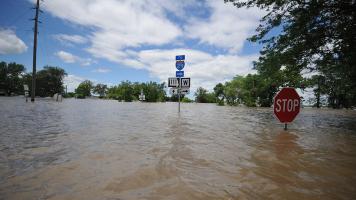
Hollywood seems delighted to scare us with the doom and gloom of far-fetched disaster films. And we seem to enjoy them, if box office numbers are any indication. Films like Armageddon, which pitted Earth against a possible asteroid strike, Dante’s Peak, which dealt with a fictional volcano eruption, Twister, which detailed the misadventures of some made-up storm chasers in Tornado Alley, and San Andreas, which provided an imaginary account of a massive earthquake in California, have terrified and delighted millions of viewers all over the

by Christopher Witt · Posted
The most frequent response many people gave me when I told them I was going to learn to make fire was, “Why?” Followed closely with, “We have matches, and lighters, and ovens, and a hundred other ways to make fire quickly and easily.” And while it’s true that there are dozens of ways to make fire in our 21st-Century society, there are also dozens of reasons why one would want to know alternative methods. In my case, it was a practical decision: I typically go camping a few times a year, but it’s at a national park, with rudimentary cooking

by Todd Vorenkamp · Posted
Panoramic photography has never been easier than it is today, thanks to digital technology. In the days of film, your options for panoramic photos were the purchase of expensive, but very capable, panoramic cameras, stitching images together in a darkroom, or physically cutting and pasting prints together. Panoramic cameras, like the Linhof Technorama-series, Hasselblad XPan, Fujifilm GX617, or Horseman SW-series cameras, are beautiful machines and still incredibly viable tools of the trade if you want to take exquisite panoramic images with

by Joseph Albanese · Posted
Take only pictures, leave only footprints.” Over time, the origins of that quote have become muddy. Some attribute it to the Baltimore Grotto, a caving club whose members feared their activities would mar the landscapes they so enjoyed. Whatever the origins, it has come to stand for an ethos encouraged by many outdoor organizations that promote responsible recreational uses of our outdoor spaces. One activity that does not alter the scenery is photography. All you are doing is capturing the essence of an area—the blues, greens, reds, and
by Todd Vorenkamp · Posted
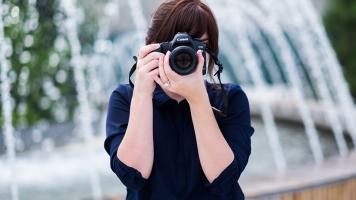
The difference between a sharp photograph and a blurry one might just be in the way you hold the camera, or how you breathe when you depress the shutter release—true statement. Let us talk about proper photographic technique and go over some tips that will help you physically make better photographs.
It is no coincidence that the term “shooting” is often synonymous with making photographs and the sports of shooting firearms or archery. In these disciplines, technique can mean the difference between success and failure. And, because the

by Mike Wilkinson · Posted
As prices continue to plummet and resolution continues to rise, it is becoming commonplace for amateur and hobbyist photographers to purchase a high-quality digital stills camera—mirrorless or DSLR. Even a photographer with a $500 camera can capture amazing clarity with just about no training whatsoever. Almost every one of these cameras now has the option to shoot video, usually in an HD resolution (or even 4K video, on some models). Lots of photographers, even the professional ones, are clueless when it comes to picking the best settings,

by Cris Silvestri · Posted
Memory cards are as ubiquitous as memory itself—almost every mobile device you own has some type of built-in storage, from cameras to iPods to tablets, and almost every device has a slot for adding additional storage space. Storage on a device can range from a couple of gigabytes of memory to dozens of gigabytes. You’ll soon find, though, that it’s never enough.
Photographers Love CF
Photographers are a rare breed. From amateur to professional, photographers depend on gear to make a difference in their art, and some of them produce astounding

10,758 Views· Posted
In a fast-paced and fun spot, photographer Peter Hurley opens his camera bags to show us what he “rolls with.” From the bags themselves to lenses, bodies, audio and video gear, and even portable calibration tools, Hurley demonstrates how he gets his work done and explains the value to his workflow of each tool. In addition to photo gear, Hurley clues us in to the importance of music on location, as well as a little bit of “shabang!”
Hurley’s gear includes:

by Lawrence Cohen_3 · Posted
Sharks: underwater photographers have tremendous respect for these fabulous, mysterious fish, and travel at great expense and distance to capture their beauty. Australia, South Africa, Guadalupe, and Fiji are well known for shark dives. But there are many places closer to home where divers can observe and photograph sharks. Here we suggest a number of locations where we have experienced exciting shark action—and you won’t have to fly to Fiji! By no means is this a complete list.

by Todd Vorenkamp · Posted
Have you ever wondered what is going on inside that picture-taking box that you just held up to your eye, or out at arm’s length, to capture a photograph?
The Basics
The camera is, in its most simplified terms, a box that allows light to enter and strike a light-sensitive surface. This surface is either a frame of film or a digital sensor. Cameras can accomplish this task in the most simple way—a pinhole camera, for instance. Pinhole cameras may have only