About 1136 filtered results

by David Adler · Posted
The Internet: where would we be without it? While I could spend an entire afternoon pondering that conundrum, the truth of the matter is that for the time being—barring some sort of global catastrophe—the Internet is here to stay. Not only is it staying, it’s growing fast, and you are a part of that growth. Building your own independent media empire brick by brick, as it were, takes time. And like most other crafts, proper tools of the trade are required. I am under the impression that you would like to create content for other people in the

by Joseph Albanese · Posted
Knives were among the first tools fashioned by humans. Using flint or obsidian, prehistoric craftsmen knapped sharp edges from these soft stones using harder ones. By fracturing the stone, they could shape blades that could be used as crude knives or axes for preparing food or building shelters. Sharing a similar design, these basic tools evolved to become spearheads and arrowheads. As time went on, techniques were improved, and stone blades were refined and improved upon. The more advanced of these could feature animal skins wound around part
by jaime traba · Posted
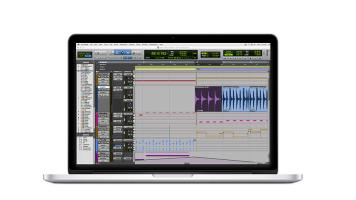
Earlier this year, Avid announced version 12 of its industry-standard Pro Tools DAW (digital audio workstation). What made a bigger splash and caused more heated discussion on the pro audio message boards was not any one functional feature of the update, but rather the fact that Avid was adopting an optional subscription-payment model, in addition to being able to purchase a license for the software outright, giving the option of yearly or monthly access. So why does
by Eric Reichbaum · Posted
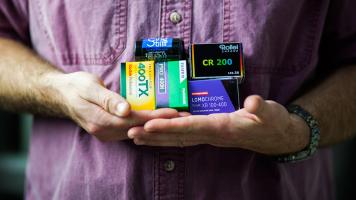
Maybe you’re an amateur digital photographer, or a young professional photographer who got into photography after darkrooms were removed from your school’s classroom, and you’re interested in shooting film but you don’t know where to begin. This guide will help you navigate your way through the multitude of options out there. While there aren’t nearly as many types or sizes of film as there were in the past, there are still enough to make choosing your film a daunting task.
Let’s take a look at your choices and, hopefully, help you narrow the
by David Adler · Posted
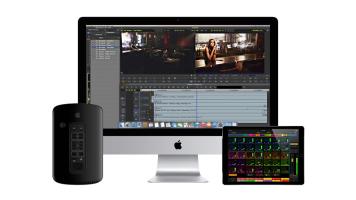
For a long time, professionals the world over have been using Apple computers to create some of the most notable content available. It says something about a company when its customers refuse to use anything but the products made by that company. While it may seem “cultish” to some, there’s a good reason for it. Apple computers have generally always been stable, reliable, innovative, and run some fantastic professional software with aplomb. Full disclosure—I am a Mac user and I own an iPhone, but the reason I own them is not necessarily

by Greg Brophy · Posted
The term “designer” covers many different fields—graphic, Web, motion, or 3D designer—and whether you are buying your first computer or just upgrading, you want your purchase to be fine-tuned to your particular needs. Designers have widely varying needs and, while you may love all things Apple, some machines or features are better suited for design than others. From “do I need a Retina screen?” to “how much RAM will cut it?” to “what kind of software will get the job done?”, searching for that perfect computer can bring up lots of
by jaime traba · Posted
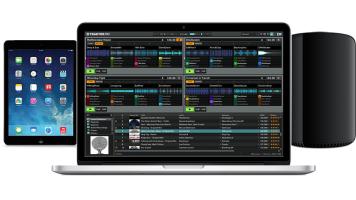
If you have five recording engineers or producers in a room, you will undoubtedly see five different approaches to any one task, all equally successful. A comfortable workflow is a key component to just about every creative pursuit, and your typical modern recording or production studio is going to be centered around your computer (to the chagrin of tape-only purists).
Even with the multitude of approaches different music makers have, it is no secret that Macs and their more recent iOS counterparts have long been the preferred computing

by Shawn C. Steiner and Bjorn Peterson · Posted
Photographers have always held Apple products in the highest regard, with their beautiful interface, exceptional design, and revolutionary feature sets. With an ecosystem encompassing products meant for use as a full-blown workstation, as well as having an assistant in your pocket, you will be sure to find exactly what you need. So, in order to guide you on your decision, what follows is a walkthrough of some of the most relevant products for photographers.
MacBook Pro
Go mobile with one of the most

by Shawn C. Steiner · Posted
Printing has become rarer these days as online albums have replaced physical ones, but there is something special about holding a physical photograph in your hand after a day of shooting. Photo albums filled with Polaroids and your drugstore 4 x 6 prints always seem to hold a place in people’s hearts as they reminisce about old times. Now, with technological improvements in the printing world, and the digital revolution, setting up a print lab at home is quite simple. Here are a few of our favorite printers, available today, for photographers

by John Harris · Posted
Every photographer has their favorite accessory, the one item that makes their work that much easier or interesting and can offer the simple pleasure of realizing how a little addition to your camera setup can make a big difference in your final product. This article is a mixed bag, touching on a variety of items, any one of which has the potential to be a photographer’s new, favorite accessory.
The Flex Lens Shade attaches to

by Daniel Bockrath · Posted
With each passing year, the quality of power supplies, preamplifiers, analog-to-digital converters, and DSP technology improves. We are fortunate to live in a time where there is now a wide variety of digital mixers available for live sound and theater applications. This overview will explore some of the products currently available from several manufacturers, and the unique features they offer.
Allen and Heath
GLD-80 and GLD-112 The Allen and Heath GLD series of digital mixers is built upon the company’s high-end iLive series of mixers.

by Sam Mallery · Posted
Compared to other kinds of electronics, purchasing a record player is typically a more meaningful acquisition. It carries with it a commitment to embrace the technology of yesterday. It makes it possible to play the music of past generations—not from compressed, impersonal Internet streams—but often from the same physical discs that were handled and listened to by people from another time. It can be a deep experience. It’s also a lot of fun!
Because you will

by Bjorn Petersen · Posted
Even with the plethora of online sharing methods and virtual ways to view your photographs nowadays, there is still nothing quite as satisfying as seeing, and holding, a printed photograph. Call it nostalgia or call it a respite from our otherwise plugged-in lifestyles, seeing an image on paper is one way to give, inherently, some deserved importance to your best shots. Throughout the process of printing your photographs, numerous decisions need to be made beyond simply deciding which image you want to use, most of important of which can be

by Michael Antonoff · Posted
What is a projection screen and what is it used for?
A projection screen is a large reflective surface, usually white, that’s typically hung on a wall in a room at some distance in front of any type of digital or film projector for the purposes of entertainment, training, education, or sales presentation. Compared to a bare wall, a projection screen affords higher reflectivity, resulting in a brighter picture. A screen also bestows a more uniform image surface and truer color rendition. Still, there are special paints that can be

by Josh Taylor · Posted
How does a rangefinder camera work? What were the landmarks in rangefinder camera design? How have they influenced photography over the years? What are their pluses and minuses compared to SLRs? What do they do best, and why?
In the late 19th Century, there were two dominant camera types:
1. View cameras that required you to compose the shot upside-down and in reverse on a ground glass, and focus by moving the lens back and forth until the subject looked sharp. You then inserted a plate or sheet film holder in the exact same image plane,