About 475 filtered results

Posted
Matt tests out the Tilta Nucleus Autofocus Adapter, showing you how to set it up and demo footage. Stick around until the end to hear Matt's thoughts.
0:00 - Elevator Pitch
0:26 - Today's Camera Setup
1:26 - Adding Lens to Library
6:17 - Autofocus Tests (In Studio & Outdoors)
8:58 - Matt's Thoughts
Sponsored by

Posted
What is a cinema camera, and how do you rig one out? Doug is covering the basics for those who already have experience with mirrorless or broadcast-style cameras. In order to understand modern digital cine cameras, we'll cover a brief history of their predecessors. After, Doug will breakdown the entire cine rig setup.
0:00 - What We're Covering
0:34 - What is a Cinema Camera?
6:19 - TLDR
9:29 - Trapped in a Cage
14:13 - Am I Seeing Things?
15:22 - You Might Need Glasses
24:22 - Absolute Power
28:14 - Accessories Make the Outfit
31:47 - Did

Posted
Now that you've filmed your video, it's time for editing and delivery in HDR. Doug dives deeper into HDR formats, as well as standards and workflows when working with HDR video. Join him in DaVinci Resolve where you'll learn about both the technical and creative sides.
0:00 - Intro
1:03 - Choosing an HDR Monitor
5:08 - Color Gamut
6:44 - Setting Up Your Monitor & Project
10:39 - Grading in HDR
24:28 - Exporting & Delivering
25:32 - Final Thoughts
Sponsored by
Posted
In part one, Doug shares how you can introduce HDR into your workflow. He discusses the advantages and disadvantages of shooting HDR video, the basics of HDR formats, and monitoring HDR on set.
0:00 - Intro
0:59 - What Is HDR Video?
2:20 - HDR Format Basics
5:30 - Middle Gray
7:19 - HDR Monitoring
12:59 - A Note on Exposure
13:45 - Where Is 18% Gray in HDR?
14:26 - Final Thoughts

Posted
Monitors are a critical component for a video production set. Sidney shares what to look for in an on-camera monitor, featuring the SmallHD ULTRA 10 4K Portable Production Monitor.
0:00 - In This Video
0:20 - Size
1:03 - Brightness
1:27 - Color Accuracy
1:58 - Connectivity Options
2:54 - Professional Monitoring Tools
3:40 - Conclusion
Sponsored by

Posted
Join Lotta to learn what sets Insta360's Luna Ultra apart from other gimbal cameras, including its dual Leica lenses, ability to capture up to 8K30fps action footage, and more.
0:00 - Sensor & Leica Lenses
0:35 - Photos & ND Filters
0:52 - Modes
1:05 - LCD Screen & Tracking
1:38 - Battery Life
1:51 - Who Is This Camera For?
Sponsored by

Posted
Large format sensors have been making their way across the filmmaking industry, so a need for compatible lenses has arisen. Enter ZEISS's Panoptes 65 lineup of cinema lenses. Join Doug for two video shoots—one in-studio and the other a documentary-style—as he puts the 35mm, 40mm, and 110mm through their paces.
0:00 - Intro
0:28 - Indoor Video Shoot
3:18 - Test Footage (Indoors)
4:19 - Outdoor Video Shoot
5:04 - A Note on Image Quality
7:04 - Demo & Test Footage (Outdoors)
10:00 - Doug's Overall Thoughts
Sponsored by

Posted
Sidney tests the DZOFilm Arcana anamorphic prime lenses, DZOFilm's most affordable anamorphic lenses for the burgeoning filmmaker.
0:00 - Intro
0:34 - Test Footage
1:40 - Physical Specs
2:23 - Breaking Down the Test Video
2:57 - Creative Potential
3:33 - Flare Test
4:30 - Bokeh Test
5:32 - Who Is This For?
Sponsored by

by Steven Esposito · Posted
Whether you are learning the craft of cinematic filming, content creation, or even video editing, Professor Zack is here to get you started!

by Zack Young · Posted
Sony has unveiled the FX5 5K full-frame cinema camera, with 3:2 open gate, 16-bit X-OCN recording, three base ISO, expanded monitoring options, and more, all packed into a compact 750g body.

Posted
Filmmaker Cooper O’Hearn and photographer Derek Fahsbender team up to break down filmmaking to its core, from pre-production and camera settings to storytelling, theory, color-grading and more.
0:00 - Intro
7:58 - Photography vs. Videography
10:59 - Frame rates & Shutter speed
17:29 - ND filters
19:18 - Aperture& ISO
24:32 - White balance
26:17 - Peaking & zebras
29:49 - Audio
32:21 - Color Profiles
34:22 - Editing software
36:19 - File storage
42:23 - Types of shots
45:13 - Filming tips
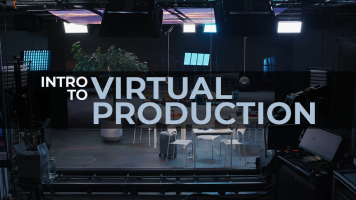
Virtual production (VP) is a filmmaking technique that combines live-action footage with digital imagery in real time. VP often happens on volume stages where interlocked LED panels display photo-real backdrops that change as the camera moves to create stunning in-camera virtual effects (ICVFX).
Posted
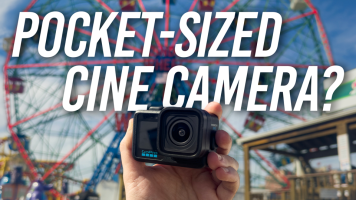
GoPro's Mission lineup aims to pack cinema camera specs into a pocket-sized action camera. Today, we're testing out the GoPro MISSION 1 PRO, and what better way than with the rides at Coney Island?
0:00 - Test Footage
0:26 - GoPro Mission 1 Pro Specs
0:55 - Sensor (Low Light, Open Gate, Frame Rates)
1:58 - LCD Screen, Battery Life, Buttons
3:04 - Internal Mics & Test
3:39 - New GoPro Wireless Mic & Test
4:11 - Photography Specs
4:23 - Patrick's Thoughts
Sponsored by

Posted
Doug discusses more advanced concepts to help deepen your understanding of frame rates. Both editors and videographers will find this video useful, since it will allow them to work in better tandem. We'll cover timecode basics, fractional frame rates (such as 29.97 fps and 23.98 fps), variable frame rates, and more.
0:00 - In This Video
0:39 - Timecode & Drop-Frames
5:36 - Variable Frame Rates
7:02 - Interlaced Video
10:34 - Telecine & Pulldown
12:47 - Mismatched Frame Rates & Refresh Rates
14:54 - Practical Tips
Posted
Frame rates are one of the most fundamental ideas to understand when it comes to technical and creative decisions for your films. It's important to know how frame rates work so you know how they'll affect the final film or broadcast. So, what frame rates are typically used? Why is 24 fps the standard for movies? Are higher frame rates better than lower ones? Join Doug for a crash course on the basics of frame rates.
0:00 - In This Series
0:46 - What Is a Frame Rate?
2:21 - Creative Uses of Different Frame Rates
3:21 - Is a Higher Frame Rate