Pro Audio
- Recently Added
- Popularity
- Name
About 238 filtered results
by Gabby Bloch · Posted
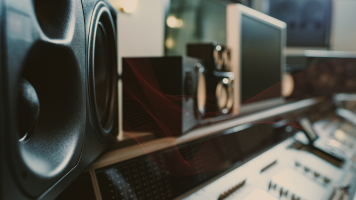
There are many factors to consider when choosing your first pair of studio monitors. And though the technical aspects of monitors can get a little complicated at times, it’s probably sufficient to understand the essentials of what a studio monitor can offer in terms of features and sound delivery. So, here’s an accessible guide to choosing the best monitors for your needs. We’ll also touch on how to best position your monitors for accuracy.
What Is a Studio Monitor?
Unlike regular speakers, which tend to have some coloration or biases in the
Posted
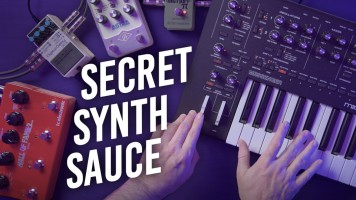
Are your synths sounding a bit dry? Are you trying to find ways to make your sound designs more interesting but coming short? Well, fret not! In this video Gabe shows you 3 easy ways to level up your sound using your synth's built-in effects, software plugins or external processors. Oh, and if you stick around until the end, he might even throw in a bonus technique to give your sound that missing je ne sais quoi.
0:00 - Intro
0:33 - On-Board Effects
1:46 - Effect Plugins
3:05 - Hardware Processors
5:52 - Re-Amping

Posted
Kevin and Andrew explore the show floor at Superbooth Berlin 2026 to show you the latest in software, audio interfaces, and more.
0:00 - Intro
0:34 - SPL Booth
5:46 - Focusrite
7:34 - Elysia
10:54 - Izotope & Native Instruments

by Freddy Gerngross · Posted
With the days we've chosen to honor our parental units quickly approaching, it can be tough to find a gift that isn't just the same old stuff as last year. While grilling utensils or a bath kit can be the stereotypical and affordable solution, these 10 audio gift ideas can seriously impress your forbears—even if your parents aren't music lovers.
For Vinyl Lovers: Audio-Technica Sound Burger and Audio-Technica ATLP70XBT
Society writ large has decided that vinyl is back and here to stay. Whether you have parents who have collected a library of

by Freddy Gerngross · Posted
Like anything worth creating, solidifying the process of a project is key to success. Often, the ambitious work of aspiring music producers can get bogged down from a lack of organization. Projects can bloat into dozens of unnamed tracks processed with reckless abandon, and audio and MIDI clips get chopped and sliced into a charcuturie board of chaotic (un)organization.
For the fever-pitched producer in a flow state, this chaos can be managed during the session (to an extent). But what if they were to step away from the project and come back

Posted
Drum sounds are an integral part of a song's production. However, recording drums at home presents its own unique challenges. Andrew provides solutions, such as microphone choice and placement.
0:00 - Introduction
0:35 - Challenges of Recording Drums at Home
2:15 - Many Parts, One Instrument
2:45 - Drum Tuning and Head Choice
3:25 - 1 Mic, 2 Options
6:00 - 2 Mics (Glyn Johns)
8:08 - 4 Mics (Glyn Johns w/kick & snare)
10:29 - 4 Mics (Spaced Pair w/kick & snare)
12:30 - 4 Mics (Blumlein Pair w/kick & snare)
13:18 - Options for Using

by Freddy Gerngross · Posted
Since its founding in 1992, DPA Microphones has gained a prestigious reputation in the audio industry for their mics' exceptional quality, crystalline transparency, and rugged and reliable build quality. And while DPA's microphones have found their way onto the stage with Beyonce, onto the sets of Game of Thrones, and into the concert halls of the world's greatest orchestras, what's perhaps most impactful to our world is the contributions they've made to the scientific community: DPA's microphones have enabled advancements in medicine,

by Freddy Gerngross · Posted
Reverb gives sound verisimilitude. Think of it as the persistence of sound after it is produced—a phenomenon of multiple clashing and diverging sonic reflections whose characteristics are defined by the surfaces and materials they contact. It reveals the nature of a physical space in infinitesimal detail.
Reverb defines the tangible nature of space and our place within it—something that sighted and hearing humans often take for granted. You can infer a ton of knowledge about an environment simply by listening to what it sounds like.
The

Posted
Home recording is more accessible, but how do you make your instruments sound good? Andrew shares how to get the most out of your experience recording music at home. In this episode, you’ll get a crash course on acoustic guitar recording at home, as well as mistakes to avoid. You’ll learn how to choose a microphone, where to place your mic, how to record acoustic guitars in an untreated room, and more. As always, Andrew will demo each mic position and share its pros and cons.
0:00 - In This Tutorial
1:00 - Basic Mic Placement
2:23 - How

by Freddy Gerngross · Posted
So, you've gotten all the hardware you need to start podcasting—the mics, production console, interface, boom arms, sound treatment, the works—but your audio quality still isn't quite as professional sounding as top podcasts. Even a recording in a well-treated room with the most expensive microphones will often need a little extra push to sound its best, especially in the crowded and competitive market of podcasting.
When shopping for plug-ins, always look for a sale, and always make sure to try out the plug-in before buying (most companies

by Freddy Gerngross · Posted
Mixing audio is not an exact science—there are many ways to achieve similar results, and what works for one project may not for another. In my ten-plus years of mixing, I’ve had the privilege and opportunity to learn both common and lesser-known techniques from some of the best engineers in the world, as well as the time and practice to discover my own tricks and techniques through experimentation and a few happy accidents. We don’t gatekeep at B&H—here are ten helpful techniques you can use to bring the best out of your mix.
1. Use

by Freddy Gerngross · Posted
When recording, mixing, or mastering, it’s critical to refer to meters to ensure the project is properly balanced and leveled but the nature of metering can be difficult to parse. The philosophy and mathematics of different methods of metering can produce vastly different results even when analyzing the same exact audio signal. Understanding how metering works and how to use it is key for creating professional sounding music.
In this guide, we discuss the basics of metering, the science and philosophy behind the different methods, and

by Freddy Gerngross · Posted
Audio engineering is something of an arcane science. Unlike the more tangible fields of engineering, the success of an audio engineer—outside of material wealth—is subjective. When it comes to the work of an engineer, a collapsing bridge is a lot more palpable than a bad mix.
This subjectivity has led to the dissemination of some fantastical claims that defy the laws of physics, acoustics, and mathematics! We can measure nearly every aspect of audio in a tangible way—mathematician Joseph Fourier has proven that all sound can be recreated by or

by Freddy Gerngross · Posted
One of the most common aspects of podcasting that gets in the way of a newcomer’s success is setting and adjusting proper levels. Too quiet and your podcast won’t grab the listeners’ attention, too loud and it will be fatiguing to listen to—and if it’s too quiet and too loud, the listener will be adjusting the volume for the entire podcast!
Proper leveling and loudness are key for audience retention and the success of any podcast. In this short guide, we will go over the basics of leveling out the audio for your podcast.
Getting the Right

by Freddy Gerngross · Posted
Choosing a Digital Audio Workstation, or DAW, is a major decision. For beginners, it will define their learning curve, workflow, and operating knowledge—for professionals, compatibility, functionality, and familiarity is key. In this guide, we will give some detailed overviews of the most popular DAWs in the audio industry, what their strengths and weaknesses are, and some of their unique features.
If you’re in a rush, here’s a quick rundown of the best DAWs for a variety of common purposes:
If you’re a songwriter/producer: Ableton, Logic