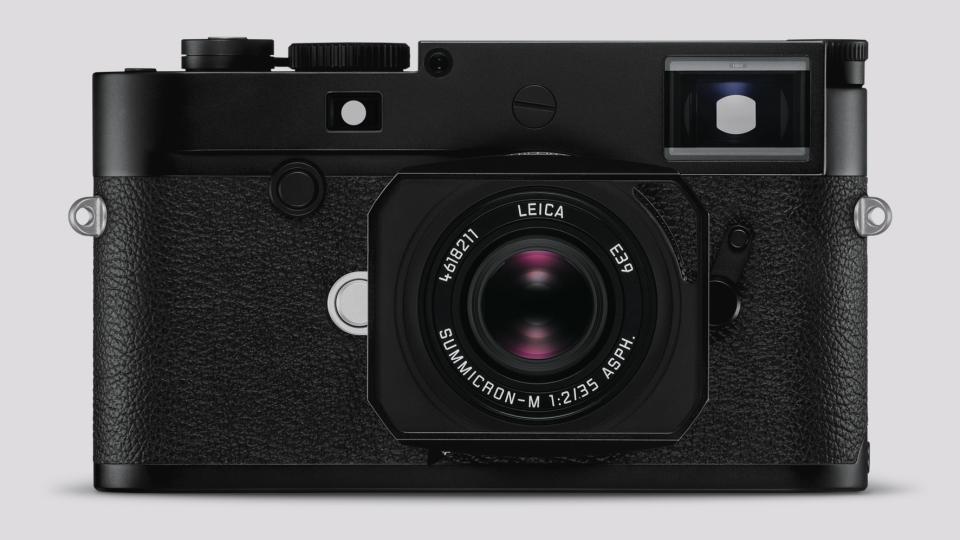
Leica has always had a penchant for remaining true to its filmic heritage, and this sentiment rings loud and clear with the newest M-series digital rangefinder, the M10-D. Fresh off the release of the stills-only M10-P, and the true successor to 2016’s unique M-D (Typ 262), the new M10-D takes the core imaging capabilities of its flagship rangefinder and places it in a stripped-down, minimalistic body without a rear LCD screen. This controversial decision by Leica was “based around the idea of using a camera completely free from distractions, allowing the user to fully focus on their subjects and the core photographic settings at hand.” By removing the menu system and all playback functions, photographers are forced to concentrate on their process and enjoy the moment—akin to photographing with film. However, as a digital camera, the M10-D still benefits from the imaging flexibility and ease of post-production when compared to film.

The M10-D has the same imaging specifications as the M10-P, including the full-frame 24MP CMOS sensor and Maestro II image processor, which afford a wide dynamic range, true color rendition, a sensitivity range from ISO 100-50000, and a continuous shooting rate of up to 5 fps. This new model also uses roughly the same body design; it has a 0.73x-magnification viewfinder, has the slimmer body profile that debuted with the M10, and features a built-in ISO dial for easier adjustment of exposure settings.

From here, the M10-D begins to differentiate itself. The calling card of the camera is its lack of a rear LCD monitor. In its place, on the rear of the body, is an exposure compensation dial (a first for Leica M bodies) and surrounding this dial is an outer ring to turn the camera On/Off or set it to On with Wi-Fi. And just as disorienting as seeing a digital camera without a screen for the first time is seeing a digital camera with a film advance lever… well, it’s not really an advance lever, but rather an integrated fold-out thumb rest for greater stability and handling, especially when working with heavier lenses. Finally, giving the M10-D a bit more versatility than its predecessor, this new model also has built-in Wi-Fi, which works in concert with the newly introduced Leica FOTOS app. This app, available for iOS and Android, will allow you to pair the camera with a mobile device for transferring images, remotely controlling the camera and shooting with a live view image, and enabling you to adjust a selection of camera features, such as choosing between JPEG or DNG, setting the time and date, and formatting your memory card. Also new, the M10-D will be compatible with the Visoflex electronic viewfinder for TTL viewing, extra-precise focusing, and for working with super wide-angle lenses.
Be sure to view the purist video about the Leica M10-D that we shot at the Photo Plus Expo 2018.
What do you think of Leica’s bold move? Would you ever consider working with a camera without a rear LCD screen? Let us know your thoughts in the Comments section, below.
