Photography
- Recently Added
- Popularity
- Name
About 1884 filtered results

Posted
Photography bad habits, we all have them. Learn how to avoid these common landscape photography mistakes and start capturing stronger, more compelling images.
0:00 - Intro
0:21 - Bad Habit 1
2:52 - Bad Habit 2
5:44 - Bad Habit 3
7:49 - Bad Habit 4
8:56 - Bad Habit 5

Posted
A powerful portrait doesn’t just capture a face, it creates a sense of depth, space, and emotion. Photographer Francisco Joel Hernandez will show you how to build strong visual depth in your portraits using lighting, lenses, and composition.
0:00 - Intro
3:09 - The flat portrait problem
8:55 - How to add depth
20:50 - Cheat code
27:28 - Off camera flash
35:46 - Lighting systems
39:16 - Technique breakdown
47:52 - Mistakes to avoid
49:14 - Final tips
53:00 - Live demo
Sponsored by


Posted
Invitations, rings, flowers are some of the small details that help tell the story of a wedding day. In this video, Lotta reveals how to turn them into stunning flat lay photographs with practical tips on styling, placement, lighting, and composition.
0:00 - Intro
0:42 - Why Flat Lays?
1:27 - How to Find Items
2:36 - Styling Tools & Backdrops
3:16 - Building Your Flat Lay
5:08 - Composition Principles
5:27 - Natural Light
6:29 - Artificial Light
6:57 - Gear & Settings
9:05 - Editing Tips
Sponsored by

Posted
Jean Fruth sits with legendary sports photographer David Burnett, sharing their unique perspectives on photographing one of the sporting world’s most storied events, the Olympics.
0:00 - Intro
2:29 - David's early work
6:24 - Learning from past work
8:32 - Finding the moment
15:37 - Photographing the Olympics
19:00 - Locking in for the moment
25:42 - Prep for long-term projects
37:57 - Wanting to get the big moment shot
43:24 - Images that stand out
51:05 - Closing
Sponsored by

by Luke Rollins · Posted
Chiaro, a brand best known for their UV filters, recently expanded their inventory with the launch of a line of circular polarizer (CPL) filters available exclusively at B&H. Available in 18 different thread sizes from 37 to 112mm, the new filters come in two build configurations, Core (aluminum) and
Posted
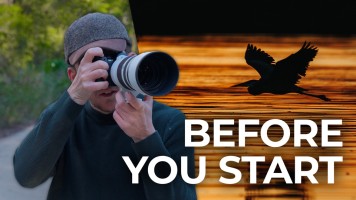
In order to take epic bird photos, you need to be able to find them first! Matt is at Everglade National Park to show you how he prepares before taking bird photos, how he composes his images, how he works with lighting, and more.
0:00 - Intro
0:42 - How to Find Birds
4:53 - How to Spot Birds in Trees
6:47 - Best Lighting
8:30 - Angles & Backgrounds
10:19 - How to Add Depth
10:53 - Environmental Portraits
11:46 - Did Matt Complete His Challenge?
Sponsored by

Posted
Portrait photographer Mike Foley covers the theory behind portraiture, focusing on how to use shapes and posing to create stronger compositions. Mike also discusses the power of simple lighting and how to achieve professional results with a minimal setup.
0:00 - Intro
2:27 - Classic approach
10:03 - Finding / making a triangle in frame
22:51 - Rembrandt lighting
39:54 - Bringing both methods together
43:26 - Closing
Sponsored by

Posted
Sony Artisan of Imagery Jean Fruth photographed her first Olympic Games this year. In Part 2, she shares advice on covering your first major sporting event, including how to prepare, what gear to bring, and how to build an efficient workflow. She also discusses the difference between expectations and reality when shooting on one of the world's biggest stages.
0:00 - Intro
1:11 - From baseball to hockey
3:17 - How Jean prepared for this new opportunity
6:26 - Dealing with not knowing the outcome
11:03 - Knowing the sport
18:15 - Workflow
24:00

Posted
Join Sam in the Bisti Badlands to learn how to utilize the OM SYSTEM OM-3 ASTRO when taking Milky Way and starry photos.
0:00 - Intro
0:30 - Key OM-3 Astro Specs
1:35 - Location Scouting
3:45 - Astrophotography Specs
6:26 - Night Live View & Starry Sky AF
9:07 - High-Res Shooting Mode
10:32 - Nightscapers Photo Conference
11:07 - Infrared Cut Filter
12:17 - Custom Button Modes
13:13 - Sam's Thoughts
Sponsored by
by Mathew Malwitz · Posted
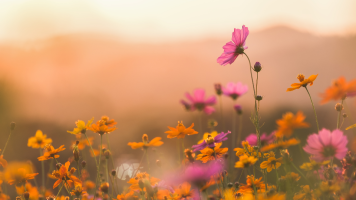
If there’s one question fledgling photographers often ask, it’s “How did you get such a nice background?” Backgrounds are an essential element of a photograph that are often neglected. In fact, it’s safe to say that a background is as important to a composition as the subject itself. After all, a distracting one will detract from an image.
In this guide, we’re going to cover the many methods used to capture clean, smooth backgrounds in our images. This will encompass the settings and gear involved as well as the in-the-field techniques you can
by Mathew Malwitz · Posted
Through the cacophony of forest sounds, your ears home in on a buzzy, almost garbled ascending song. Perhaps you recognize it immediately, or maybe you need to confer with one of the trusty internet databases or apps. You train your eyes on the canopy, scanning for movement of any kind, when you see it: the cerulean warbler, a small rowdy songbird with wings slightly splayed from the body. Quickly, you lower your binoculars and train your camera on the little blue passerine before snapping a few frames.
The resulting photos clearly show the

Posted
Sidney tests out the LUMIX L10, a compact camera that fits the best of Panasonic's photo and video features in a lightweight package.
0:00 - Key Information
1:25 - Sensor & Dynamic Range
1:55 - Lens
2:28 - Real-Time LUT & Film-Like Photo Styles
3:06 - More Specs
3:30 - Sidney's Experience & Thoughts
4:28 - Video Features
5:20 - Biggest Takeaway
Sponsored by

by Mathew Malwitz · Posted
Who doesn’t love a close-up shot of a flower or bumble bee? Some of the most beautiful aspects of nature are quite small and require special tools to capture them in a meaningful way. Whether it be of a cute little insect visiting our garden, or miniature figurines you paint and sell, we need a camera that can focus close and deliver good, quality results.
Before you panic, hear us out. We don’t need to get carried away with complicated lenses and accessories, and can just enjoy yourself with a simple compact,

by Mathew Malwitz · Posted
Optic size is measured by what it can do, but when you’re new to the hobby, this can be confusing. Pick up a spotting scope or any pair of binoculars and you’ll see them adorned with a set of numbers like 8x42, 7x32, or 20-60x80. What exactly do those numbers mean and what do they tell us about an optic?
At the most