Photography
- Recently Added
- Popularity
- Name
About 426 filtered results

by Shawn C. Steiner · Posted
Defining and recommending bags for someone to use every day is tough, though I will say the key to any good everyday carry (EDC) bag is that it be just large enough to fit your essentials. Taking that into consideration, I’m going to try and do the impossible and recommend some bags that creatives in various professions may want to check out in the hunt for their next pack.
Photographer: Peak Design Everyday Backpack 20L
Of course, we are going to start with
by Allan Weitz · Posted
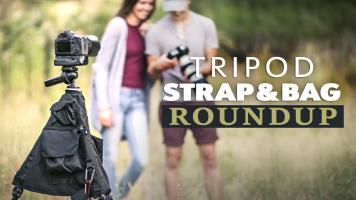
One thing I really don’t enjoy when I’m out taking pictures is having to carry a tripod. My tripod came with a case, but I prefer leaving it home when I’m out taking pictures. When traveling from point A to point B, or when not in use, my tripod resides safely in its case, but when I’m out on the prowl with camera in hand, I prefer attaching a tripod strap from its ends and slinging it over my shoulder.
Tripod Straps
Tripod straps are often overlooked when it

by Bjorn Petersen · Posted
The golf season is in full swing and this week brings us the first major tournament of the year. Whether you’re a player or a spectator, B&H has the goods to complement your enjoyment of the game, ranging from cameras for your golfing vacation to binoculars for tournament viewing, as well as a host of other accessories to enhance your round.
Cameras
As a golfer and as someone who works at B&H, one of the most frequently asked questions I hear on the course is, “What’s a good camera to bring with me while golfing?” Even though
by John Harris · Posted
If you are a Nikon shooter who is considering wedding photography as a part of your repertoire, or currently shooting weddings and looking to add a new lens to your kit, there is no shortage of options, from the tried and true to the exotic. Let’s look at what’s available.
Zoom Lenses
The workhorse zoom lenses often found on the cameras of wedding pros—as well as photographers of all stripes—should be mentioned up front. The venerable 24-70mm f/2.8 is now available in two versions, the most recent iteration, the

3,998 Views· Posted
Interested in night photography? Want a deep dive into the types of cameras that are best suited to this genre? You are in luck! Educator, author, and co-founder of National Parks at Night, Gabriel Biderman is here to give us a seriously detailed look at some of the most popular cameras for night photography. Biderman talks about megapixel counts, sensitivity ranges, and other concerns photographers may have while providing numerous examples and comparisons. Read more about night photography
by Allan Weitz · Posted
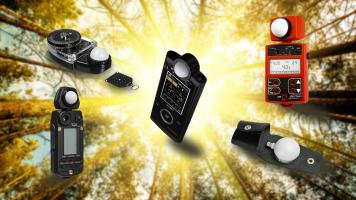
Almost every camera sold at B&H contains a light meter designed to calculate extremely accurate exposure readings, typically with a choice of Spot, Average, and Segmented metering modes. Good as they are, handheld light meters still have the upper hand when it comes to analyzing light.
For starters, the meter in your camera only reads reflected ambient light. If you’d prefer to take an incident reading, i.e., measure the light falling onto you subject rather than reflecting off your subject, you can’t do it without having to add

by Allan Weitz · Posted
Pancake lenses, those small fixed focal length lenses that barely protrude from your camera’s lens mount, are becoming increasingly common, and for several reasons. Most commonly based on a simple Zeiss Tessar lens design that dates back more than a hundred years, pancake lenses have come back into vogue mostly due to size—they extend an inch or less from the camera body—and weight, which on average is about three-plus ounces. When they're mounted on a compact DSLR, Four Thirds or Micro Four Thirds camera body, you may find yourself

by Josh Taylor · Posted
Wedding photography has become an extremely popular and lucrative specialty. First and foremost, a wedding is a grand, unrepeatable, emotionally charged event at which expectations run high, and second best won’t do. Being a wedding photographer requires dedication and talent, but having the right equipment is crucial if you expect to achieve sharp, well-composed, well-lit images that depict people at their best. Here’s a basic rundown of what you’ll need to take your wedding photography to new dimensions, or to fill in the gaps in your

by Josh Taylor · Posted
Over the past few years, professional-caliber photo printers have come a long way, and today’s top models can turn out large prints of impressive quality rivaling those made by the high-end printing services catering to commercial and art photographers and demanding enthusiasts. The latest pro-grade inkjet printers all offer pigment-based, multi-cartridge ink systems with multiple monochrome inks for superior reproduction of blacks, have extremely fine ink delivery nozzles, and can turn out ultra-hi-res color prints in sizes of 13 x 19 inches
by Allan Weitz · Posted
When the first few generations of mirrorless cameras began arriving on our shores, they weren’t taken seriously by wedding photographers, due to sluggish autofocusing (compared to DSLRs) and, more importantly, the dearth of lens options.
That’s no longer the case. Today, Sony offers an attractive selection of fixed prime and zoom lenses to go along with its greatly improved mirrorless cameras. Though designed for Sony’s full-frame E-mount cameras (the most likely choice for wedding shooters) they are equally at home on Sony’s APS-C format

by Bjorn Petersen · Posted
Although photographing a wedding usually conjures the image of primarily working in a handheld fashion, there are often moments in the course of events that can truly benefit from the use of additional camera support by using a tripod. When it's possible to plan your shots in advance, a tripod will add increased stability to ensure sharper imagery and greater control and refinement possibilities for your compositions. Handheld shooting will often be your main method, but a tripod is an ideal accessory for accomplishing a wider array of imagery

by John Harris · Posted
As a professional photographer, you have many options for printing the photos you shoot. The kind of printer you choose is based not only on the type of photos you make and who your clients are, but on how you want to present your work and what style of personal promotion interests you. As a wedding photographer, you might want to present acceptable work prints to your clients and have a lab handle the final prints, or you might want to invest in your own high-end printer and print your images.
Possibly, you’d like to bring a portable dye-
by Todd Vorenkamp · Posted
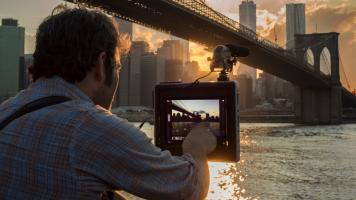
Most of us know that the iPad is a powerful photographic and filmmaking tool. Whether you are using it for post-processing, image sharing, camera control, storage, live view monitoring, or just for taking photos, the iPad is finding a home in the camera bags of many photographers.
If it has one shortcoming, however, it may be the fixed-focal-length lens that only features digital zoom. But, if you consider the built-in iPad camera just a part of a larger lens system, you can

by Shawn C. Steiner · Posted
There are many reasons to want a camera bag that doesn’t look like a camera bag. It could be style, practicality when using the bag for other reasons, or to avoid becoming a target for opportunistic thieves. You are in luck, because plenty of bag makers offer fashionable designs that are perfectly suitable for every day. Here are six that we find appealing.
ONA Bowery
One of the biggest names in stylish, everyday camera bags is ONA, and the

by Allan Weitz · Posted
Single-digit temperatures are not fun. Snow days are, however, a great time to capture the fun of winter. The usual problems arise when you start traveling out into the wet and chilly world of winter—not all cameras are perfectly equipped to be operated either in these extreme conditions or with gloves. Here you’ll find a collection of solid systems that will survive a blizzard.
Olympus OM-D E-M1X
Surprising us with this pro-oriented release, the