Photography
- Recently Added
- Popularity
- Name
About 426 filtered results

by Allan Weitz · Posted
Getting the most out of your camera and lens often means having to go beyond the limitations of these basic, though very essential components. Regardless of your choice of camera systems, be it DSLR or mirrorless, there are many accessories designed to up your game as a photographer, and maybe even enhance your photographic experience.
If your camera system of choice is a Micro Four Thirds (MFT) from Panasonic or
by Todd Vorenkamp · Posted
Camera accessories: not only can they be entirely practical for the types of photography you enjoy, they can also give your camera a unique look and feel, while boosting performance. Fujifilm’s nice lineup of accessories, and an array of third-party accessories, allow Fujifilm photographers to get the most out of their camera systems, and are great gift ideas for the Fujifilm shooters in your life.
Grips
If you grew up in the days of film cameras, before cameras

by John Harris · Posted
When you think of photography accessories, of what do you think? Cameras? Of course, they’re not. Lenses? No, too integral. Tripods? I feel they are their own item, not an accessory. Flashes? I say yes, because what good is a flash without a camera, but Nikon lists flashes as their own category, not an accessory. Can we all just agree that straps and caps are accessories and if not, how do you define an accessory?
Speedlights
For the sake of this article, let’s start with flashes, a.k.a. speedlights. The top of the line from Nikon is the

by Shawn C. Steiner · Posted
It’s gift-giving season again! While many of us will be excited for any potential gifts that will be received, the idea of tracking down gifts for some of our more difficult friends makes many dread holiday shopping. I can’t help you with most of your friends but, if you have a photographer in the bunch, I think I can make some recommendations that will make life easier. All the items below won’t be limited to a specific camera brand or shooting style, so you don’t have to worry about finding out specifics or learning all that much to pick up

by John Harris · Posted
What defines an ultra-telephoto lens? Of course, it’s the “ultra” (or at times “super”) prefix that we are concerned with when talking about these lenses, which enable photographers to get a close-up view of something from which we normally remain very distant.
These lenses are used primarily for photographing wildlife, sports, journalism, and perhaps paparazzi or “stake-out” photography. If most readers are not going on a stake-out or stalking stars, let’s say a clear majority of ultra-telephoto lens users are photographing sporting events,

by Todd Vorenkamp · Posted
When the inner planets, Mercury and Venus, pass between Earth and the Sun, it is known as a “planetary transit.” While not as visually spectacular as a solar eclipse, the transit of our inner solar system’s neighbors is a remarkable sight to viewers on Earth. Unfortunately, these events are not visible to the naked eye, so let’s discuss what gear is recommended for photographing and viewing the transits.
Astronomical images NASA/JPL
Before you invest in solar viewing optics, please know that these transit events are rare.

by Josh Taylor · Posted
Experienced photographers usually stick with what works, and that’s why so many enthusiasts and working pros still opt for traditional DSLRs with reflex mirrors and optical viewfinders. Peruse the impressive specs of the seven cameras we’ve detailed below and you’ll see why. All of them deliver a full complement of advanced, cutting-edge, often unique features along with awesome real-world performance, and all of them accept the full complement of legacy lenses in the typical serious shooter’s arsenal. In addition, their robust, ergonomically
by Shawn C. Steiner · Posted
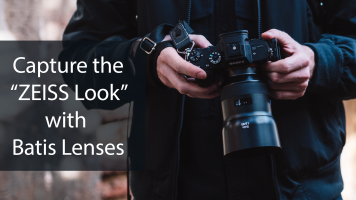
There are a few names in the photo industry that inspire confidence. ZEISS is certainly one of them. Just seeing its logo can make a product—be it a lens or a smartphone camera—appear trustworthy. This work goes beyond simply making lenses. A core part of its imaging business involves partnerships with other leading brands, and the one with the most eyes on it today must be Sony. ZEISS and Sony have maintained a mutually beneficial relationship for years

by Lawrence Cohen · Posted
Waterproof point-and-shoot cameras have changed the reason many people scuba dive. In the early days, ocean explorers like Jacques-Yves Cousteau used scuba and cameras to explore the deep for scientific research purposes. Now, sport and hobbyist divers want to capture images and video to share their underwater experiences. Simple digital cameras in basic housings allow all divers to capture underwater snapshots and movies. However, many divers want to take their imaging to new depths.
Using a DSLR or mirrorless camera with interchangeable

by Bjorn Petersen · Posted
When choosing the perfect camera for travel photography, there are myriad options available, depending on the way you like to shoot, how compact you want your camera to be, and how versatile your camera system needs to be. Ranging from ultra-compact point-and-shoots to sleek interchangeable-lens options, here are 12 portable cameras perfect for your upcoming travels.
1. Leica Q2
I’m an advocate of traveling with a single lens, and the Leica Q2

by Allan Weitz · Posted
The topic of this article might seem easy-breezy to compose, but truth be told—it isn’t. For starters, how do you define “travel friendly?” Where are you going? How are you getting there? And what exactly do you plan on photographing once you get there? Do you already own a camera and lenses? If you do, are you happy with them and, if not, why?
There’s simply no way we can address every scenario but, at the very least, we can offer you food for thought.
Bigger Doesn’t Always Mean Better
With few exceptions, it would be fair to say just about

952 Views· Posted
Summer is the perfect season for travel, and we’ve got three dedicated travel backpacks to help you safely carry all your camera gear. Join David Flores from B&H as he talks up some of our favorites: the Think Tank Photo Airport Essentials, the

by Bjorn Petersen · Posted
Traveling with film isn’t quite as straightforward as traveling with a digital camera. With digital, you simply need to pack your camera, pack your lenses, and take some batteries and memory cards. This is all the same for film photography, except, instead of some memory cards, you have to make an active decision about which and how much film you’re going to bring. The more often you travel with film, the easier this question becomes. But even still, as a veteran, I always second-guess myself each time I’m packing film for a trip.
The issue

by Shawn C. Steiner · Posted
Sometimes 1:1 just isn’t enough to capture your photographic vision, and this is where ultra-macro lenses come in handy. These options can capture extreme close-ups and reveal the minute details of subjects, opening your imaging world to even the smallest objects. One interesting note about these lenses is that many won’t focus to infinity, making them tools for only the most die-hard fans of macro photography.
Canon MP-E 65mm f/2.8 Macro Lens
If there were a “classic” ultra-macro lens, it is Canon’s

by Shawn C. Steiner · Posted
One thing many photographers learn quickly is that photography can be an expensive hobby. This is especially true if you head into a niche field and need some dedicated tools to get the shots you want. Macro is one of those specialties, and it asks you to purchase a dedicated macro lens that is generally going to be pricier than your standard lenses. Fortunately, the photo world is filled with affordable alternatives to get you started with your close-up experiments.
The trick to high-quality macro images is getting closer to your subject.