Outdoors
- Recently Added
- Popularity
- Name
About 100 filtered results

by Cory Rice · Posted
You've been studying star charts for weeks. You’ve read “Tips for Buying a Telescope,” picked out, and purchased your first telescope. You can hardly contain your enthusiasm while setting up your new scope. Finally, the moment arrives—you take your first magnified look at the night sky, prepared to be blown out of this world. It is a beautiful sight. Yet after the initial awe wears off, you can’t help feeling a
by Staff Writer · Posted
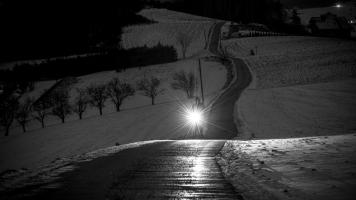
It’s hard to imagine a more useful tool than a flashlight. We’re pretty much helpless if we can’t see what we’re doing—and it’s often during those times when we can’t see, such as a power outage or car trouble on a dark road, that we have important things to do. So, whether it’s peering behind the stove in search of a dropped serving spoon or navigating the impacts of a major storm, a flashlight is a must-have item.
The flashlights of today are brighter and more efficient than ever, and come with all kinds of features, from flashing SOS

by Christopher Witt · Posted
The astronomical phenomena of a planet moving into opposition isn’t unique—but what is unique is when three planets are in opposition in quick succession. This spring, the three bright outer planets—Jupiter, Saturn, and Mars—will be at opposition during a span of just 79 days.
Images courtesy of NASA/JPL-Caltech/Space Science Institute/Cornell
Jupiter’s opposition occurred first, on May 8, in the constellation Libra. Next was Saturn’s opposition, which occurred on June 27, just above the Teapot stars of Sagittarius. Finally, the opposition of
by Morgan Lyle · Posted
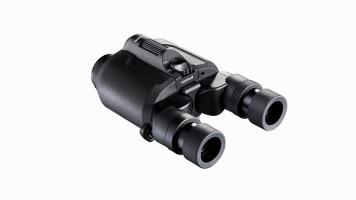
A 12x binocular is powerful enough to reveal the details of far-off subjects—as long as you're not holding it in your hands. At that magnification, the shaking of even the steadiest observer will badly disrupt the viewing experience. If you're on a boat or in a moving vehicle, the problem is even worse. But the 12x28 Techno-Stabi Image-Stabilized Binocular from Fujinon frees you from the tyranny of the tripod. Its
by Morgan Lyle · Posted
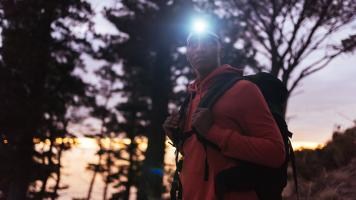
At the turn of the 20th Century, the only people who wore lamps on their heads were miners. Those early headlamps burned acetylene gas, until Thomas Edison invented an electric model, in 1914. Miners still wear headlamps today, as do dentists, doctors, electricians, plumbers, and many other professionals. The technology has evolved from gas flame to incandescent bulb to LED, but the principle is the same: you just can’t beat hands-free, portable light.
Of course, headlamps aren’t just for digging coal and drilling teeth. They’re perfect for a

by Morgan Lyle · Posted
It feels good to know you’re going the right way—especially if it doesn’t involve unfolding and re-folding a map or, heaven forbid, asking for directions. Auto makers and tech companies have catered for decades to our desire for accurate, hassle-free navigation aids, and today it’s hard to imagine a smartphone or recent-model car that doesn’t offer turn-by-turn GPS.
But modern stand-alone GPS units offer much more than maps and directions, and they’re not just for use in motor vehicles. GPS bicycle computers let you take part in virtual races,

by Christopher Witt · Posted
Before I started writing for B&H, I wrote and produced promos, trailers, and launch campaigns for a variety of paranormal investigative TV shows for a network that primarily airs Sci-Fi programming. In that role, I've spent literally weeks of my life watching those shows and, as a consequence, became fairly familiar with the gear that they all seemed to use—and it turns out that their kits were all surprisingly similar. So as we move into the Halloween season and ghosts and ghouls are on people's minds, I'm here to share some of the

by Christopher Witt · Posted
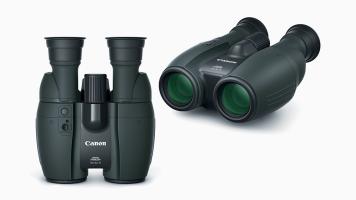
Building on the success of its predecessor, Leica has introduced refinements and improvements across the board to produce its new Rangemaster CRF 2700-B laser rangefinder. Up top is a longer metering range that reaches out to 2,700 yards, thanks, in part, to a narrower beam divergence, while staying with the same small CR2 battery previously used.
Still in place is the onboard inclinometer and environmental sensors that measure the
by Christopher Witt · Posted

by Christopher Witt · Posted
The scientific community in general, and astronomy in particular, is all abuzz these days as the hype builds for the upcoming North American Eclipse, happening on August 21. Between my position here at B&H and my personal interest in astronomy, I’ve been talking about this event for almost a year to my friends and colleagues, and I’ve found that people have a lot of questions about solar eclipses. Sure, we’ve all heard about solar eclipses, but how many of us have actually done research on them? I’m thinking that the answer is “not many.”
by Christopher Witt · Posted
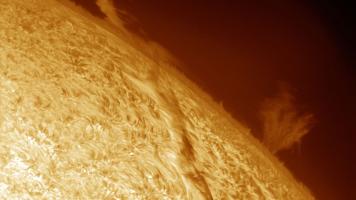
If you have an interest in astronomy, chances are that you’ve heard of the upcoming North America Eclipse, in August 2017. And if you have a conventional telescope, you know the problem is these telescopes are all made for nighttime use so, to use them for solar and solar eclipse viewing, you need special filters to protect your instrument and (more importantly) your eyes. Luckily, we here at B&H have you covered, with filters to adapt your telescope for viewing the sun in general, and the solar eclipse, in particular.
First Things First

by Christopher Witt · Posted
A great deal of mystery and misconception surround the topic of observing the sun and solar eclipses, and while you should absolutely not look directly at the sun without proper protection, we here at B&H have got you covered on how to enjoy viewing the sun and, later this year, the solar eclipse. Read on to see what’s available for you, if you’re interested in investing in a dedicated solar telescope.
White Light or Narrow Band?
Right out of the gate, you need to decide: White light or Narrow-band (Targeted) viewing? For specifics about
by Todd Vorenkamp · Posted
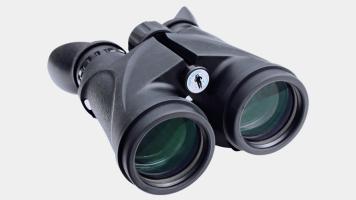
The 3D Astronomy 8x42 Space Walker 3D Binoculars are changing the way star gazers and astronomers around the world are enjoying the night sky. These binoculars give users an immersive view of the stars and planets above in way that standard astronomical (or all-purpose) binoculars do not.
From the Earth, the night sky looks two-dimensional, as if the stars are shining down on us from a distant vast dome ceiling, like you find

by Morgan Lyle · Posted
Fresh air scented with pine needles, evenings around a campfire, and a night sky full of stars: for a great many people, camping is the ultimate getaway. More than 22 million Americans enjoyed some kind of camping in 2014, reports the Outdoor Industry Association. Some like it active and adventurous, others lazy and restful, but all find it restorative for body and spirit. As George Washington Sears wrote under the pen name Nessmuk, in 1891, “We do not go to the green woods and crystal waters to rough it, we go to smooth it.”
A camping trip is

by Ryan Zanoni · Posted
Nature calls to certain people. For some, the sea and rivers call the loudest, beckoning them to aquatic exploration and experiences, and they answer fervently. In rare cases, this passion leads to amazing things. Julieta “Jules” Gismondi and LouAnne Harris, river guides and paddling instructors at Manhattan Kayak + SUP [Stand Up Paddling], in New York, NY, are two such people. Together, the friends are known as the Atlantic SUPergirls, and as their story proves, the name is apt.
LouAnne Harris (left) and Jules Gismondi (right)
Just over a