Outdoors
- Recently Added
- Popularity
- Name
About 21 filtered results

by Staff Writer · Posted
The landing of the Apollo 11 lunar module, Eagle, on the surface of the moon on July 20, 1969, and the first steps of a human on another celestial body, represent one of the most remarkable achievements in the history of mankind. B&H Photo is helping to commemorate the milestone anniversary of NASA astronauts Neil Armstrong, Buzz Aldrin, and Michael Collins’s great journey to the moon and back with several special-edition telescopes from Celestron that ship with a commemorative Apollo 11 50th anniversary coin and

by M. Brett Smith · Posted
Starting Monday, May 6, B&H will begin our week-long coverage of everyday carry (EDC) gear. More than just the contents of your pack or purse, EDC items are the essential tools that get you through your day. Whether it’s the noise-canceling headphones that help you survive your subway commute or the do-everything smartphone that assists you in more ways you can count, if it’s something you carry with you all the time, we’re gonna discuss it (and maybe throw in a couple of recommendations along the way). We’ll also be checking out EDC kits

by Christopher Witt · Posted
Since its introduction at the dawn of the 21st century, the Ultravid HD-Plus family of binoculars has been Leica’s flagship line, to the adoration of fans around the world. This year the company is taking the precision engineering and optical quality that are the hallmarks of the Ultravid HD-Plus and elevating the design elements to produce the
by Staff Writer · Posted
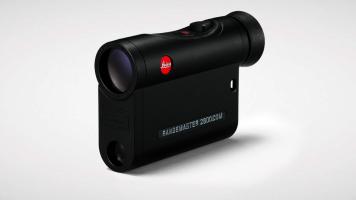
Bringing the accuracy of pinpoint distance measurement with a range of up to 2,800 yards, the new Leica Rangemaster CRF 2800.COM is the first compact Leica laser rangefinder capable of a Bluetooth connection to your mobile device equipped with the new Leica Hunting App. The wireless connection also works with your Kestrel Elite weather meter.
The Rangemaster CRF 2800.COM gives a 7 x 24 optical view of your target with 15mm eye relief

by Christopher Witt · Posted
With the upcoming total lunar eclipse poised to be the “Big Thing” for 2019 (visible throughout North America), we here at B&H’s Space Headquarters were planning on putting together a tour of the moon as a primer for those readers who may not know that much about our closest neighbor in the solar system… but then we realized that NASA is pretty awesome at stuff like that and had already put together a fantastic video!
Click and enjoy the best five minutes you’ll spend today with this
by Todd Vorenkamp · Posted
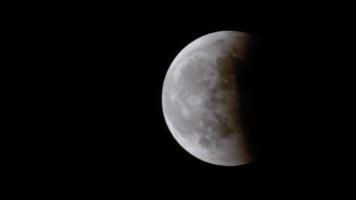
Hey, Earthlings! There will be a total lunar eclipse coming our way, beginning on Sunday, January 20 2019, and lasting into the 21st! Here are some facts you need to know.
Who is involved?
You! Your friends and family! The Sun, Moon, and Earth!
What is it?
An awesome, total lunar eclipse.
The darkest shaded areas of the globe are where the entire eclipse is visible from start to finish. Moving outward from that region,

by Todd Vorenkamp · Posted
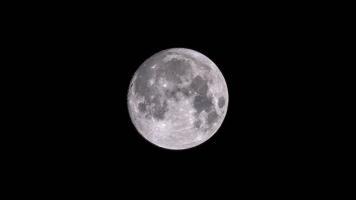
I am certain that I am not the only Earthling who is in love with the moon, but it was my grandmother who called it "Todd's Moon" after one of the first words I ever spoke was, simply, "moon." Ever since those early days, I have spent a lot of time looking at the moon, thinking about the moon, reading about the moon, and photographing the moon.
To learn about the moon in the olden days, a lunar enthusiast would have to go to their local
by Christopher Witt · Posted
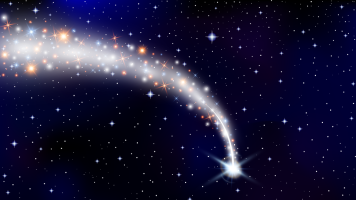
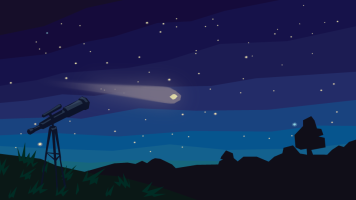
Remnants left over from the earliest formation of our solar system, comets are thought to originate from the theoretical Oort Cloud. Located far out beyond even the farthest planet, it is thought to contain as many as 2 trillion objects, each of which has the potential to become a long-period comet. These objects are often referred to as “dirty snowballs” because they are mostly made of rock and ice until gravity from a large passing celestial body, like a star, pulls a piece out of the Oort belt and starts it on its journey toward the sun.
by Christopher Witt · Posted
When I started hearing the buzz in the astronomy community about how Comet 46P/Wirtanen was coming in hot through our Solar System, my ears proverbially perked up. A quick Google search revealed that this is a truly historic apparition and one that justly deserves the buzz. (The term “apparition,” in astronomy, refers to the appearance or time when a comet, especially a periodic one, is visible.)
The comet was discovered, in 1948, by Carl Wirtanen (hence its name) at the Lick Observatory,
by Meryl Greenblatt · Posted
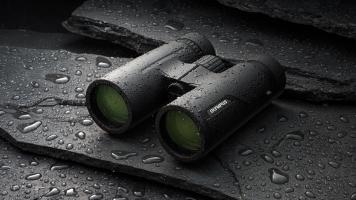
With the fall season upon us and bird migration going full throttle, bird-watchers and their best friends—their binoculars—are out in force. I took this opportunity to try two new pairs from Olympus, the Pro Series 8x42 and 10x42. At
by Christopher Witt · Posted
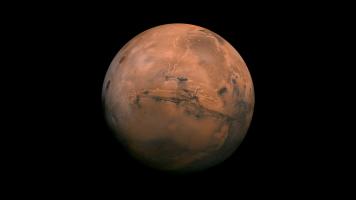
The astronomical phenomena of a planet moving into opposition isn’t unique—but what is unique is when three planets are in opposition in quick succession. This spring, the three bright outer planets—Jupiter, Saturn, and Mars—will be at opposition during a span of just 79 days.
Images courtesy of NASA/JPL-Caltech/Space Science Institute/Cornell
Jupiter’s opposition occurred first, on May 8, in the constellation Libra. Next was Saturn’s opposition, which occurred on June 27, just above the Teapot stars of Sagittarius. Finally, the opposition of
by Morgan Lyle · Posted
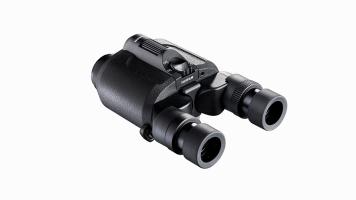
A 12x binocular is powerful enough to reveal the details of far-off subjects—as long as you're not holding it in your hands. At that magnification, the shaking of even the steadiest observer will badly disrupt the viewing experience. If you're on a boat or in a moving vehicle, the problem is even worse. But the 12x28 Techno-Stabi Image-Stabilized Binocular from Fujinon frees you from the tyranny of the tripod. Its

by Christopher Witt · Posted
Building on the success of its predecessor, Leica has introduced refinements and improvements across the board to produce its new Rangemaster CRF 2700-B laser rangefinder. Up top is a longer metering range that reaches out to 2,700 yards, thanks, in part, to a narrower beam divergence, while staying with the same small CR2 battery previously used.
Still in place is the onboard inclinometer and environmental sensors that measure the
by Christopher Witt · Posted

by Christopher Witt · Posted
The scientific community in general, and astronomy in particular, is all abuzz these days as the hype builds for the upcoming North American Eclipse, happening on August 21. Between my position here at B&H and my personal interest in astronomy, I’ve been talking about this event for almost a year to my friends and colleagues, and I’ve found that people have a lot of questions about solar eclipses. Sure, we’ve all heard about solar eclipses, but how many of us have actually done research on them? I’m thinking that the answer is “not many.”