- Recently Added
- Popularity
- Name
About 78 filtered results

Posted
Landscape and wildlife photographers swear by photographing at sunrise and sunset. But, there is another time of day when you can shoot nature photography and still get beautiful results. Join Sam and Matt in the Everglades to learn how to capture photos both in golden hour and blue hour.
0:00 Intro
0:52 Why Sunrise & Sunset?
6:44 Blue Hour for Landscapes
9:34 App for Identifying & Finding Birds
10:13 Mid-Day Wildlife & Landscapes
11:52 App for Tracking the Sun & Moon
12:31 Time of Year
13:26 How Early to Arrive
14:03 Can You
Posted
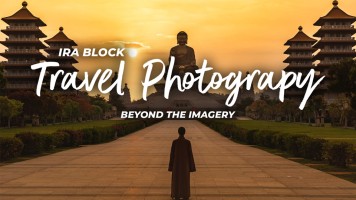
From photographing for the local news to expeditions for National Geographic, Ira Blocks shares his stories of traveling around the world. Ira captures history and culture, but it wasn't easy. He discusses how he was hired by Nat Geo, and all the logistics and planning that goes into his assignments.
0:00 - Intro
2:46 - Working for Nat Geo
6:00 - Ira's first assignment
14:18 - How Ira got started
17:30 - Photographing in color film
21:49 - Olive Oil story
31:29 - Getting into lighting
38:05 - Archaeology work
1:11:29 - Prints on location

Posted
The prime lens vs. zoom lens debate is back, this time for wildlife. There are many features to consider when choosing a lens that's right for you. Matt takes these Canon lenses to Yellowstone National Park to see which focal length has better image quality, autofocus, low light performance, and more.
0:00 - Telephoto Prime or Zoom?
1:05 - Prime Lens Pros & Cons
3:38 - Zoom Lens Pros & Cons
5:12 - Image Quality
5:49 - Fall Off
6:14 - Autofocus (Speed, Accuracy & Tracking)
8:12 - Ease of Use
10:43 - Low Light
12:54 - Which Works

Posted
Photographing wildlife can be unpredictable. Which of these cameras (the Canon R5 II and R1) will have your back? Matt shares what you'll have to consider when deciding between these two cameras.
0:00 - Can You Bear These Puns?
0:13 - Today's Video
1:28 - What's the Same and What's Different?
4:36 - Low Light Performance
5:36 - Pre-Capture
6:52 - Black-Out Free Shutter
8:21 - IBIS & Handheld
9:45 - How Does It Compare in the Edit?
10:19 - Which Is Better for You?
Sponsored by

Posted
Is the Canon RF 100-300mm f/2.8 the best option for wildlife photographers? From relatively wide environmental shots to animal portraits, this lens just might be able to do it all. Matt shares what this lens has to offer in Yellowstone National Park.
0:00 - Intro
0:43 - Specs & Photographing Bison
4:17 - Big Horn Sheep
6:01 - 1.4x & 2x Teleconverters
7:21 - Dueling Bison
8:32 - Why This

Posted
Should you raise your ISO or lower your shutter speed? How do you compose a wildlife photo? Evan Watts (@wattswildlifephoto) shares five tips that'll help you take better wildlife photos!
0:00 - Intro
0:10 - Aperture
1:52 - Composition
2:54 - Shooting Mode
3:43 - ISO
4:38 - Understanding Wildlife

Posted
Choosing the right camera gear can feel overwhelming, especially when you're just starting out. Whether you're venturing into wildlife photography, launching a portrait business, diving into travel photography and videography, or exploring landscape photography, having the right setup is important. To help you navigate your choices, our resident photographers and videographers share their top gear recommendations based on their own experiences.
0:00 - Intro
0:25 - Portrait Overview
0:45 - Portrait Gear Under $500
1:36 - Under $800
2:22 -

Posted
Capture everyday macro photos in the comfort of your own home. Sony Alpha Ambassador Mahesh Thapa shares some tips and tricks to turn your home into a macro photography paradise. Mahesh also recommends equipment and techniques to capture your best macros.
Sponsored by
0:00 Intro
2:12 Simple Kit for Macro Photography
3:02 Mahesh’s Camera Setup
6:16 Lenses
9:35 Useful Camera Accessories
16:50 Putting It All Together
20:47 Idea Suggestions
28:00

Posted
Which is better: primes or zooms? Get ready for a Sigma lens showdown: Iceland Edition! From the Aurora Borealis to travel portraits, Maria and Matt face off to answer this age-old question.
0:00 - Intro
1:32 - Northern Lights
6:39 - Diamond Beach Landscapes
10:51 - Travel Portraits
14:00 - Astrophotography
16:30 - Final Thoughts
Sponsored by

Posted
Canon announces its third lens of 2024 and the smallest and lightest zoom lens of the RF lineup, the RF 28-70mm f/2.8 IS STM for full-frame and APS-C EOS R-series mirrorless cameras. Equally suited for stills and video, the lens’ innovative design benefits both the image quality and the lightweight, compact form factor. Its bright maximum aperture and versatile field of view makes it ideal for content creators seeking a high

Posted
Kicking off the second generation of G Master prime lenses, Sony has upgraded one its most popular portrait prime lenses with the FE 85mm f/1.4 GM II lens. Replacing its eight-year-old predecessor, the sequel is lighter and more compact while delivering higher image quality, smoother bokeh, better autofocus performance, and better overall performance and usability for video shooters.

Posted
Full frame or micro four thirds camera? Telephoto prime or zoom lens? What other equipment might I need? Matt details what’s in his camera bag on this bird photography journey.
0:00 - In This Video
0:30 - Full Frame Setup
1:57 - Micro Four Thirds Setup
7:30 - Accessories
10:49 - What's Next?
Sponsored by

Posted
What makes Anamorphic lenses and their "look" so iconic? What is a squeeze ratio, and how do you desqueeze in post? Jabari explains all that and more in this crash course on anamorphic lenses.
0:00 - In This Video
0:28 - A Brief History
1:37 - Anamorphic Characteristics
4:20 - Anamorphic Pre-Production
7:37 - Anamorphic Post-Production
8:29 - Anamorphic vs. Spherical Footage
11:23 - When & Why Use Anamorphic Lenses?

Posted
Meet the Nikon NIKKOR Z 35mm f/1.4 Lens, a hybrid full-frame camera lens. Its well-balanced and lightweight design make it ideal for gimbal video shooting and as an everyday carry lens for travel and street shooting.

Posted
Virtual reality and other digital worlds are becoming more and more commonplace with each passing day and now the creation of content for these 3D and VR platforms is getting easier with Canon’s new RF-S 3.9mm f/3.5 STM Dual Fisheye Lens for the EOS R7. This lens joins the RF 5.2mm as part of Canon’s EOS VR System and provides a more affordable and accessible option for individuals looking to start their VR creation journey.