Video
- Recently Added
- Popularity
- Name
About 14 filtered results

by Steven Gladstone · Posted
Mirrorless cameras are small, light, and can get into spaces traditional cinema and ENG cameras just can't. However, mirrorless cameras are not meant to work on a film set all day long—it just isn't in their ergonomics. This is especially true if you are planning on handholding a camera all day, or working with accessories such as follow focus units, zoom motors, or external monitors.
Build Your Own or Pre-Made
You can build your own support rig, if you like. Head out to your machine shop and have at it. But, most likely, you lack the milling

by Ronald Francis · Posted
The Canon EOS C70 Cinema Camera, with Canon’s recently developed RF lens mount, is designed with a comprehensive feature set suitable for virtually all types of projects and venues, notably the online education market.
Canon EOS C70
Its features include Dual Gain Output (DGO), auto ISO and auto gain, unlimited recording, vertical

by Mary Latvis · Posted
No matter what your faith, today’s worship isn’t limited to rote liturgical responses—it’s about personal connections between you and a higher power and among fellow believers. Sharing that passion shouldn’t be limited to using static, fixed camera positions for your broadcasts, social media, website, or in-house displays. See how Canon’s array of digital cinema cameras can help you dynamically capture not just traditional house-of-worship services, but also field

Posted
Maria teaches you how to make your own food video at home, with tips on filming, lighting, and editing and some fun tricks to make it your own!
Also check out these other At-Home videos for more ways to help you stay creative at home.
by Ronald Francis · Posted
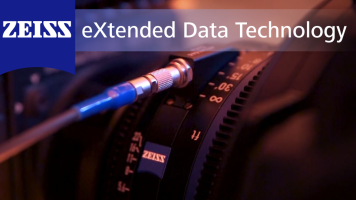
On the side of some ZEISS lenses is a 4-pin LEMO connector, built in, with the words “eXtended Data” inscribed above it. This connector is part of ZEISS’s eXtended Data Technology (XD), which provides lens data for VFX applications. More specifically, eXtended Data efficiently transfers shading and distortion data via a hardware/software workflow. It allows VFX artists to adjust shading and distortion characteristics precisely in post-production. The compatible ZEISS lenses include the
by Steven Gladstone · Posted
Since the Canon 5D MarkII (since supplanted by the Mark III and Mark IV) started shooting video and consumer camcorders started capturing 4K, the lines of differentiation between cameras, and for what purpose, have been blurred. What follows is my take on how to navigate your choices, and make the selection which will be the most appropriate for you
by Steven Gladstone · Posted
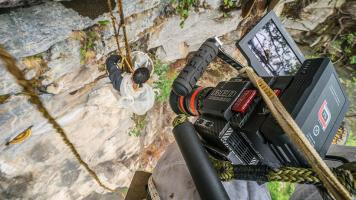
So, you’ve got your camera and now what? Whether it be of the digital cinema, ENG, camcorder, DSLR, or
by BH Event Space… · Posted
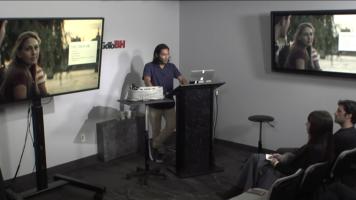
In this B&H Event Space video, filmmaker Brandon Li shares his favorite techniques for creating a story out of purely improvised material. His strategy for creating a film is heavily dependent on the unexpected, and for using those unexpected elements to fuel creativity. Working without scripts or storyboards, it is part of his plan to have events go not according to plan. Li guides you through his filmmaking process, using clips from his many improvised films to underscore talking points. Topics discussed include: planning your shoot to

by BH Online Videos · Posted
It’s here! The Canon EOS C700 takes the top slot in Canon’s Cinema EOS Line, above the well-regarded C300 Mark II and C500. With more internal recording options, including internal Apple ProRes and Raw recording solution developed in conjunction with Codex Digital. Plus, with frame rate options going up to 240 fps, what’s not to get excited about? In this video, Doug Guerra, from B&H, will go over the C700’s exciting feature set in

by Ronald Francis · Posted
To show you what work opportunities are available out there for film school graduates, we asked five filmmakers to describe their experiences after film school. Their skill sets are as varied as their accomplishments—a senior VFX artist in Hollywood; a freelancer who has managed commercial work in films and documentaries for a decade; a multi-faceted talent who acts, directs, writes, teaches, and runs a production company and art gallery; a former assistant to Wes Anderson; and a US Air Force member who went to film school after his

by Steven Gladstone · Posted
Way back when I was in college, a young director came to speak to my class and share his experiences with making, for the time, a moderately budgeted film. Nearly 30 years later, I can still remember him saying that a location day costs $150 a minute. That meant arriving on set, walking over to craft services, and getting a cup of coffee—cha-ching! $150. Drinking the coffee—cha-ching! That’s another $150 (think about that the next time you get a Grande, iced, sugar-free, vanilla latte with soy milk at Starbucks.) That comes to $9,000 an
7,280 Views· Posted
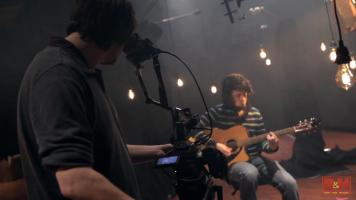
In the following video, Chase Kubasiak, from Zacuto, gives the lowdown on shooting with multiple cameras, offering tips and techniques to make your next multi-cam shoot easier. Covering topics including camera matching, syncing, coverage, and editing, the solutions presented in the video can be applied to a variety of multi-cam styles, including interviews, concerts, and narrative films. We hope you enjoy the video, and invite you to view the wide selection of other instructional and informative

by Peter Ward_1 · Posted
Though many of us are familiar with cameras having two ports―a timecode in/out port and a genlock port―we may not consider why both might be needed. Perhaps we dismiss genlock as just a legacy holdover from the times before switchers had built-in frame synchronizers. The terms “sync” and “timecode” are often used interchangeably, and the fact that timecode can be used to sync devices only compounds this confusion. Sync (genlock) is like a beat that calls out when a field (as well as a line with tri-level) occurs, while timecode indexes each
by Steven Gladstone · Posted
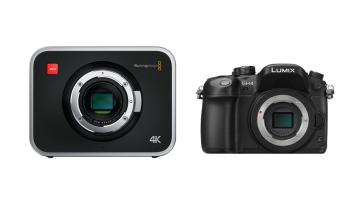
Even though it's only been shipping for a short time, the Blackmagic Production Camera 4K is the current "go-to" choice for shooting 4K video with a single sensor/interchangeable-lens system for less than $4000. However, things may change when Panasonic ships their 4K-capable Lumix GH4. If you're in the