About 2005 filtered results
by Shawn C. Steiner · Posted
Louis Lumière was a pioneering French filmmaker, and in 1935, he took the concept of “the remake” to another level when he reshot the famous Arrival of a Train at La Ciotat in 3D. To those who don’t know, the original 2D version was among the first publicly shown films when it premiered in January of 1896. It has since become a classic for anyone interested in the history of cinema, and created one of the first urban legends of film.
The story has it that because of the realism of a train rolling toward the audience, the crowd was
by Eric Reichbaum · Posted
Michael Christopher Brown is a Magnum photographer who has shot multiple stories for National Geographic, and was a subject in an HBO documentary about photojournalism. Currently, he’s on an assignment in Africa, but was kind enough to answer a few questions about the benefits and drawbacks of using a smartphone to capture images in the field.
What do you find appealing about shooting with a camera phone: is it the portability, the fact that it’s less intimidating to your subjects, or something else?
It’s a number of things, including what
by Shawn C. Steiner · Posted
William H. Mumler was the first well-known spirit photographer, and deservedly so, for capturing Mary Todd Lincoln with her deceased husband, President Abraham Lincoln.
Following the Civil War, many people wanted to make connections with their recently deceased relatives and friends. Photography was new, and considered a method of reaching out.
Today, this image of Abraham Lincoln’s ghost is fairly easy to explain. Mumler used the simple process of double exposure. I say simple since it’s as easy as taking two separate photographs on a single
by John Harris · Posted
If you could build your own digital camera at 8 years old, you would be a very impressive little big shot. This is the goal of the Bigshot Digital Camera Kit, which was developed by Columbia University Computer Science Professor Shree Nayar and his team of students and engineers. “It’s about getting kids’ hands dirty,” says Professor Nayar, who first sketched out the Bigshot on a newspaper page in 2006. “In an age when software rules, I want kids to know how to build hardware.”
Photo by
by Justin Dise · Posted
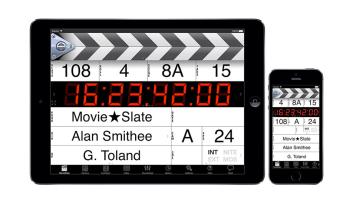
There is a plethora of apps out there, geared toward cinematographers. While many are useful, I’ve decided to share the four apps to which I find myself returning regularly. They have earned a place in my digital tool kit and, in my eyes, are must-haves for any DP or camera assistant.
Sun Seeker
Cinematographers always have an eye on the sun, and want to know where it will be at every hour during a shoot. When will the sunlight come through that window? How will I have to move the actor to keep a consistent backlight when shooting
by jaime traba · Posted
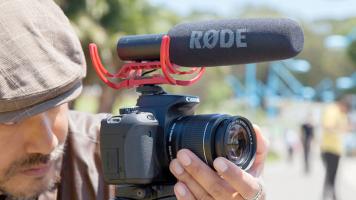
In a perfect world, budgets would be unlimited and you could hire a top-notch sound person for every production. But for students, amateurs, or professionals on a shoe-string budget, you probably don’t have the funds available to do that. This doesn’t preclude you from stepping up the quality of your audio. Here are five steps you can take that can help your sound.
1. Pay more attention to sound while filming (just by opening your ears)
Yes, you have more than enough to pay attention to when you’re behind the camera, but a little attention to

8,035 Views· Posted
Join Kelly Mena, of B&H Photo, as she explains the basic principles of depth of field in photography. Mena defines depth of field and explains the distinction between its deep and shallow variations—the former rendering everything from subject to background in sharp focus, the latter rendering the subject in sharp focus and the background soft and out of focus. Mena discusses the variables you can use to control depth of field in your images: aperture, focal length, and camera-to-subject distance. She also explains how you can use the ISO

by Josh Taylor · Posted
Whenever you open, select, or edit the digital images you’ve shot, or creatively correct or enhance them using post-production software such as Photoshop or Lightroom, you are relying on a display device—a monitor connected to or built into your computer, tablet, or smartphone—to show you an accurate representation of the colors, color saturation, monochrome tonality, contrast and other characteristics of the images captured by your camera. If what you see on the monitor does not match what the camera captured, the prints made from these files
by BH Online Videos · Posted
In the following video, Mia McCormick, of Kelby Media, discusses accessories and shares tips that help you get the most out of your DSLR for outdoor event videography work. McCormick explores using variable neutral density filters to maintain shallow depth of field in bright conditions, the benefits of lenses with de-clicked aperture rings, image stabilization, and using zoom lenses to get close to the action safely. McCormick also discusses employing camera rigs for extended shooting times, on-camera shotgun microphones for improved

by BH Event Space… · Posted
Join professional landscape photographer and author Tim Cooper for an information-packed lecture on landscape photography. This very popular photographic discipline requires practice, planning, and a solid grasp of the technical side of image making.
In this two hour lecture, Cooper explains methods you can use to capture both dramatic and quiet landscape photographs, using proper light and good technique. He begins with a brief section on gear before discussing how the power of lenses can alter your perception of the scene. Next, he discusses

2,640 Views· Posted
Time-lapse is a great way to capture slow moving natural events or "slice of life" moments. A series of images taken over time are combined in software to create the look of video moving in a fast forward.
by John Harris · Posted
Len Speier has been shooting on the streets of New York City since the 1960’s. He’s actually been shooting a lot longer than that, but he didn’t get serious with his art until after a stint in the Army and a career as a trial lawyer. At 86, his work is in the permanent collection of numerous museums, and he’s a respected teacher, notably developing a popular course at The New School, entitled, “What Every Photographer Should Know about the Law.” Mr. Speier spoke with us about his shooting experiences and the changes in street photography
by Bjorn Petersen · Posted
While many photographers would deem themselves landscape photographers, nature photographers, or outdoor photographers, Rich Pomerantz takes on the seemingly more specific title of “garden photographer.” Based on this description alone, one might conjure up images of lush, vibrant, kempt gardens of opulence, which he certainly does photograph, but that’s not the extent of his photographic range. For Pomerantz, his work extends to include all aspects of purposed nature, including, but not limited to,

by Shawn C. Steiner · Posted
Portable digital audio recorders and their built-in microphones have made it easier for everyone to capture high-quality audio. Ambient sounds, podcasting, and live music are obvious uses for these highly capable devices, but one of the most significant areas for portable digital recorders is in film and video production. The past decade has brought a wave of affordable camera systems that can shoot cinema-quality Full HD and 4K video.
by BH Online Videos · Posted
Most of us have smartphones with built-in cameras, but many of us just point and shoot without much consideration about how we want our pictures to turn out. This video introduces three basic shooting concepts that can help you capture better images with your smartphone camera.After addressing light, composition, and technique, the video goes on to cover twelve more shooting tips for creating more professional-looking photos and video. Whether you use your smartphone camera to capture portraits of friends or to document