About 2005 filtered results

by BH Online Videos · Posted
In this week’s video, FocusEd discusses ISO. ISO is a measurement of a digital sensor’s (or films) sensitivity to light. This video goes into detail about when to use different ISO settings, as well as explaining native, standard, and boosted ISO for your digital camera.

by Todd Vorenkamp · Posted

by Todd Vorenkamp · Posted
In Part I we talked, in a fair amount of detail, about what DOF is and how it is determined. If you are happy with what you learned in Part I and do not feel the need to know the math behind all of the different factors in DOF, then you are free to go out and start confidently manipulating DOF while taking photos. However, if you are having difficulty pressing the

by Todd Vorenkamp · Posted
Depth of field (DOF) is defined as the area in a projected image, forward and aft of the focal plane, which also appears to be in focus in the image. When you pass light through a lens and focus that light to form an image on a piece of film, digital sensor, projection screen, etc., the area of the image that is in true focus is razor thin—the focal plane. Everything else is out of focus, to some degree. However, because of the subtlety of the out-of focus regions, we do not notice the softness of the image until, as objects are located

by Todd Vorenkamp · Posted
There is a great deal of confusion surrounding crop factor, and it is particularly difficult to explain, but let’s give it a try, shall we?
Before we dive in, let me dispel two vicious rumors related to crop factor that are circulating through the photography (Internet) world today:
Crop factor does NOT affect a lens’s focal length.
Crop factor does NOT affect a lens’s aperture.
Before you scroll to the bottom of the screen to leave a comment to the contrary, let me explain why I am stating these facts…
by BH Online Videos · Posted
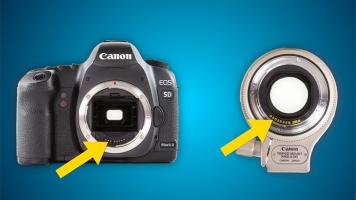
In this week’s video, FocusEd presents a discussion of lens mounts. Not every lens fits on every camera, and not every lens from each manufacturer works on every camera from that manufacturer. This video examines cameras from Canon, Nikon, and Sony, their mount systems, and explains the differences between their respective mounts.

by Daniel Bockrath · Posted
It is a commonly held belief that the frequency response of human hearing is between 20 Hz and 20,000 Hz, with degeneration of the upper frequencies occurring as a person grows older. More recent research may indicate that human beings can detect signals much higher than this, though the perception of those frequencies may be expressed as harmonic interactions and by the transient crossings in the time domain. But what about experiencing sounds below 20 Hz?
"New technologies such as the remarkable rotary subwoofer now make this possible..."

by Amanda Bellucco · Posted
Regardless of “niche,” the one thing every working photographer needs is a portfolio. Not just any thrown-together collection of images will cut it, either. A strong, concise, and impressive showcase of your talent is crucial to developing your business. If your website is your storefront, then your portfolio is your biggest and most effective sales tool. It emphasizes who you are, it shows off what you’re capable of, and it tells new customers exactly what you can do for them. Without a portfolio, you’ll be dead in the water. After all, talk

by BH Online Videos · Posted
In this FocusEd video, we discuss the sometimes confusing aspects and nature of crop factor. This is not about how many bushels of corn an acre of rich soil in Iowa will yield—this is about how your combination of optics and sensor size affects the angle of view of your lens. When you have a camera with a sensor smaller than a full-frame sensor or 35mm film, it effectively changes the focal length of your lens, and therefore, your angle of view. This video explains how to apply the crop factor to figure out the 35mm equivalent of your lenses.
by Jessica Sample · Posted
1) Chasing light
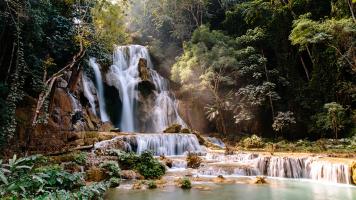
I’m really not a morning person but, on travel shoots, I always force myself to wake up with or before the sun. Photography is all about light, so it's important to capture the most beautiful light possible. What also makes shooting in the early morning more preferable than the late afternoon is there are often fewer people and tourists. I found this to be especially true at Machu Picchu and Belvedere lookout, in Moorea. My assistant and I had heard about this lookout on top of Belvedere Mountain, in Moorea, and for this image

by Alan Winslow · Posted
Travel portraiture can be one of the most difficult forms of photography, but it is also one of the most rewarding. As photographers, we begin daydreaming of the perfect image even before we pack our bags. Imagining a craggy face set against the soaring cliffs of Amalfi, or a robed woman gliding through the brilliant, winding streets of the Chefchaouen medina, we can easily see ourselves there, capturing the essence of the place. Upon arrival, though, the location is often overwhelming, the travel exhausting, and the language barriers daunting

by Todd Vorenkamp · Posted
The primary measurement of a lens is its focal length. The focal length of a lens, expressed in millimeters, is the distance from the lens’s optical center (or nodal point) to the image plane in the camera (often illustrated by a "Φ" on the top plate of a camera body) when the lens is focused at infinity. The image plane in the camera is where you will find your digital sensor or film plate. If you are an optical engineer, this is important

19,959 Views· Posted
In this week’s video, FocusEd discusses lens focal length for photographers. You will learn about what focal length is, how sensor size and lens focal length affects your angle of view, and more!
For more on Focal Length, check out this article.

by Ken Kaminesky · Posted
For travel photographers, the path to getting the perfect shot is often strewn with hurdles. Through trial and error, as well as a lot of learning the hard way, I've ended up being able to walk away with some of my favorite photographs, thanks to proper planning and preparation. At other times, I’ve relied on stealth and a little bit of good luck to come away with a good photo. Sometimes, though, it’s just not meant to be.
When I began photographing travel imagery, I did not have a clue on how to secure permission to photograph in restricted

6,921 Views· Posted
In this video presentation, pro wedding photographer Susan Stripling imparts advice for fellow wedding shooters based on her years of experience in the business. She outlines eight pitfalls that if not prepared for, can ruin your whole day, and maybe your client’s wedding photography experience! Inside these tips, Susan shares her thoughts about time management, contingencies, gear issues, and client relationships. We hope you enjoy the video, and invite you to view the wide selection of other