About 2005 filtered results

Photography is all about light, and the light we capture with our cameras is known as an exposure. What goes into making an exposure, you may ask? And what constitutes a good or proper exposure? We’ve got you covered. We’ve put together the ultimate guide to teach you the basics, from the three pillars of exposure to how we can manipulate it to achieve our artistic vision.

Posted
When you're getting started in portrait photography, it can be tempting to buy the most expensive gear in order to improve your photos. But what if we told you that all you need is one 100W light? Enter Westcott's FJ100 100Ws Off-Camera Strobe and FJ100 M 100Ws Speedlight. Join Juan as he uses these lights on their own and together.
0:00 - Intro
0:27 - One Strobe Light Setup
3:23 - One Speedlight Setup
4:11 - Minimal Headshot Setup
5:55 - What's the Verdict?
Sponsored by

Posted
You've mastered your craft behind the lens, now it's time to make it work for you online. Clare and Joe Chadwick are part of the B&H social media team and produce work as freelancers. They're here to help you learn how you can turn your work into compelling video content for social platforms.
0:00 - Intro
1:29 - Short form video & carousels / Educate & Entertain
19:24 - Editing app recommendations
24:05 - Timing of posting
32:48 - Q&A break
51:00 - Creating carousel posts
1:04:42 - Joe's workflow for creating carousels
1:07:34

Posted
In this final live studio demo, Tony Gale combines part one and two. You'll learn to push your creativity further by combining constant light and flash.
0:00 - Intro
4:15 - Adjusting the model
5:51 - Different mixed lighting
7:16 - Mixing daylight & strobes
23:35 - Using gels
34:44 - Shooting in JEPG vs. RAW
37:42 - Correcting the background
40:56 - Using a bigger light source
48:15 - Combining LED & strobe lights
1:06:55 - Changing to diffuser
1:16:35 - Q&A
Sponsored by

Posted
Photography can influence a dancer's understanding of their own artistry. Join photographer Gene Schiavone, dance writer Gavin Larsen, and dancer Kylie Edwards as they discuss the making of their recent photo book on the lives of ballet dancers.
0:00 - Intro
1:26 - Gene's photography background
7:31- Kylie's background
12:44 - Gavin's background
16:07 - Working together as photographer and dancer
24:35 - The book being a collaborative effort
27:51 - Dancer's emotions to seeing theirselves in the photos
33:36 - Image selection &
by Luke Rollins · Posted
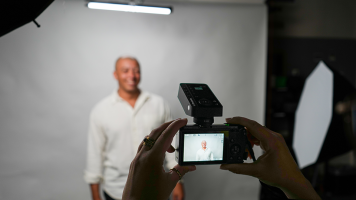
At first glance, studio photography and the compact camera may seem strange bedfellows. The type of work associated with the studio—still life, product photography, portraiture, macro photography—usually wants cameras with larger sensors and interchangeable lenses, especially in professional applications. Compact, point-and-shoot cameras, for their part, have their natural home in everyday, travel, nightlife, and street applications, where their discretion and size become virtues.
It might seem almost cruel to introduce the compact to the
by Mathew Malwitz · Posted
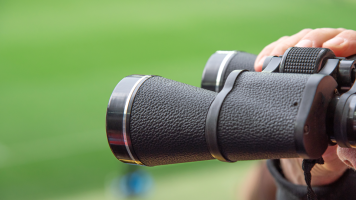
When choosing binoculars or scopes, a term that should be heavily considered is "exit pupil." What is exit pupil, and what does it do? In optics, we're often focused on magnification and light-gathering capabilities, and these are essential for understanding how optics works, but overall viewing experience shouldn't be discounted.
If you look at any optic at arm's length, you'll see the small pinpoint sized window of

Posted
Portrait photographer Susan Magnano explores how to take control of light in any environment using portable LED lights. Using Nanlite LEDs, you can transform ordinary scenes into compelling images in real time.
0:00 - Intro
1:15 - Benefits of continuous light
4:23 - Studio constraints
5:14 - Workflow
7:15 - Exposure
8:35 - Science of additive color
11:02 - Lighting gobos & split lighting
12:14 - Shutter drag
12:44 - Lights & tools being used
13:35 - Lighting setup & settings / Using gobos
32:49 - Creative traditional headshots
50

by Mathew Malwitz · Posted
At one point or another, you’re bound to hear someone say that you need to shoot in a RAW file format. There are advantages to this decision, from additional detail to better control over the look of our final image. But what exactly is a RAW file and what does it do for our photographs? In this guide, we aim to give you a better understanding of the RAW file and how to use it to our advantage.
What Is a RAW File?
RAW files, sometimes referred to as digital negatives, are the raw data recorded by your camera’s imaging sensor. This data is

Posted
In part 2, Tony Gale demonstrates how to use flash by focusing on light placement and optimal camera and flash settings.
0:00 - Intro
3:10 - Directing a model
4:51 - Sony a9 iii (High speed sync)
12:00 - Adjusting flash & camera settings
23:01 - Adding an umbrella modifier
34:07 - Softboxes
48:35 - Adding light with reflectors
52:23 - Grid modifiers
1:00:40 - Tony's portrait process/li>
1:11:25 - Q&A
Sponsored by

by Freddy Gerngross · Posted
When it comes to converting and amplifying audio, these three terms are often used interchangeably, and to make things more confusing, audio interfaces and headphone amps can have DACs built into them.
But fear not dear reader, we’ve got the info you need to make the right choice! Here’s the rundown of these categories and when to consider them:
DAC (Digital-to-Analog-Converter)
What is a DAC?
A DAC is an audio component that takes the 1s and 0s of a digital audio signal and converts it into an audible analog signal that is coherent to the
Posted
Take the guesswork out of at-home recording. Musician and B&H Social Media Video team member Andrew Swift walks you through the essential techniques for micing both acoustic and electric guitars live.
0:00 - Intro
1:03 - Recording acoustic guitar sound
12:20 - Recording with a dynamic mic
23:32 - Recording with a condenser mic
31:23 - Recording with both a large and small condenser mic
51:52 - Recording electric guitar sound
1:07:06 - Recording with a ribbon mic
1:15:21 - Recording with large condenser & ribbon mic
1:28:48 - Plugins
1

Posted
Now that you've filmed your video, it's time for editing and delivery in HDR. Doug dives deeper into HDR formats, as well as standards and workflows when working with HDR video. Join him in DaVinci Resolve where you'll learn about both the technical and creative sides.
0:00 - Intro
1:03 - Choosing an HDR Monitor
5:08 - Color Gamut
6:44 - Setting Up Your Monitor & Project
10:39 - Grading in HDR
24:28 - Exporting & Delivering
25:32 - Final Thoughts
Sponsored by

Posted
Andrew takes us through ways to record both electric and acoustic upright bass at home. You'll hear how different DI boxes can subtly change the sound of the electric bass and how to mic a bass amp. For Upright bass, Andrew will share some considerations when using a DI box as well as a nifty trick to mic an upright with a Shure SM57. You'll also hear how both ribbon and condenser mics can make the upright bass sound full.
0:00 - What We're Covering Today
0:29 - How Electric Basses Work
1:03 - Using the Hi-Z/Intrument Input
2:03 - DI Boxes
Posted
Sony Artisan of Imagery Tony Gale is back in the Event Space to give a three-part series on portrait lighting. In part one, you'll learn the fundamentals of using constant light to create beautiful, well-lit portraits.
0:00 - Intro
1:30 - Different constant lights
6:15 - Using sunlight
11:54 - Using a single lightbulb
14:14 - Single light (with modifiers)
23:43 - Why continuous lighting vs flash
32:29 - Controlling the background
40:14 - Main & full lights (with modifiers)
55:52 - Rim light
57:42 - White balance & color checkers
1:01