About 1374 filtered results

17,221 Views· Posted
In the following video, Larry Becker presents the Fujifilm X-T1 mirrorless digital camera and covers its features and unique functions in comparison to the previous Fujifilm X-series cameras. The video begins with a quick comparison between the X-T1 and the first mirrorless X-series camera, the X-Pro1 and, covers the X-Trans CMOS II sensor, Intelligent Hybrid autofocus system, as well as the impressive electronic

907 Views· Posted
In the following video, Larry Becker presents an overview of the Olympus Stylus SP-100 digital camera and covers its unique features, powerful zoom, and distinct imaging capabilities. The video begins with a focus on the 50x optical zoom lens and transitions into the unique Dot Sight framing assist tool that benefits this long-reaching lens. From here, Becker introduces the sensor and video-recording capabilities of the

905 Views· Posted
In the following video, Rob Rives, from B&H, demonstrates the Focusrite iTrack Dock for the iPad. He explores the dock’s form factor, input capability, and monitor control knob. The video showcases the dock's microphone preamps, taken from Focusrite’s Scarlett interfaces, and Rives mentions its maximum recording resolution of 24-bit/96kHz. He also demonstrates the iTrack’s app compatibility. We hope you enjoy the video, and
1,149 Views· Posted
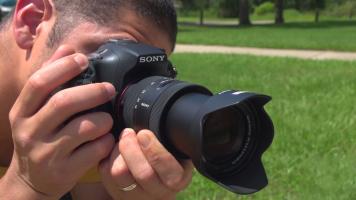
In the following video, Larry Becker presents the Sony a77II DSLR camera and covers its new features and technologies in comparison to the former, original a77. The video begins with a quick rundown of some of the imaging facets, including the 24.3MP APS-C sensor and BIONZ X image processor, and segues into the new 79-point phase-detection autofocus system with 15 central cross-type points and the 12 fps continuous shooting rate. From here,
by Bjorn Petersen · Posted
Two years after the introduction of the D800 and D800E, Nikon announced their successor, the D810, which was billed as the new high-resolution DSLR solution for still photographers and videographers. Upon release, one of the first issues to come to mind with this statement was: how does one improve upon a camera that
22,415 Views· Posted
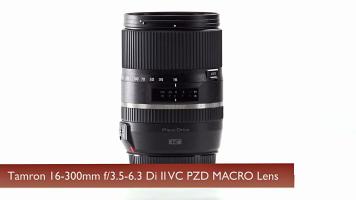
In the following video, Larry Becker presents the Tamron 16-300mm f/3.5-5.6 Di II VC PZD Macro Lens, and covers its versatility, optical qualities, and performance-related attributes. The video begins with a rundown of the lens' design as well as its ability to produce a 1:2.9 maximum magnification ratio despite its expansive zoom range. From here, the video touches on the Piezo Drive AF motor, and its near-silent and fast performance, as well as the

2,015 Views· Posted
In this video, Mia McCormack takes a look at three wide-angle cine prime lenses from Rokinon designed for APS-C sized sensors. It covers the manual focus design, lens mount compatibility, and the cinema features of each lens, including the stepless aperture ring, 0.8 pitch lens gears, and T-stop measurements. The first two lenses Mia showcases are the Sony E-Mount versions of the 8mm T3.1 Fisheye lens, with a super-wide 180 degree
by Justin Dise · Posted
Getting your DSLR or mirrorless camera ready for serious video production work often means building a rig around it. A good place to start is to add a camera cage and 15mm rod-based support system. With plenty of options available on the market, deciding on a solution that works best for you and your camera can be daunting. To make your life easier, German manufacturer walimex Pro offers the Aptaris Universal XL Action-Set, adjustable to fit a variety of DSLR cameras, and provides the flexibility to switch quickly between handheld, shoulder
by John Harris · Posted
I appreciate a camera that allows its restrictions to become benefits, a camera that optimizes its best qualities over the addition of secondary and often unnecessary features. The Sigma dp2 Quattro Digital Camera has limitations, but to its credit, it isn't designed to do everything, and what it is designed to do—take
by Justin Dise · Posted
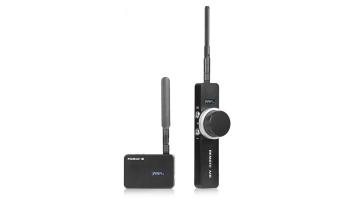
One of the unsung heroes of the film industry is the focus puller. It doesn't matter how great the camera movement, lighting, or acting is if the image on the screen is out of focus. Traditionally, the focus puller, or 1st Assistant Camera (AC), operates on the side of the camera, using a follow focus to mark spots and "pull focus" to follow the action/subject. In many cases it isn't too difficult for the camera assistant to move along with the camera, but when the director calls for complex shots on jibs, dollies, stabilizers, or motorized
by Ryan Zanoni · Posted
Explore the world beneath the water’s surface without getting wet, using ROVs and viewing systems from Aquabotix. The HydroView motorized remote-operated vehicles and AquaLens viewing systems allow you to study marine life and environments; perform inspections under your boat; carry out

24,186 Views· Posted
In the following video, Mia McCormick gives an overview of the Blackmagic Design Production Camera 4K to help you determine if the camera is right for you. The video explores the camera’s Super35-sized sensor with 12 stops of dynamic range, active Canon EF mount, and recording options, including Ultra HD 3840 x 2160 recording at 24 or 30fps using Apple’s ProRes HQ format. McCormick disusses the 6g-SDI and Thunderbolt video connections, 2.5" SSD recording media, and touchscreen camera controls. She rounds out the video by mentioning some
by Steven Gladstone · Posted
Once upon a time, the choices for portable video tripod legs were limited to one design: two-stage, dual-aluminum tube construction, with a ground or mid-level spreader, and that was it. Single-tube legs for still photo shoots have a few nice features, but just aren't designed to handle the situations that confront video shooters. This makes them unsuitable for most video work, and relegates them to extremely small compact camera use, or specialty shots where a bigger set of tripod legs just won't do. However, E-Image has a set of tripod legs


1,210 Views· Posted
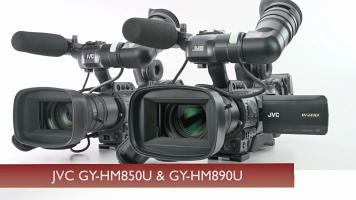
In the following video, Mia McCormick introduces us to JVC's new ENG-style, shoulder-mount professional video cameras, the GY-HM850U and studio-configurable GY-HM890U. The video opens with a discussion of the multi-codec recording system of the cameras, which are supported by nearly every major editing program, and include a 50 Mbps
by Eric Reichbaum · Posted
When the Canon 16-35mm f/4L lens was first announced, many photographers were disappointed that it wasn’t a new version of the already existing 16-35mm f/2.8 with image stabilization. I can assure you that, during my time with this lens, I didn’t once wish that I could turn that wheel past f/4 to f/2.8. For my
