About 5244 filtered results
by Jay Dickman · Posted
Today, everyone is an aspiring photographer due to the ubiquitousness of the cell phone camera. Instead of carting around their large DSLR, the cell phone is becoming the de facto tool of choice, since it’s always with us. What the mirrorless camera system offers is the ability to carry a real camera that provides the photographer with lens choice, exposure options, and a real viewfinder, all in a package that is small enough to encourage the photographer to carry that camera and leave the full-size DSLR at home.
While the cell phone is great

by Luke Ballard · Posted
As sure as the sun will rise, it is infinitely better to capture your travel landscapes at exactly that moment—sunrise.
Without any doubt, sunrise is the perfect time to be in position and photographing the landmarks that you find on your travels. There has been a lot of discussion, debate, and even heated argument through the years about whether sunrise or sunset will offer you the better shot, and I feel it's important to try and put the matter to rest.
I do believe that anyone who argues that sunset is better enjoys their sleep and doesn’t
by Ralph Lee Hopkins · Posted
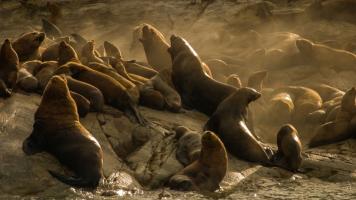
Stellar sea lions, South Marble Islands, Glacier Bay National Park and Preserve, Southeast Alaska. Making sharp images from a moving ship requires shooting with a fast shutter speed and being prepared to capture the moment. It had been raining all day in Glacier Bay when the weather finally broke. The soft side light highlighted the steam coming off the animals. (Canon DSLR, 100-400mm, f/5.6 @ 1/1000, ISO 400)
Every travel photographer has a bucket list of dream destinations. There are a number of wild places in the world that are best visited
by Gabriel Biderman · Posted
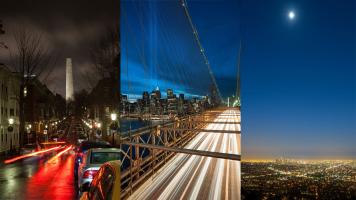
The greatest challenge in travel photography and in photography in general is capturing the essence of a person or place. The world is smaller than ever and almost everyone is traveling and taking pictures. So how do you separate yourself from the pack?We are often told that the best time to photograph is during the magic hours of dusk and dawn. The lighting can be very gentle, even, with wonderful shades of yellow and blue dancing together. However, I think more magic can be found when we photograph at night and extend our exposure into the

by John Paul Capo… · Posted
Share Experience / Share Vision
John Paul Caponigro
It was December 2005. We had just made the long crossing of the Drake Passage to Antarctica. On the horizon were enormous icebergs. It was our first view of big ice. We all rushed to the deck and began to photograph. I found myself standing shoulder-to-shoulder with Seth Resnick. He was using a long 300mm lens. I was using a wide 28mm lens. We both looked at each other and then looked again. Our approach was so different we were astonished. "Let me see your camera!" we both said

by Mirjam Evers · Posted
I am a founding member of Photo Quest Adventures, an international travel company specializing in deluxe photography workshops and unique cultural experiences around the globe. Here are my Top Ten favorite photo destinations.
Cuba
Cuba is known for its gorgeous Spanish colonial architecture, white-sand beaches, hand-rolled cigars, vintage cars, and out-of-this-world mojitos. When American travel to Cuba was

by Allan Weitz · Posted
June is the hottest, harshest month of the year. The heat and humidity index might be higher in July and August, but light-wise, June is hands-down hotter and harsher. What I'm referring to is the quality of light that washes down upon us as the sun rises to its highest midday point in the sky—and the net effect of all this bright, high-angle light, photographically speaking, is an excess of blue tint and harsh contrast levels.
Despite the image-enhancing tools built into the simplest of digital cameras nowadays, the effects of
by Chris Gampat · Posted
Now that you've got those great new photography accessories from the holidays, what's next? It's time to learn how to use them to their fullest potential. There are some great specialists that can help you learn how to do just that. Here's a list of a few schools that offer classes to help you become a better photographer. Maine Media Workshop (MMW)The Maine Media Workshop offers specially-tailored classes to accommodate a
by John Harris · Posted
Most photographers love getting gifts. (Well, who doesn’t?) But with the wealth of equipment available and accessories for that equipment and accessories for those accessories, there is always a new “toy” that can expand a photographer’s creativity or speed their workflow. In this article, we’re going to showcase a handful of stocking stuffers: budget-friendly gifts that will make your favorite shooter smile. If you think, however, that the pro or advancing photographer on your gift list might be interested in upgrading their
by BH Event Space… · Posted
Andy Biggs is a wildlife photographer who has found his ultimate inspiration in the African landscape. He has great respect and a deep understanding of its wildlife, people and culture, and he shares this philosophy by running photographic safaris and teaching. For anyone interested in this type of photography, this is a must-see presentation.
The almost-two-hour video is divided into two sections. In the first part, Biggs shares many of his wonderful images collected over the years, while explaining his approach to wildlife photography. He
by Allan Weitz · Posted
When Cliff Hausner of MACGroupUSA greets me in the hallowed halls of B&H Photo with his familiar "Al-you-gotta-see-this..." it's usually for good cause. This time it was to show me the new gimballed tripod heads from Induro, which are designed to make working with longer focal-length optics smoother and easier.Unlike traditional pan and ballhead designs, Induro's gimbal heads cradle your lens in a way that greatly reduces the balancing act that's part & parcel of shooting with longer, heavier
by david wells_2 · Posted
I have blogged, lectured and argued for many years that a camera is nothing more than a tool that solves a given photographer’s problem. A camera brand is not a symbol of loyalty to one kind of photography, nor is it some kind of credential for membership in some kind of “club.” The sooner each photographer starts to figure out what their particular challenges are, and which camera works for them to resolve those challenges (regardless of brand), the sooner they will
by Allan Weitz · Posted
At B&H, we currently stock about 100 point-and-shoot cameras; all of them are capable of shooting terrific photographs, and in most cases, video. The choices are far narrower, however, for those seeking digicams that can take an occasional dunk in the drink, an accidental fall, a tropical schvitz, or a high-altitude freeze. If this describes your lifestyle, the following 10 digicams are specifically designed to take a rougher ride than most of the larger, pricier cameras we sell at B&H (and at a fraction
by Allan Weitz · Posted
Click here to view our newly updated Film Scanners Roundup article.
If you began your love affair with photography back in the days of film, raise your hand. OK. Now raise your hand if you still have a darkroom in which you still print your slides and negatives. I thought so.*
*For those reading this at home you’ll have to take my word… not too many hands went up for the second request.
If you’ve long since decommissioned
by Allan Weitz · Posted
On the surface, it’s sometimes hard to tell the differences between entry-level and mid-level DSLRs. Though some mid-level DSLRs are physically larger than entry-level models, they’re not always larger—and even when they are it’s often not by much. Not until you pick them up, peer through the finder and fire off a few frames do you begin to appreciate the heftier, more solid feel of the camera, and inevitably the camera’s quicker AF and shutter-response times. In addition to feeling beefier in the hand, mid-level DSLRs are also sealed more