About 5244 filtered results
by Amanda Bellucco · Posted
Professionals in the photo and video community put a lot of stock into finding portable, easy-to-set-up equipment, and that’s exactly what Bescor aims to provide. Their Field Pro Lighting brings user-friendly versatility to the forefront with several kits designed especially for videography professionals. The LED-700 series is a great solution for lighting both in the studio and on location.
by Eric Reichbaum · Posted
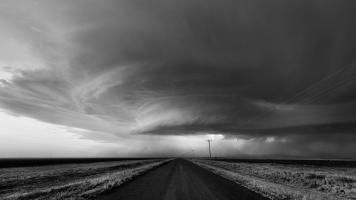
Mike Olbinski went from photographing lightning in his backyard with a point-and-shoot camera to being a professional storm photographer—in a flash. His time-lapse storm videos have gone viral in a big way; one of them even made an appearance in a major motion picture. I spoke to Olbinski to find out how he does it.
Was storm photography how you started
by Sam Mallery · Posted

8,138 Views· Posted
Join renowned wedding photographer Moshe Zusman as he explains his approach and shares some of his techniques for posing brides, grooms, and wedding parties. If you want your wedding portraits to possess pizzazz, character, elegance, and a natural feel, Zusman suggests that you treat each image as though it were part of a high-fashion shoot.
You can achieve the best images by posing your subjects assertively—and you can imprint ideas in your consciousness by posing your friends, spouses, or relatives in practice. Plan in advance, scout

by John Harris · Posted
Most photographers encounter the Rule of Thirds at some point in their life, and likely recognize it as more of a theory or suggestion than a hard rule. But what are the origins of the Rule of Thirds? It turns out that its roots can be traced back to the 18th Century.
The Rule of Thirds posits that a visual composition is most pleasing to the eye when its compositional elements conform to an imaginary set of lines that divide the frame into equal thirds, both horizontally and vertically. Furthermore, the “Rule” suggests that the human eye
by Shawn C. Steiner · Posted
Whether you shoot in the studio or on location, Limelite offers an LED, tungsten, or fluorescent lighting solution to suit your needs.
Increasingly popular LED technology is represented by Limelite's Mosaic lights. These 1x1' panels employ 576 LEDs with a CRI of >85 for accurate color rendering and output up to 5200 lux at 3'. Daylight, Tungsten, and Bi-Color versions are available and feature a back-panel
by Josh Taylor · Posted
A legendary lighting company is refreshed and repositioned to achieve its rightful place in the US imaging marketplace: Bowens International Ltd., based in the UK, has been a leading manufacturer of advanced photographic lighting systems for well over half a century, and has been a top-selling brand among professional photographers and serious enthusiasts worldwide, for many years. Until recently, Bowens’s presence in the USA has been overshadowed by more aggressively marketed brands of lighting equipment. But that began to change last year

1,579 Views· Posted
In this third episode of Prospectives, Lindsay Adler takes us through her process as a fashion photographer. She discusses how she keeps herself inspired, where she gets her ideas, and how she surrounds herself with other professional creatives to achieve her looks. This episode has been sponsored by Sigma, lenses that Lindsay herself uses for her fashion shoots. Show created and directed by Kelly Mena.


20,063 Views· Posted
In the following video, Larry Becker presents an overview of the Nikon D3300 DSLR camera and covers its features in respect to its position as a compact, lightweight, entry-level model. Information is presented about how this camera's imaging assets perform, including its 24.2MP DX-format CMOS sensor and EXPEED 4 image processor, as well as a bit on its 11-point autofocus system, continuous shooting rate, and video recording capabilities.
by Shawn C. Steiner · Posted
Louis Lumière was a pioneering French filmmaker, and in 1935, he took the concept of “the remake” to another level when he reshot the famous Arrival of a Train at La Ciotat in 3D. To those who don’t know, the original 2D version was among the first publicly shown films when it premiered in January of 1896. It has since become a classic for anyone interested in the history of cinema, and created one of the first urban legends of film.
The story has it that because of the realism of a train rolling toward the audience, the crowd was
by Sam Mallery · Posted
"What's In My Bag" articles have become so popular these days that they're evolving into a full-blown independent media genre. It's a topic we often cover here at B&H, and everyone from National Geographic to The Verge has contributed to the trend. What you can discern about someone by examining the contents of their to-go bag is always a fascinating exercise, and the images can inspire unique solutions to your own in-the-field workflow needs.
Putting one and one together, bag manufacturer Timbuk2 launched their
by Sam Mallery · Posted
B&H will be hosting a live webcast on the new Sony Alpha a7 and a7R full-frame mirrorless cameras today at 1 p.m. EST. The show will feature a panel consisting of Pulitzer Prize-winning photographer Brain Smith, Sony's Senior Manager of Technology Mark Weir, and our own Gabriel Biderman, an accomplished night
by Eric Reichbaum · Posted
Michael Christopher Brown is a Magnum photographer who has shot multiple stories for National Geographic, and was a subject in an HBO documentary about photojournalism. Currently, he’s on an assignment in Africa, but was kind enough to answer a few questions about the benefits and drawbacks of using a smartphone to capture images in the field.
What do you find appealing about shooting with a camera phone: is it the portability, the fact that it’s less intimidating to your subjects, or something else?
It’s a number of things, including what
by Shawn C. Steiner · Posted
William H. Mumler was the first well-known spirit photographer, and deservedly so, for capturing Mary Todd Lincoln with her deceased husband, President Abraham Lincoln.
Following the Civil War, many people wanted to make connections with their recently deceased relatives and friends. Photography was new, and considered a method of reaching out.
Today, this image of Abraham Lincoln’s ghost is fairly easy to explain. Mumler used the simple process of double exposure. I say simple since it’s as easy as taking two separate photographs on a single

by Bjorn Petersen · Posted
After Adobe Creative Cloud came to full fruition in mid-2013, much discussion arose surrounding this new cloud-based subscription service versus the previous model of issuing perpetual licenses. In many regards, this new business model provoked a sense of insecurity in many users who were accustomed to owning a piece of software rather than having to rent it. On the other hand, Adobe CC’s merits lie in the fact that they are now able to offer continuous updates and new features to different programs as they are ready, rather than having to