About 5244 filtered results
9,951 Views· Posted
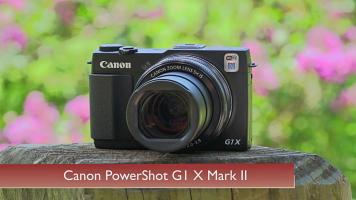
This video from Kelby One is Larry Becker’s hands-on review of the Canon G1 X Mark II. Becker discusses the camera’s 1.5" sensor, built-in 24-120mm lens, and Wi-Fi/NFC capabilities, as well as other features, such as a poseable pop-up flash and manual function controls. He also makes a good argument for why he thinks the G1 X Mark II will keep point-and-shoots alive and well in the age of the smartphone.
by Bjorn Petersen · Posted
Deviating from the common adage that "everything can be fixed in post," optical filters are an essential tool for current-day photographers and cinematographers to correctly balance exposures and achieve successful results at the time of shooting. In spite of the advancements for digitally manipulating imagery post production, filters offer the unique advantage of being able to get a shot right, in-camera. And in many cases, filters allow you to achieve effects and techniques that are simply not possible any other way.
Photograph above by

17,221 Views· Posted
In the following video, Larry Becker presents the Fujifilm X-T1 mirrorless digital camera and covers its features and unique functions in comparison to the previous Fujifilm X-series cameras. The video begins with a quick comparison between the X-T1 and the first mirrorless X-series camera, the X-Pro1 and, covers the X-Trans CMOS II sensor, Intelligent Hybrid autofocus system, as well as the impressive electronic

907 Views· Posted
In the following video, Larry Becker presents an overview of the Olympus Stylus SP-100 digital camera and covers its unique features, powerful zoom, and distinct imaging capabilities. The video begins with a focus on the 50x optical zoom lens and transitions into the unique Dot Sight framing assist tool that benefits this long-reaching lens. From here, Becker introduces the sensor and video-recording capabilities of the
1,149 Views· Posted
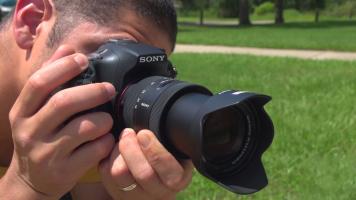
In the following video, Larry Becker presents the Sony a77II DSLR camera and covers its new features and technologies in comparison to the former, original a77. The video begins with a quick rundown of some of the imaging facets, including the 24.3MP APS-C sensor and BIONZ X image processor, and segues into the new 79-point phase-detection autofocus system with 15 central cross-type points and the 12 fps continuous shooting rate. From here,
by Bjorn Petersen · Posted
Two years after the introduction of the D800 and D800E, Nikon announced their successor, the D810, which was billed as the new high-resolution DSLR solution for still photographers and videographers. Upon release, one of the first issues to come to mind with this statement was: how does one improve upon a camera that

22,415 Views· Posted
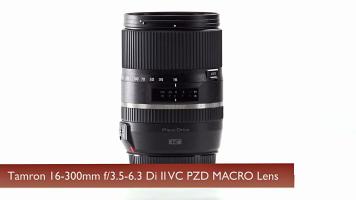
In the following video, Larry Becker presents the Tamron 16-300mm f/3.5-5.6 Di II VC PZD Macro Lens, and covers its versatility, optical qualities, and performance-related attributes. The video begins with a rundown of the lens' design as well as its ability to produce a 1:2.9 maximum magnification ratio despite its expansive zoom range. From here, the video touches on the Piezo Drive AF motor, and its near-silent and fast performance, as well as the

by Todd Vorenkamp · Posted
Lightning is one of Nature’s most impressive displays and capturing it with a camera is a challenge, but the results can be almost as grand as the natural spectacle. There are a lot of overlaps between lightning photography and fireworks photography, but lightning’s unscheduled appearance adds an element of luck to the adventure.
Before we get started, there are two points I’d like to make:
Lightning is incredibly awesome, fun to

by Allan Weitz · Posted
What is a lens?
Superficially, a lens is little more than a cylinder containing optical elements that shift about as you focus by turning a ring around the cylinder. But even in its most basic form, a camera lens is far more complex than it might appear.
A lens is more than the sum of its parts. When you attach a lens to a camera, your choice of lens is very much like a painter's choice of brush. For finer details, the painter will choose a narrow, pointier brush. For cloud-free skies, a broader brush would be a wiser choice. Wide-angle lenses

by Mike Mezeul · Posted
The weather is something we all have to adjust to accordingly with each passing day. Sometimes it’s the heat, sometimes snow, sometimes the threat of beastly supercell thunderstorms and tornadoes, especially here in the Central Plains. It’s on these days in particular that I grab my camera, hop in my car, and drive hundreds of miles to document these monstrously beautiful yet destructive wonders of nature.
For the past 14 years I have spent my springtime traversing the country, from the Texas/Mexico border to Canada, documenting severe

by Seán Duggan · Posted
An iceberg grounded just offshore
I think that travel can be an important part of the creative experience for photographers. The idea of the open road and the images you’ll find there is a powerful draw. Seeing new sights and exploring new visual territory can be very invigorating and it helps to kindle the creative spark. You see things in a new way because the primary purpose of the journey is to see, to view the world with new eyes, and create something from that vision.
Some landscapes, some places, just get inside your head and inside
by Michael James Murray · Posted
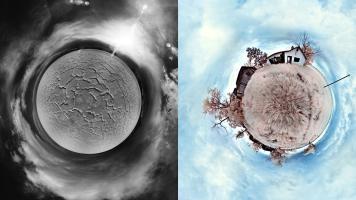
It's June 19, and I'm at a diner in Twenty Nine Palms, California, staring warily at the first cup of coffee I’ve had in days. Ten days ago I was in Upstate New York, anxiously anticipating the images I was about to make. To most of you, this is a story you’ve heard before: traveling the country to bear witness to its grandeur. However, have you seen the world like this?
I am an art photographer

by John Harris · Posted
I appreciate a camera that allows its restrictions to become benefits, a camera that optimizes its best qualities over the addition of secondary and often unnecessary features. The Sigma dp2 Quattro Digital Camera has limitations, but to its credit, it isn't designed to do everything, and what it is designed to do—take


by Joe Reifer · Posted
When we travel to amazing places, taking pictures allows us to show our friends and family what we saw. Composing the perfect photo is a process of pointing your camera at something interesting, and shooting at the right time. But what if the people viewing your photos could virtually stand where you were standing, and look around, fully immersed in the scene?
360-degree panoramas are a unique and exciting way to let your viewers explore your pictures. If you’ve played with Google Street View, or have seen a real-estate listing with a virtual

by Jeff Cable · Posted
To me, there is nothing more exciting than flying to new locations around the globe and finding the best places to capture photos. I have been very fortunate to be able to fly all over the world and see many different locales and their resident cultures, and I find that each location offers a different opportunity for photograph mining. I say mining, because just like a miner who has to search through lots of rock to find the cherished stone, we search among the distractions, the mundane or overshot locations, for that perfect photo.
Above