Pro Audio
- Recently Added
- Popularity
- Name
About 444 filtered results

Posted
Recording violin, viola, cello, or even a full string quartet at home doesn’t require a world-class studio. Join Andrew as he breaks down how to capture natural, detailed string recordings with microphone choices and placement techniques for both solo and ensemble, all from his living room. We'll even check out how to fake a larger ensemble with a string quartet. You'll be surprised at the results.
0:00 - Intro
0:19 - How String Instruments Produce Sound
2:02 - Mic Placement Suggestions
3:04 - Recommended Mic Types for Strings
3:40 -

by Gabby Bloch · Posted
As a podcaster, life becomes a lot easier when you have the right equipment. If you’re currently stuck with a simple audio interface or portable recorder, you’ll probably benefit from upgrading your setup to a multitasking mixer that can serve every function you may need as your podcast grows and your creative ideas expand. Since content creation has become such a big thing, it’s challenging to sort through all the available products to find which

Posted
Recording horns doesn't have to be hard or expensive. Join Andrew in his living room as he demonstrates the basics of recording solo horns and a 3-piece horn section at home. Starting with the humble Shure SM57 all the way up to top-shelf condenser microphones, you'll hear how all these mic types sound on a selection of woodwind and brass instruments.
0:00 - Intro
0:28 - What makes live horns so special?
1:07 - Mic Placement & Gain Levels
2:37 - Shure SM57
3:44 - Other Dynamic Mics
5:26 - Ribbon Mics
7:14 - Condenser Mics
8:44 - Tube

by Freddy Gerngross · Posted
If you’re looking to get into home recording, you’ll need an audio interface. They all do essentially the same thing, so what matters is the number and types of input/output (I/O) they have. In the current market, every manufacturer is looking to set themselves apart from the competition and in this guide, we’ll go over some popular and affordable series of audio interfaces we have in stock at B&H and what to look for depending on what you’re trying to accomplish. Our picks clock in under $500 for the most part so you won’t have to sweat

by Freddy Gerngross · Posted
When it comes to converting and amplifying audio, these three terms are often used interchangeably, and to make things more confusing, audio interfaces and headphone amps can have DACs built into them.
But fear not dear reader, we’ve got the info you need to make the right choice! Here’s the rundown of these categories and when to consider them:
DAC (Digital-to-Analog-Converter)
What is a DAC?
A DAC is an audio component that takes the 1s and 0s of a digital audio signal and converts it into an audible analog signal that is coherent to the

by Freddy Gerngross · Posted
In yet another entry to our 500-series guides, we’ll be discussing some of the many amazing equalizer modules for sale at B&H. In recent years, 500-series gear has exploded in popularity, and in turn, companies have been driven to offer more and more impressive and advanced modules—and with recent advancements in audio technology, the choices even include miniature recreations of legendary rack gear. So, whether you’re trying to add a standard or a superpowered 500-series EQ to your Lunchbox, read on to learn what we have in store!
Single
Posted
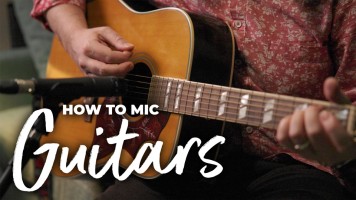
Take the guesswork out of at-home recording. Musician and B&H Social Media Video team member Andrew Swift walks you through the essential techniques for micing both acoustic and electric guitars live.
0:00 - Intro
1:03 - Recording acoustic guitar sound
12:20 - Recording with a dynamic mic
23:32 - Recording with a condenser mic
31:23 - Recording with both a large and small condenser mic
51:52 - Recording electric guitar sound
1:07:06 - Recording with a ribbon mic
1:15:21 - Recording with large condenser & ribbon mic
1:28:48 - Plugins
1

Posted
Andrew takes us through ways to record both electric and acoustic upright bass at home. You'll hear how different DI boxes can subtly change the sound of the electric bass and how to mic a bass amp. For Upright bass, Andrew will share some considerations when using a DI box as well as a nifty trick to mic an upright with a Shure SM57. You'll also hear how both ribbon and condenser mics can make the upright bass sound full.
0:00 - What We're Covering Today
0:29 - How Electric Basses Work
1:03 - Using the Hi-Z/Intrument Input
2:03 - DI Boxes

by Freddy Gerngross · Posted
In the postmodern era of music production, most musicians, producers, and engineers rely on a computer running a robust Digital Audio Workstation (DAW) like Pro Tools or Ableton to be the studio centerpiece. But despite their power and convenience, sometimes creating in this environment can turn into a series of mouse clicks that eat away at the joy and magic of music production. There are times when ditching the DAW and going old school with a physical piece of hardware can unlock new potential, forcing you to develop alternative techniques

by Freddy Gerngross · Posted
Whether you record demo tracks on the road, produce podcasts at home, or collaborate with other artists in random locations, having a travel-friendly audio interface is key to staying versatile in your work. An ideal interface would be small enough to fit in a backpack, laptop bag, or satchel while supporting multiple types of I/O and USB powering. Seriously, the last thing you need is to have your ideas vanish whilst frantically searching for a free AC power outlet. Thankfully, your options are plentiful in number, and I’d like to bring your

by Freddy Gerngross · Posted
Let’s face it—microphones are expensive. We all want a stocked mic locker with the greatest vintage microphones the world has to offer, but unfortunately, that’s a privilege few can afford. But fear not! There are plenty of amazing and affordable microphones in production that rival or even exceed the sound of the classic studio legends. So whether you’re micing up a guitar, your voice, or a whole drum kit, check out five of my favorite mics that we have in stock at B&H.
Large Diaphragm Condenser: Rode NT1 5th Gen ($214-$228)
As a mic I

by Freddy Gerngross · Posted
Perhaps more than in any other creative field, the line between professional and prosumer is the blurriest in pro audio. Just within the last 15 years, the quality of gear that has become financially obtainable by hobbyists and enthusiasts has increased exponentially, from interfaces to

by Freddy Gerngross · Posted
As miraculous as audio recording and reproduction technology must have been for those who witnessed its proliferation during the early 20th century, it remained a broadly rudimentary process until the late 1940s when the adoption of magnetic tape became standard.
Unfortunately, magnetic tape was invented in an extremely tumultuous time and place: German engineer Fritz Pfleumer’s 1927 invention was sequestered away from the world at large for nearly twenty years. When Germany was liberated in 1945, Allied forces were ordered to seize all German

by Freddy Gerngross · Posted
For this installment in the 500-series guide, we’ll be looking at the available offerings of effects modules in the 500-Series format. I’m also including more utility modules that aren’t necessarily an “effect,” but don’t fall under the Preamp, EQ, or Compressor categories and are quite useful, nonetheless. Some more recently released 500-series effects modules have a combination of preamps and dynamics processors or can be used as such, so if you’re looking to get started on a budget, these could be good places to start your 500-series

Posted
In this video, Kevin breaks down the dos and don'ts of planning your first recording session at a commercial studio. He'll break down budgets, logistics, and everything you'll need to have the best experience possible.
0:00 - Intro
0:35 - How to Choose the Right Studio for You
2:11 - Pre-Production
3:34 - Understanding Roles
6:03 - Studio Etiquette
6:53 - Budgeting & Pricing Estimates
10:46 - Most Importantly