Photography
- Recently Added
- Popularity
- Name
About 517 filtered results
Posted
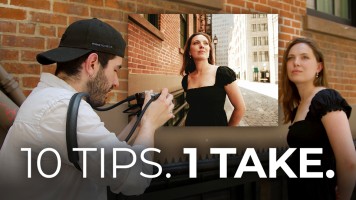
Natural light is a more affordable and accessible way to light your portraits, but it can be tough to master. Join Juan in this one-take video, as he shares his top 10 tips for mastering natural light and creating more compelling portrait photographs.
0:00 - Directional Lighting
1:13 - Hand Method
1:50 - Building Bounce
2:55 - Background Ideas
3:55 - Harsh Light
4:44 - Stop Posing Your Models
5:34 - Shoot in the Shade
6:20 - Catch Light
6:59 - The Last Tip
by Mathew Malwitz · Posted
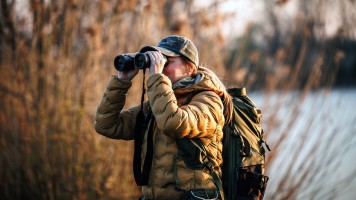
Birds, they’re all around us. If you haven’t paid much attention to them, you’re not alone. But, once you do, you’ll have a hard time stopping. If you haven’t yet dabbled in bird watching, known colloquially as birding, we have just one question. Why not? Birding is the perfect way of partially disconnecting from the digital world we find ourselves in and connecting with nature through observation, and one of the most relaxing pastimes imaginable.
If you’re fascinated by our feathery friends but don’t know where to start, we’ve got you covered

by John Harris · Posted
It would be foolish to claim that there is only one way to take a portrait, but there are some accepted norms and basic camera settings that you should understand if portraiture is to become your area of photographic interest. Remember though, as you walk down your creative path, that a portrait is more than a headshot, more than a beautiful photo of your subject; it is an opportunity to get to know someone, to have a visual conversation with a person, and to use your photographic skills to pass that understanding of the person on to the

Posted
Recently, the B&H social media video team traveled to the Florida Everglades to film a wildlife and landscape photography series. Matt Matkin led the bird photography segment, sharing his personal approach to capturing birds in action along with a few memorable moments from the experience.
0:00 - Intro
2:43 - Why bird photography in the Everglades
7:29 - Equipment used
9:13 - Bird resources
12:55 - First impressions & tips
25:08 - Camera settings & composition tips
46:14 - Look for other wildlife
47:22 - Camera & lens

by Mathew Malwitz · Posted
Birding is, by definition, the recreational hobby of observing and identifying wild birds in their natural habitat. Finding birds is the easy part. Just go outside and stop, look, and listen, and you’ll notice our feathery friends like you’ve never seen before. But how do we identify them? We need to consider a few physical attributes of the birds, from their overall shape to the length of their tail and more.
Birds come in all sorts of elaborate shapes, sizes, and color patterns that make them stand out, or in some cases, remain hidden from

Posted
Landscape and wildlife photographers swear by photographing at sunrise and sunset. But, there is another time of day when you can shoot nature photography and still get beautiful results. Join Sam and Matt in the Everglades to learn how to capture photos both in golden hour and blue hour.
0:00 Intro
0:52 Why Sunrise & Sunset?
6:44 Blue Hour for Landscapes
9:34 App for Identifying & Finding Birds
10:13 Mid-Day Wildlife & Landscapes
11:52 App for Tracking the Sun & Moon
12:31 Time of Year
13:26 How Early to Arrive
14:03 Can You

Posted
“Live From New York, it’s Saturday Night!” That single sentence has become a catchphrase for devotees of comedy and popular culture for more than 50 years—generations of fans who willingly turn their attentions from the height of weekend revelry to the televised antics of Saturday Night Live.
Above Photograph © Mary Ellen Matthews
As this illustrious broadcast wraps its 51st season, we’re releasing an encore of our 2025 chat with SNL’s photographer-in-residence Mary Ellen Matthews, while we busy ourselves backstage to bring you some exciting

by Mathew Malwitz · Posted
The a7R series has long been popular among wildlife photographers for the big files and associated crop-ability so to speak. That said, one area where the R could use some improvement is in the speed department. After all, it was never designed to be a wildlife camera; Its bread and butter was always resolution with landscape, portrait and studio photographers making the most use of all the extra detail. But, as tends to happen, Sony bends the rules.

by Luke Rollins · Posted
Since its inception, the a7R series has been a mainstay of portrait photographers, for whom its high-resolution imagery benefitted large-scale prints in fashion, beauty, and art contexts. With the release of the a7R VI Mirrorless Camera, Sony has introduced speed into the portraitist's toolkit, eliminating the tradeoff between resolution and processing and making the act of portraiture one of agility and discovery.

by Mathew Malwitz · Posted
Who doesn’t want to capture fun and creative portraits of our four-legged friends? We know we love it. In fact, pet photography may just be the most popular form of photography there is. Think of all the smartphone snaps of yawns, big stretches, and funny moments we all take of our cats, dogs, chinchillas, and beyond.
Quick snaps aside, you know what really ups the quality of our pet portraits? Lighting. Just as with any form of portrait, lighting unlocks possibilities that can be impossible without it. But what lighting system should we use?

Posted
You can take portraits with what you have available, even if it's your smartphone and natural light. Composition, angles, and directing have a huge impact on the quality of your photo. However, if you're ready to invest in some gear, Juan shares his camera and lighting recommendations.
0:00 - In This Video
0:34 - Beginner Portrait Photography
4:19 - Mid-Level
8:12 - Professional Portraits 101
12:10 - Outro
Posted
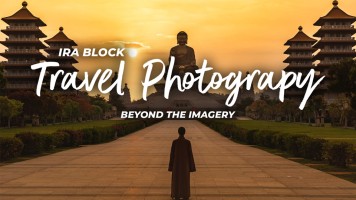
From photographing for the local news to expeditions for National Geographic, Ira Blocks shares his stories of traveling around the world. Ira captures history and culture, but it wasn't easy. He discusses how he was hired by Nat Geo, and all the logistics and planning that goes into his assignments.
0:00 - Intro
2:46 - Working for Nat Geo
6:00 - Ira's first assignment
14:18 - How Ira got started
17:30 - Photographing in color film
21:49 - Olive Oil story
31:29 - Getting into lighting
38:05 - Archaeology work
1:11:29 - Prints on location

by Mathew Malwitz · Posted
There’s an old adage that claims in order to be a wildlife photographer, you need a lot of time and a lot of money. This is only partly true. Many great wildlife photo opportunities can occur in urban parks and even in your own backyard, as long as we know what we’re doing. In this article, we’re going to cover a number of essential tips that will help you become a better wildlife photographer.
If you’ve read our introduction

by Mathew Malwitz · Posted
Binoculars are a must-have for any nature enthusiast. Whether it be to get a close-up view of a bird that landed outside the kitchen window or taken on a hike, there are many applications for these handy optics. If you’re in the market for a new pair of binoculars, what better option than the new Swarovski CL Companion III series. They’re colorful, portable, and the perfect companion for any outdoor adventure.

by Luke Rollins · Posted
There comes a time in a photographer’s life—usually after some consistent success with an on-camera flash—when they say to themselves, "I’m ready to make my own light on demand." Thus begins a seemingly never-ending journey—first mastering the basics, then trying to put some feeling and expression into their photos.
Assuming you’re versed in