- Recently Added
- Popularity
- Name
About 51 filtered results

Posted
Landscape and wildlife photographers swear by photographing at sunrise and sunset. But, there is another time of day when you can shoot nature photography and still get beautiful results. Join Sam and Matt in the Everglades to learn how to capture photos both in golden hour and blue hour.
0:00 Intro
0:52 Why Sunrise & Sunset?
6:44 Blue Hour for Landscapes
9:34 App for Identifying & Finding Birds
10:13 Mid-Day Wildlife & Landscapes
11:52 App for Tracking the Sun & Moon
12:31 Time of Year
13:26 How Early to Arrive
14:03 Can You
Posted
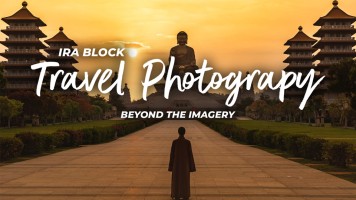
From photographing for the local news to expeditions for National Geographic, Ira Blocks shares his stories of traveling around the world. Ira captures history and culture, but it wasn't easy. He discusses how he was hired by Nat Geo, and all the logistics and planning that goes into his assignments.
0:00 - Intro
2:46 - Working for Nat Geo
6:00 - Ira's first assignment
14:18 - How Ira got started
17:30 - Photographing in color film
21:49 - Olive Oil story
31:29 - Getting into lighting
38:05 - Archaeology work
1:11:29 - Prints on location

Posted
The prime lens vs. zoom lens debate is back, this time for wildlife. There are many features to consider when choosing a lens that's right for you. Matt takes these Canon lenses to Yellowstone National Park to see which focal length has better image quality, autofocus, low light performance, and more.
0:00 - Telephoto Prime or Zoom?
1:05 - Prime Lens Pros & Cons
3:38 - Zoom Lens Pros & Cons
5:12 - Image Quality
5:49 - Fall Off
6:14 - Autofocus (Speed, Accuracy & Tracking)
8:12 - Ease of Use
10:43 - Low Light
12:54 - Which Works

Posted
Photographing wildlife can be unpredictable. Which of these cameras (the Canon R5 II and R1) will have your back? Matt shares what you'll have to consider when deciding between these two cameras.
0:00 - Can You Bear These Puns?
0:13 - Today's Video
1:28 - What's the Same and What's Different?
4:36 - Low Light Performance
5:36 - Pre-Capture
6:52 - Black-Out Free Shutter
8:21 - IBIS & Handheld
9:45 - How Does It Compare in the Edit?
10:19 - Which Is Better for You?
Sponsored by

Posted
Is the Canon RF 100-300mm f/2.8 the best option for wildlife photographers? From relatively wide environmental shots to animal portraits, this lens just might be able to do it all. Matt shares what this lens has to offer in Yellowstone National Park.
0:00 - Intro
0:43 - Specs & Photographing Bison
4:17 - Big Horn Sheep
6:01 - 1.4x & 2x Teleconverters
7:21 - Dueling Bison
8:32 - Why This

Posted
Should you raise your ISO or lower your shutter speed? How do you compose a wildlife photo? Evan Watts (@wattswildlifephoto) shares five tips that'll help you take better wildlife photos!
0:00 - Intro
0:10 - Aperture
1:52 - Composition
2:54 - Shooting Mode
3:43 - ISO
4:38 - Understanding Wildlife

Posted
Choosing the right camera gear can feel overwhelming, especially when you're just starting out. Whether you're venturing into wildlife photography, launching a portrait business, diving into travel photography and videography, or exploring landscape photography, having the right setup is important. To help you navigate your choices, our resident photographers and videographers share their top gear recommendations based on their own experiences.
0:00 - Intro
0:25 - Portrait Overview
0:45 - Portrait Gear Under $500
1:36 - Under $800
2:22 -

Posted
Top-tier gear needs a top-tier bag! Luckily, Nick shares the top 5 camera bags to gift the photographer or video shooter in your life this holiday season. These backpacks, shoulder bags, and cases are ready to fit whatever setup they have for the day!
0:00 - Intro
0:22 - Backpack 1
0:48 - Backpack 2
1:12 - Shoulder Bag
1:35 - For a Fully Rigged Cine Camera
1:53 - Wheeled Utility Case
2:11 - Final Thoughts

Posted
APS-C or crop sensor cameras offer a lot of benefits for the beginner photographer. Maria shares the benefits of these budget-friendly cameras, as well as photos taken with each of them! What camera would you buy?
0:00 Types of Cameras
0:41 Why Upgrade from Your Smartphone?
1:20 Why You Should Get an APS-C Camera
3:34 In-Camera Features
4:06 Pricing

Posted
There are important tips to know before printing your own photos. Lotta shares the benefits and drawbacks to printing at home or at a printing studio. She will also share how to edit your photos for printing, how to choose a frame, and more.
0:00 - Why Print Photos?
0:34 - Methods
1:35 - At-Home Printing Pro's and Con's
2:01 - Which Printer to Use
2:33 - Preparation & Best Settings
3:55 - Photo Paper
5:05 - Using a Printing Service
5:30 - How to Find & Work with a Photo Lab
6:19 - How to Mount Your Print
8:15 - Metal or Aluminum

Posted
Lotta answers the question "what film camera and stock should I buy?" There are different types of film cameras, and understanding how they work will help you find the one that's right for you. But that's only half the equation: the next step it choosing a film stock. Lotta shares which types of film work for which types of cameras.
Be sure to check out the B&H Used Department to get started on your film photography journey.
0:00 In This Video
0:43 SLR

Posted
We all have different answers to the question “what is the only camera lens you need?” B&H SuperStore employees and customers share what they think is the best camera lens, a.k.a. their desert island lens. It seems odd at first to have a camera and lens on a desert island. But if you’re stranded there, you might as well pass the time with some photography!
0:00 Intro
0:16 First Floor
2:35 Used Department
3:22 Second Floor
7:40 What's Your Desert-Island Lens?

Posted
In this video, SIGMA Ambassador Martina Abreu goes over the best ways to find and photograph birds without disturbing their natural habitats.
0:00 - Introduction
2:25 - Bird Photography Ethics
9:11 - Sigma Lenses Used
9:57 - Birds in Flight
14:30 - Challenging Light and Weather Conditions
25:07 - Challenge Yourself
26:21 - How to Handle Your Camera in Certain Situations
28:40 - Lens and Settings Discussion / Q&A
Have any tips for photographing birds you’d like to share? Let us know down below.
Sponsored by

Posted
Join Kristi Odom as she shares her wildlife photo-editing workflow in Lightroom Classic, from culling a large number of photos using Photo Mechanic, to settings to use when exporting.
0:00 - In this Video
1:05 - Culling and Selecting
8:42 - Jaguar Photos
13:03 - Bees in Flight Photos
16:58 - Macaw Photos
20:04 - Adaptive Presets
26:32 - Bee on a Flower Photo
27:55 - Export (Settings & Organizing)
What does your editing workflow look like? Let us know down below.
Sponsored by

Posted
Kristi Odom explores the Bolivian Amazon to share and photograph its gorgeous biodiversity, from the birds to the insects.
0:00 - In this Video
0:44 - Deforestation
1:57 - Bees
5:44 - Yellow-Rumped Cacique Bird
8:20 - Insects
10:38 - Hummingbirds
14:07 - What's Next
Sponsored by
The close-up photos of animals are organic interactions taken from inside an animal sanctuary. There was no baiting or luring of wild animals.
