Video
- Recently Added
- Popularity
- Name
About 23 filtered results

by Steven Gladstone · Posted
In this segment of Show Us Your Shot, filmmaker Steven Gladstone shares with us the differences between a dolly and a zoom. He begins by recreating a two-dolly combination move using a skateboard dolly and a slider, and then moves on to examine the choice between zoom in and dolly in. “With the small size and lightweight nature of today’s equipment, once-difficult shots become easier to pull off. I took this opportunity to try the shot with a dolly and a zoom, and it makes a great illustration of the differences between the two.”
About

by Steven Gladstone · Posted
As filmmakers, we’ve all heard that it is important to get BTS video and on-set shots. On my last shoot, I handed a digital camera to a PA and said, “Take behind-the-scenes-stills.” This did not work out well, because I ended up with about 900 stills, of which 97% were useless. It wasn’t the PA’s fault—after all, this is a highly developed craft, and he had no idea what to photograph. I also had no idea what to tell him, so between his making coffee runs, picking up and dropping off actors, and driving the cube truck, he did his best.
I know
by Steven Gladstone · Posted
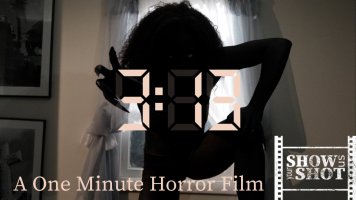
From the filmmakers: "3:13 is a one-minute horror short created for Make Long Story Shorts, on Instagram. Inspired by the phenomenon of sleep paralysis, this film follows Maria (Robbie Jean) who experiences a terrifying visit by a shadowy Demon (Diamond Simone) at 3:13 AM, but can't move—only to wake up and realize it was a nightmare. Working within the limited time length, I wrote a 'loop' narrative to make the viewer feel like they're 'stuck' in the nightmare. By using the a7ii camera on a DJI Ronin S rig, we were able to create both fluid

by Steven Gladstone · Posted
The test involved an actor, dressed in a cowboy outfit, lighting up and smoking a cigar. The test was done late in the day, with no additional lights, and we were racing against the sun. The green screen we had was a little bit on the pale/unsaturated side, but we went ahead with it anyway. We imported the footage into Final Cut Pro and applied the Keyer effect.
Most of it was working well, except there were some areas that were bleeding through the image so we tried to clean that up with the addition of masks/garbage mattes. You can see where

by Steven Gladstone · Posted
You’ve shot, edited, and finished your film. You’ve sent it off to the festival circuit, and you’ve been getting accepted. Congratulations. And yet, each festival is asking you for promotional material, on-set stills or behind the scenes (BTS) video. Sadly, all you have is a picture or two from just before you started shooting, and one that the crew sent around—of you, passed out from exhaustion—at the end of the shoot. But getting good on-set stills and BTS video, that’s tough. I know, I’ve been there. It is hard enough just getting the film

by Steven Gladstone · Posted
If you are gearing up to shoot your film, video, webisode, or pretty much any production, don’t forget to take on-set photographs and BTS video. This is something I’m sure you have heard before, but it is one of those things everyone knows, but doesn’t do. In the following two articles, I ask about the value of on-set photos and BTS video, from the perspective of a producer, and then from the perspective of film festivals. In Part 1, I interview JB Bruno, a no-nonsense kind of guy who is a long-time AD, Line Producer, and Producer in the film
by Steven Gladstone · Posted
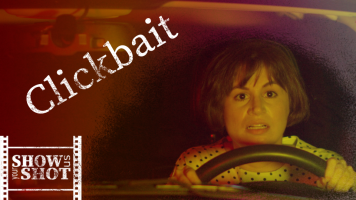
In this segment of Show Us Your Shot, Michael Epstein and Sophia Cacciola share with us their technique for creating a dreamlike driving shot with a stationary car, shooting high speed on the film, Clickbait.
“Clickbait is a modern, giallo-inspired horror, dark comedy film about the costs of seeking notoriety. A college student who will do just about anything for Internet fame is kidnapped by a stalker, and her reluctant roommate is the only one who can save her. During the attempted rescue sequence, we were looking to create a dramatic, music
by Steven Gladstone · Posted
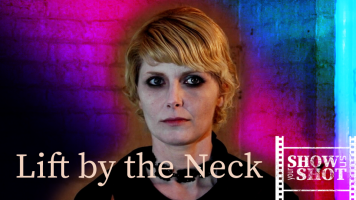
Lifting someone by the neck may look easy in the movies—you just need an actor who is ridiculously strong. But in the real world, where you don’t want to hurt the actor who is being lifted, it takes some smart camerawork and nifty editing to make it look convincing. In this segment of Show Us Your Shot, PJ Woodside and Steve Hudgins of Big Biting Pig Productions, from Kentucky, show you just how they pulled it off with only three simple shots, on their film, The Caretakers