Macro Photography

Question: Is there a “best” format for shooting macro close-ups? If you tell me “full-frame,” I won’t argue with you. I’ve taken many fine macro close-ups with 4 x 5" studio cameras, medium-format cameras, APS-C, Micro Four Thirds, and even point-and-shoot cameras. And you know what? They’re all perfect in their own way.
Above image: Detail, old railroad tie (Olympus M.ZUIKO Digital 30 f/3.5 Macro ED MSC)
Do larger-format cameras take sharper photographs? Yes. Do larger-format cameras allow for finer control over selective focusing? Yes again

When you start getting extremely close to your subject, you may run into some difficulty with lighting. This could be because your large lights can't get into position easily, you can't get the type of lighting you want, or you are so close that you are casting a shadow. There are solutions to these problems, and each has its own unique capabilities and look that will help you bring your macro photography up a notch.
Let's start things off with something you probably already have in your bag, an

One thing many photographers learn quickly is that photography can be an expensive hobby. This is especially true if you head into a niche field and need some dedicated tools to get the shots you want. Macro is one of those specialties, and it asks you to purchase a dedicated macro lens that is generally going to be pricier than your standard lenses. Fortunately, the photo world is filled with affordable alternatives to get you started with your close-up experiments.
The trick to high-quality macro images is getting closer to your subject.
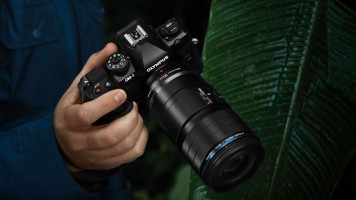
In the close-up, high-magnification world of macro photography, it is seldom that the tools vary from the so-called “standards.” The main reason for this is that there is something simple and elegant about that classic 100mm f/2.8; it is a proven design that simply works well. It offers a comfortable working distance, is easy to design to 1:1 magnification, and is versatile in that many photographers tend to work with these short telephoto macro

The Meyer Optik Gӧrlitz Trioplan 100 f/2.8 is a new lens with a long history. Dating back more than a hundred years, the Trioplan 100 is a triplet design which, as the name implies, only contains three lens elements. Why people would be interested in an optical dinosaur a century down the pike has to do with the quality of bokeh this lens produces.
Because of its three-element design and 15-blade iris, the Trioplan produces what Meyer Optik fanboys and

There are certain combinations that just work well together—peanut butter and jelly for instance—so it should come as no surprise that a complementary pair of lenses isn't too hard to come by. In this case, we are talking about the classic Canon EF 50mm f/1.4 USM and the respected EF 100mm f/2.8L Macro IS USM.
Almost no explanation

As someone who enjoys pushing the envelope photographically, I’ve always had a soft spot for manual focus lenses. Hence my excitement over the invitation to test a Lensbaby Velvet 56 and write a review of its macro capabilities.
Back story
Lensbaby has been at the forefront of creative-effects photography since the company’s founding, in 2004, and the Velvet 56 stands out in the product line for
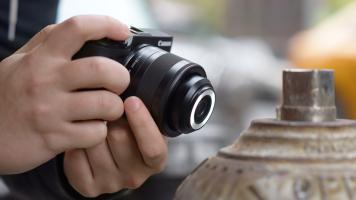
Capture the tiniest details by getting up-close and personal with Canon’s latest mirrorless lens release: the EF-M 28mm f/3.5 Macro IS STM. Designed for the EOS M series of mirrorless cameras, this APS-C lens is an ideal mate, thanks to its claim as the world’s lightest autofocus macro option and a retractable design that shrinks the length to just 1

The mysterious realms of miniscule objects, colorful flora and creepy-crawly bugs hold a fascination for image makers of all sorts. Most photographers know that capturing images on such an intimate scale requires a macro lens or special accessories to allow for close focusing, but another critical component is the lighting.
For an overview on the different lighting tools and approaches to consider, we spoke with macro photography and lighting specialist Lester Lefkowitz, who will present a talk about macro photography at the
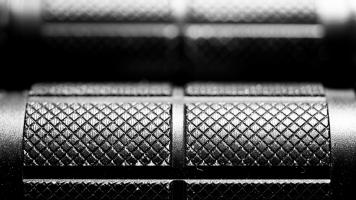
For a photographer, macro photography might be the perfect “rainy day” activity. Once you discover close-up photos of things, you realize that everything can be turned into a photograph, especially on the macro level.
All Images © Todd Vorenkamp
So, with so many “everythings” out there to shoot, what should you train your macro lens on?
I decided to challenge myself by taking photographs of the contents of my camera bag. The end pocket of my

It is probably safe to say that many of us photographers have, either with our cameras or smartphones, tried to capture a close-up image of an insect, flower, toy, or other object. We have an idea of what we want this photograph to look like as we prepare to capture the image. We've seen and admired beautiful close-up images before but, when we nose the camera lens up to the object, we see nothing but a blur—the lens can't focus close enough to
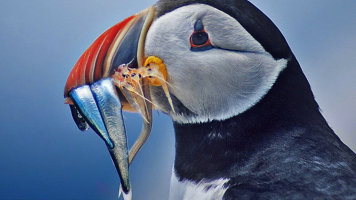
Frustrated with taking blurry macro images? In this video, from the 2015 OPTIC Imaging Conference, Roman Kurywczak will teach you how to take stunning, tack-sharp macro images, whether out in the field or in a studio setting. Macro photography can take the viewer into another world and the act of making the images transports the photographer into a shooting nirvana. Roman will show you how to take your macro images to the next level and help you create your own stunning works of art!
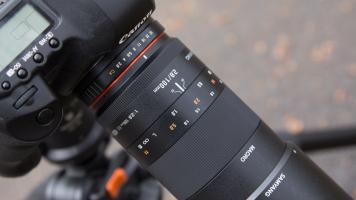

In the following video, Allan Weitz presents a handful of unique options for macro photography that deviate from the common and traditional macro lens. Beginning with the Canon MP-E 65mm f/2.8 1-5x Macro Photo Lens, Weitz delivers an overview of this high-magnification optic that permits focusing on subjects from 1:1 to 5:1 reproduction ratios. Second up is a profile of the

4,014 Views ·Posted
In the following video, B&H photo wiz Allan Weitz introduces the Olympus Stylus TOUGH TG-3 Digital Camera and the LG-1 LED Macro Ring Light attachment. This video presents the rugged features of the 16-megapixel camera, as well as the idea that it’s an excellent microscope control feature, offering a minimum focus distance of just 0.4" and a 44.5x magnification