Macro Photography
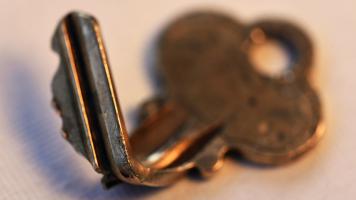
I wanted to participate personally in B&H’s Macro Week content creation, but I’m not an experienced macro photographer, so I borrowed a Nikon AF Micro-NIKKOR 200mm f/4D IF-ED lens from a colleague, bought an Aputure Halo Ring Light and set out to create interesting and
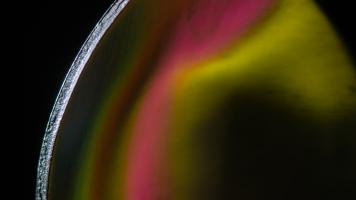
Macro photography is discovery. Even better, it's rediscovery. With selected focus and tight framing, the photographer guides us to see what we would otherwise not, even to reimagine what we think we know so well, common items otherwise overlooked.
To me, finding magic in the everyday is what makes macro photography so enjoyable, and with this thought in mind, we present the work of Ruby Frei. Frei works in a bakery that I frequent and, when I met her, I knew nothing of the magic she was cooking up with a
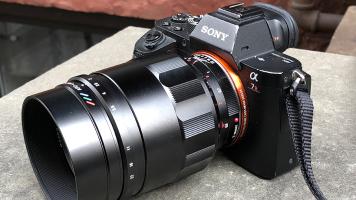
Voigtländer, a division of Japanese lens maker Cosina Optical, is known for producing surprisingly affordable lenses that, with few exceptions, deliver outstanding image quality. One of the company’s latest offerings is the Voigtländer MACRO APO-LANTHAR 65mm f2 ASPH, slightly longer than normal and faster than most macro lenses, which focuses down to 12.2" from the image plane. The new MACRO APO-LANTHAR features 10 elements in 8 groups

In this B&H Event Space video, photographer Lester Lefkowitz shows you how to get in close, closer and really close, to capture the wonderful details and never-ending curiosities of both natural and man-made objects. While presenting a mix of photographs and diagrams to illustrate important technical concepts, Lefkowitz discusses magnification ranges, various optical and mechanical methods for getting close, issues of critical focus and depth of field, techniques for camera support and vibration control, various lighting methods (available

809 Views ·Posted
Lester Lefkowitz covers the concepts of macro photography.

934 Views ·Posted
Photography icon Robert Capa once famously said, ‘If your pictures aren’t good enough, you’re not close enough.’ One of the great ways to get people’s attention with your photos is to bring them close to your subject. Getting in close can be achieved with a macro lens or even zooming in close with a long lens. This is a fun and exciting type of photography that anyone can learn. And the best part is, you can take close-up photos anywhere! Learn how to take high-quality photos of small subjects and make a giant impression on your viewer.
Jeff

I like shiny things, but I have never really had a reason to buy or own jewelry—I’d rather buy camera gear. I have, however, always wanted to photograph beautiful diamonds and rings. Unwilling to enter the jewelry business for photographic purposes, the arrival of the new Fujifilm XF 80mm f/2.8 R LM OIS WR macro lens and super-generous access from the very nice people at Ken and Dana Design in

There is no camera currently on the market that is more well-rounded than the Nikon D850. It offers everything you could possibly want and then some. Balancing outstanding resolution with more than enough speed and then tossing in UHD 4K video really does make this a versatile system and, perhaps, the best camera to be released in 2017. At home I like shooting food and, since I am dating someone who is studying to be a chef, there is always plenty
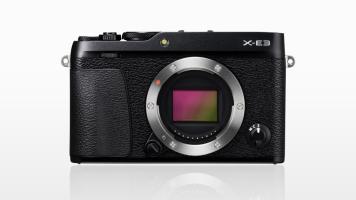
In a triple announcement, Fujifilm has released the new Fujfilm X-E3 interchangeable-lens mirrorless camera, the FUJINON XF 80mm f/2.8R LM OIS WR Macro Lens, and, for the GFX shooters, the FUJINON GF 45mm f/2.8 R WR medium format lens.
Fujifilm is continuing to upgrade

It has been “Macro Week” at B&H Explora, and this week’s episode will put a nice bow on all the articles and photos we have published on the subject, with an overview of what type of macro photography lenses and systems are available. We begin this podcast talking with photographer Marc Silber about his new book
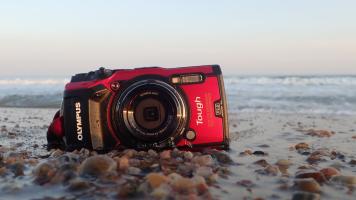
The Olympus Stylus Tough TG-5 has arrived and it is very, very good! The good news is that if you never picked up the very good Stylus Tough TG-4, you can now grab this feature-packed, rugged Tough TG-5 camera and go out shooting. The bad news is that if you have a Tough TG-4, there is now something even better on the market and you will probably want to upgrade.
Photographs © Todd Vorenkamp unless otherwise noted
If you follow the industry, you know that the smartphone camera has pretty much destroyed the point-and-shoot market. Why would I
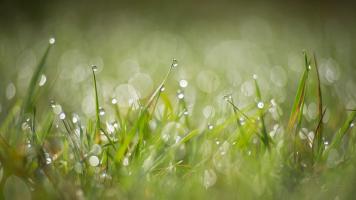
Anita Kram has an eye for detail. This is hardly surprising, given her work as a scientist in the fields of cell biology and microscopy, yet it is a trait that serves her equally well as an avid photographer who loves to explore the magic of nature.
She spent many years photographing with a standard macro lens, but felt creatively stuck by the lack of atmosphere she could achieve with her regular gear. Then she discovered Lensbaby, and realized that these specialty lenses would allow her to dial-in just the right effects to bring out her

Close-ups taken with wider-angle lenses also expose subtle detail, but by framing your subject in its surroundings, you also create a narrative to go along with the visual detail. “Normal” macro photographs expose detail, ultra-wide-angle close-ups tell stories.
Macro photography is fascinating in the way it enables us to focus on the kind of subtle details we seldom notice otherwise. Sometimes the most mundane subjects can become fascinating when viewed at life size or greater.
Photographs © Allan Weitz

One of the most underrated and possibly least understood tools of the macro world is the bellows. Seemingly antiquated and perhaps intimidating, a bellows is, simply put, a flexible tool that adds distance between a lens and your camera body to decrease the minimum focusing distance and increase your reproduction ratio. A bellows functions on the same concept as the more popular genre of extension tubes, but with the key distinction of added control. Rather than resorting to preset lengths to distance the lens from your camera, like an

There are many different macro lenses on the market today, with focal lengths from 15mm to 200mm. Most of them hit the same 1:1 magnification ratio that gives shooters the life-sized reproduction they want for superb close-ups. With so many options to choose from, how should you go about making your decision?
To begin, you should think about what and how you plan to photograph. If you are working with jewelry in a studio, you are going to have very different