Macro Photography

Macro photo studios share many of the same basic needs and equipment as traditional photo studios—just on a smaller scale. This reduction in size both lowers the cost of entry into the genre while inviting creativity from resourceful DIY photographers. Below are some tips for expanding your macro studio using items around the house or easily obtained from local art, craft, or hardware stores.
One of the most versatile tools in any photo studio is the

Shallow depth of field (DOF) is one of the visual effects that many photographers seek in their everyday photographs. To accomplish this, there is the grail quest for lenses with larger and larger maximum apertures. In the world of macro and
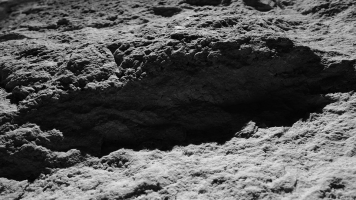
As part of Macro Week at B&H Explora, I challenged myself to make landscape photographs “in macro.” I really did not have much of an idea what I was getting myself into, but it’s important to try new things, even if just for a short experiment. My idea was to approximate a landscape photograph in the close-up detail and scale of a macro image. To attempt this, I was fortunate to have a

0 Plays ·Posted
It’s Macro Photo Week at the Explora blog and you’ll find many helpful articles and videos about the tools, techniques, and practitioners of macro photography. On the podcast, however, we go deeper than macro, like 1000x deeper—our conversation is with geologist, gemologist, and microscopist Nathan Renfro
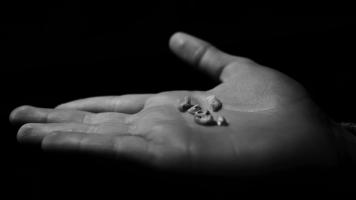
For an upcoming segment on the B&H Photography Podcast, I was given a Leica Q2 Monochrom Digital Camera to sample for a few weeks. Since Macro Week at B&H is upon us and the Q2 has a sublime and simple macro mode, I produced a short series of

The art of photographing the wristwatch is known as one of the most challenging aspects of still life photography. Between the relatively small size of the timepiece, reflective sapphire and acrylic crystals, shiny elements on the watch face, matte leather or nylon straps, etc., there are a multitude of surfaces with different properties and reactions to light and the camera.
Photographs ©Todd Vorenkamp
If you are a lover of the wristwatch or a horologist, you

Close-up or macro photography is an incredible way to capture the tiny world around us on a super-detailed level. While the dedicated macro lens is still one of the best tools for exploring the world on a miniature scale, there are some very inexpensive ways to jump into macro photography with the lens or lenses you already own—no need for a specialized close-up macro lens. In this article, we will take a closer look (no

Macro and close-up photographers often employ the technique of “focus stacking” to increase the depth of field in their images. While this is often done in a controlled studio environment with a sturdy tripod or support and sometimes the benefit of macro focusing rails, it is possible to use this technique out in the field armed only with a minimal amount of gear. Handheld focus stacking is challenging, fun, and can produce some great results.

Welcome to B&H Photo’s Macro Photo Week! From April 26-29, 2021, across all B&H's channels, you'll see new content and events about close-up and macro photography. You'll find invigorating chats with photographers who like to get up close and personal with their subjects, tutorials to sharpen your macro photo skills, and inspirational close-up photos.
Find us on social media at #BHMacroWeek to talk about all things tiny. Share your close-up photos and geek out with other macro lovers! And enter the

Going eye-to-eye with a praying mantis can be a trip and a half, but understandably, not everybody shares my enthusiasm for creepy crawlies. This doesn't mean you cannot enjoy the visual treats afforded by peering at everyday objects at life-size or greater magnifications. To illustrate my point, I pulled a half dozen spice jars out of my cupboard along with a few herbs from our spring garden and photographed them with full confidence that none of them would bite or sting me.
Photographs © Allan Weitz 2021
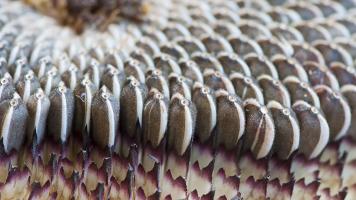
Congratulations on the purchase of your macro photography gear—a world of discovery awaits you. Macro and extreme close-up photography are genres that truly foster a “new” way of seeing, and the goal of this article is to encourage those who own macro-capable gear to embrace the possibilities, to experiment, and to take more macro photos.
Get deep with me, people—the contracted world of macro photography is an ever-expanding, limitless abstraction. It is not necessary to seek distant lands or beautiful people to enjoy the art and craft of

Macro photography is one of those technical subsets of photography that leans heavily on the photographer having the proper gear. While you don’t truly need a macro lens and tripod, they are almost essential to successful macro photography. If you have a macro lens and tripod and you have embarked on the awesome exploration of the tiny world around you, you may have noticed that precision macro focusing is one of the challenges of macro photography. No worries, however! There is

The term “macro photography” is most often defined as close-up photographs taken with macro lenses, but isn’t always the case. True, macro lenses are designed to deliver life-size photographs of small objects with sharp edge-to-edge detail, but macro lenses are not the only tools of the trade when it comes to going face-to-face with bumblebees.
If macro photography is something you’d like to delve into without first having to invest in a macro lens, you have several

There are few genres of photography as technical as macro photography, and it seems like the closer to a subject you get, the trickier it can be to work out all of the variables of exposure, focus, and sharpness. While figures like magnification, aperture, and depth of field are still relevant in all arenas of photography, they take on a new level of importance when working close up. The reward to solving a puzzle like this, though, is dynamic

Macro photography never ceases to amaze me. Show me the face of a jumping spider reproduced at life-size or greater and I’ll undoubtedly stop what I’m doing and stare at it for a while. What’s interesting is how ultra-wide-angle lenses, which are available for DSLRs and